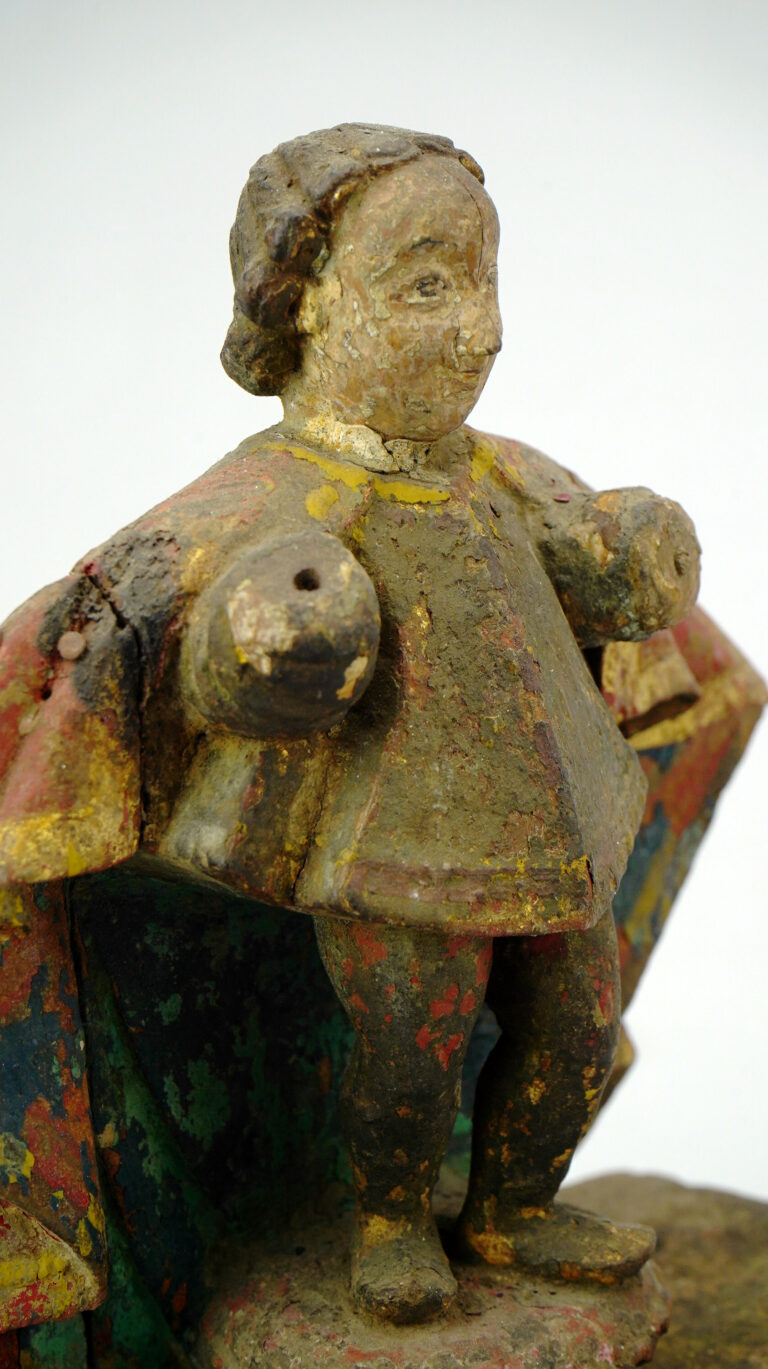
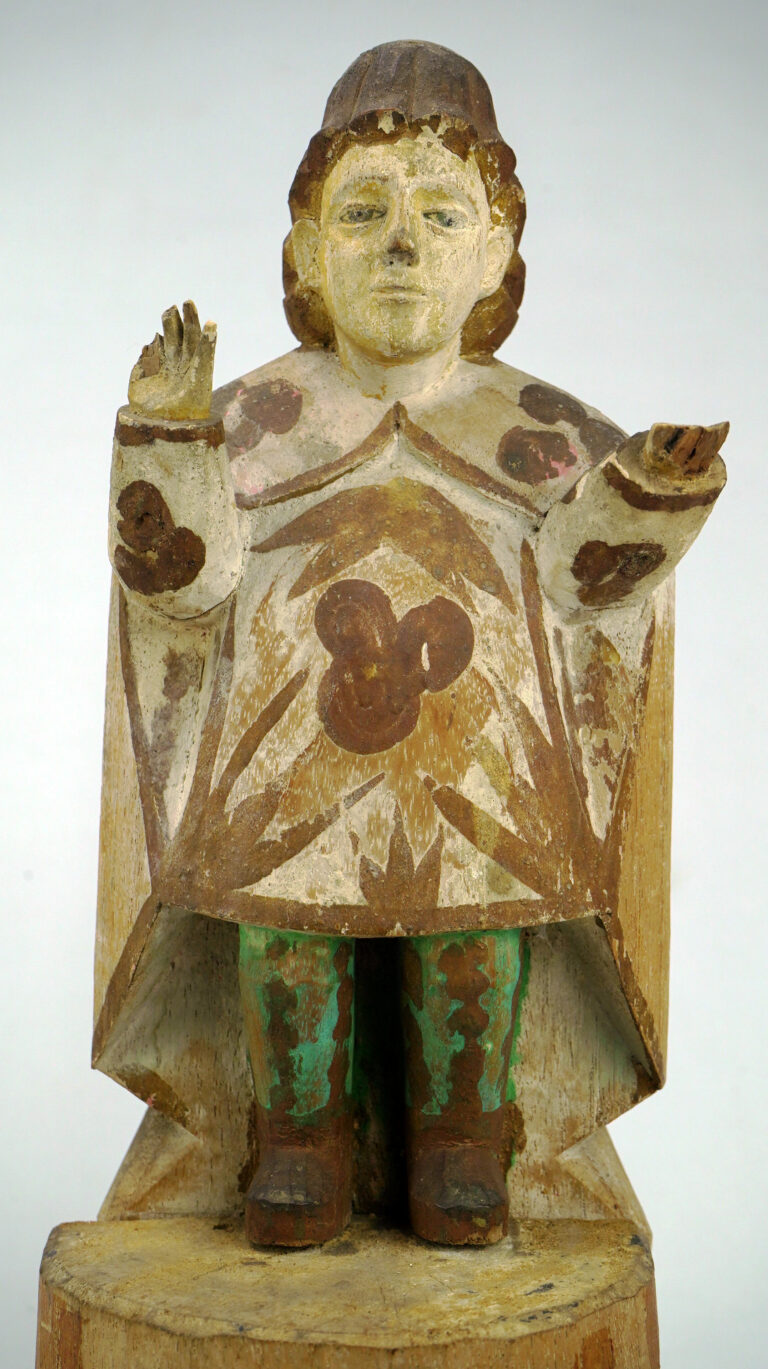
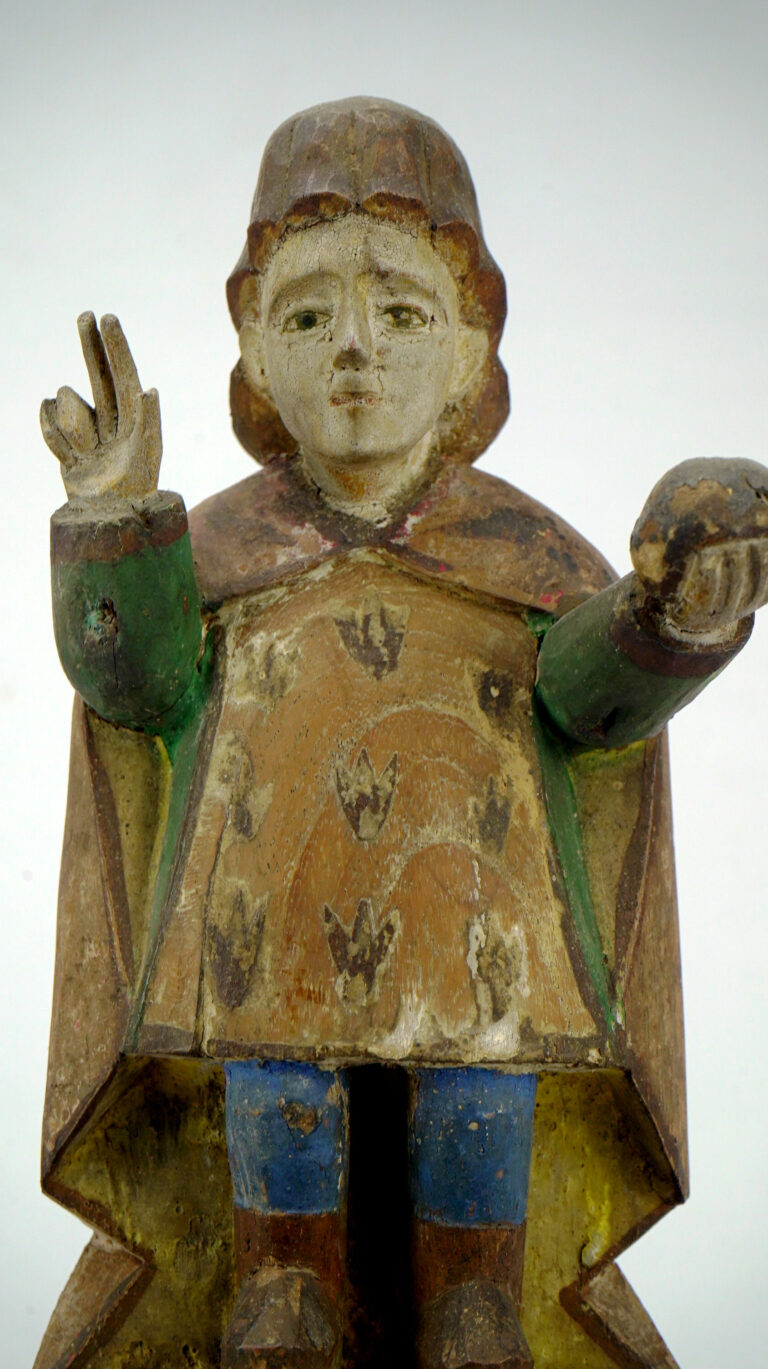
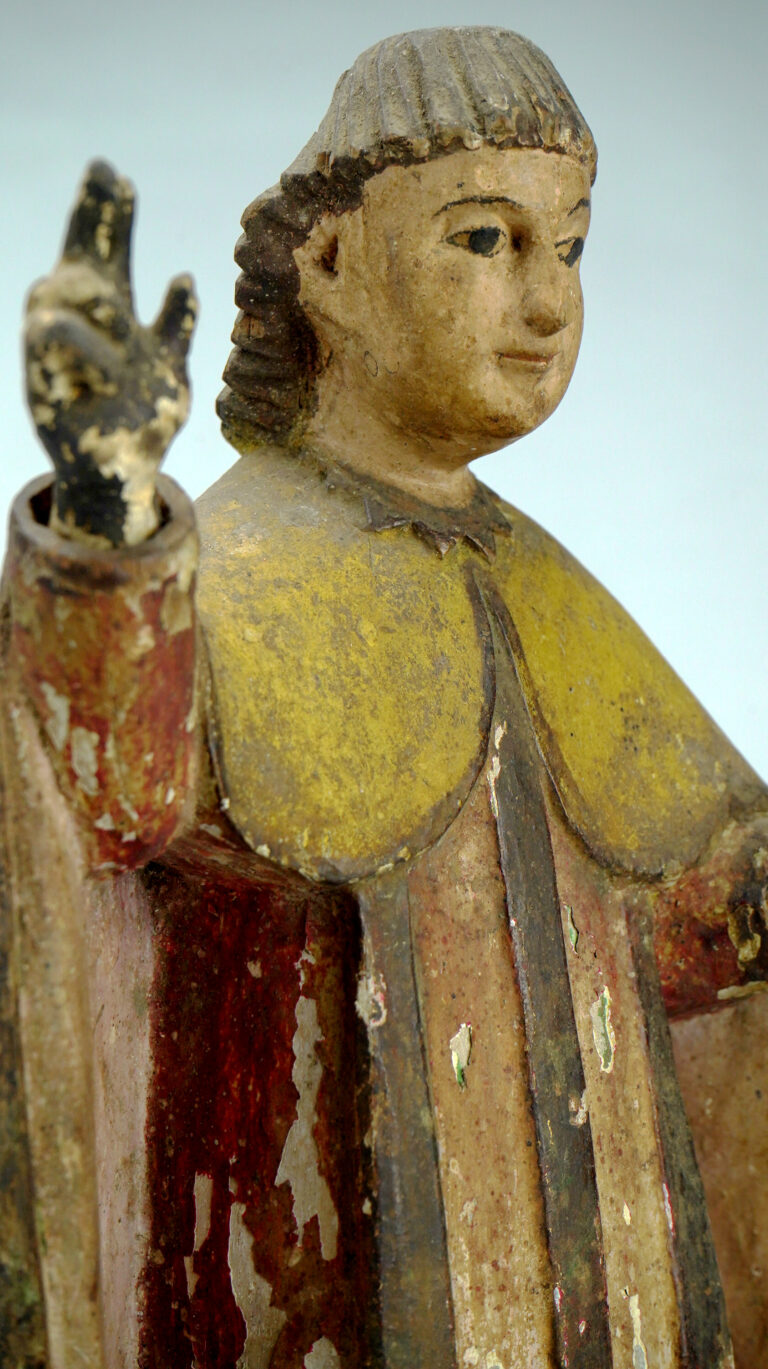
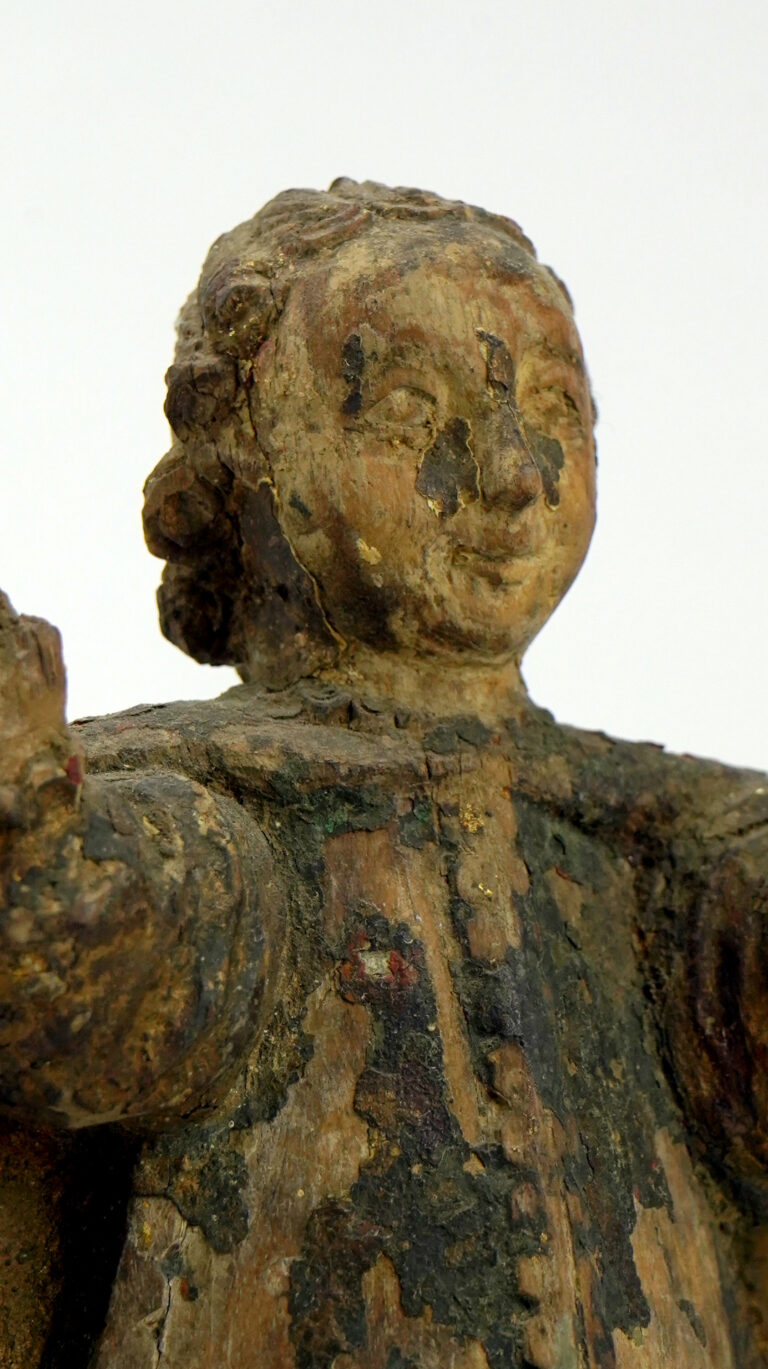
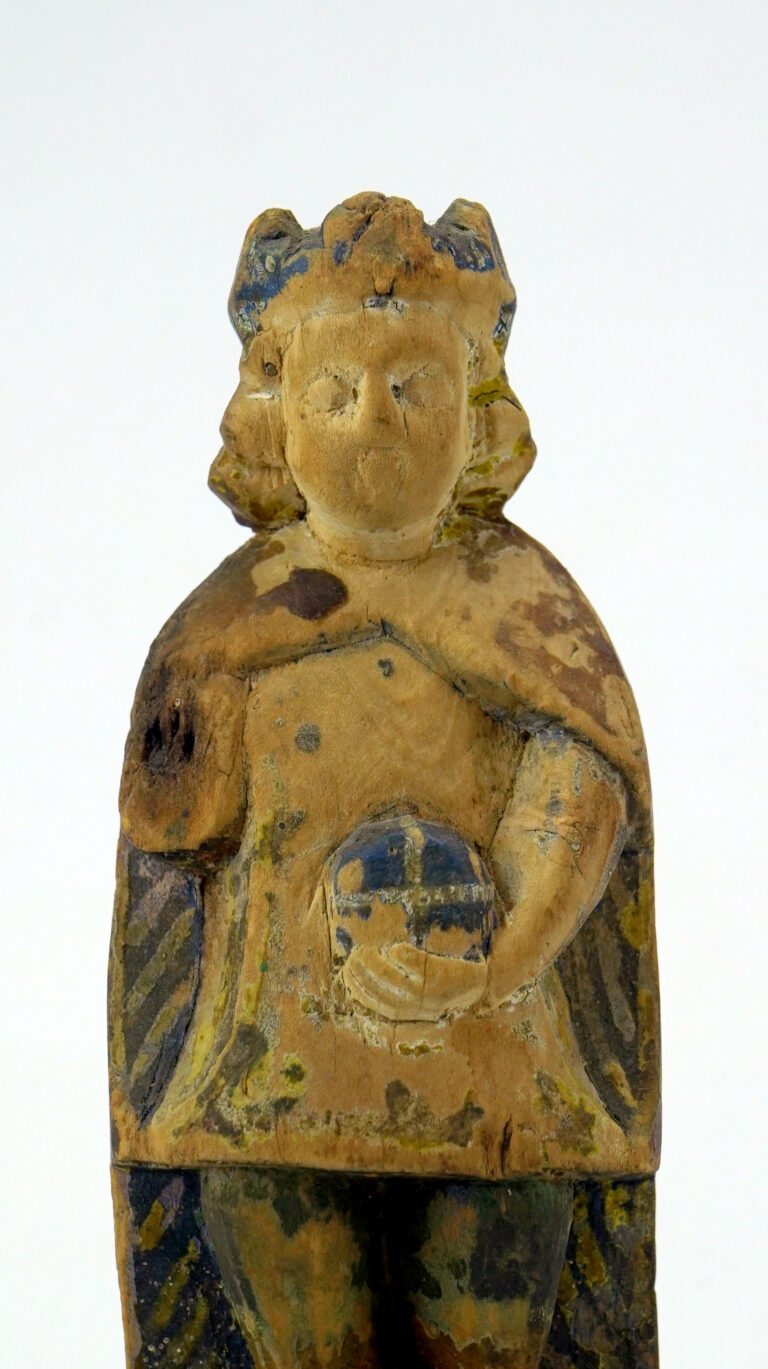
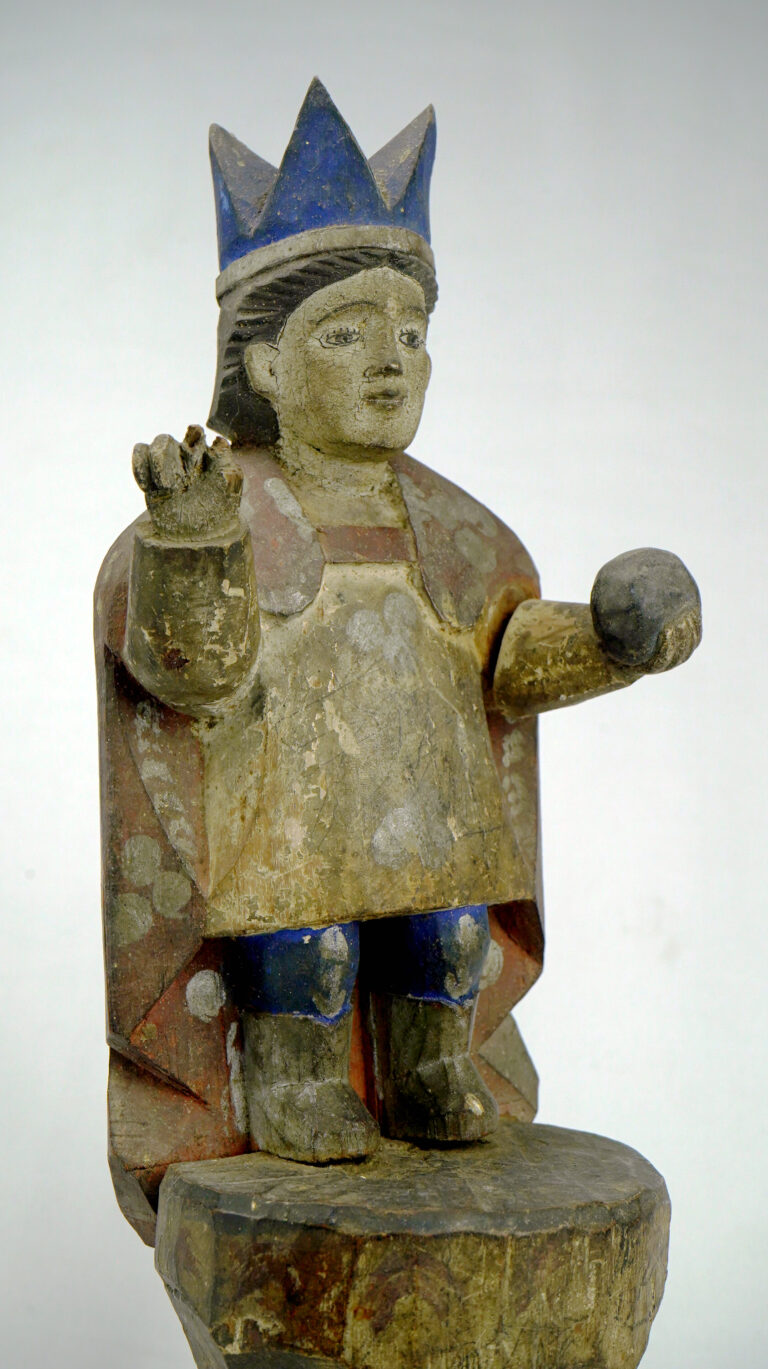
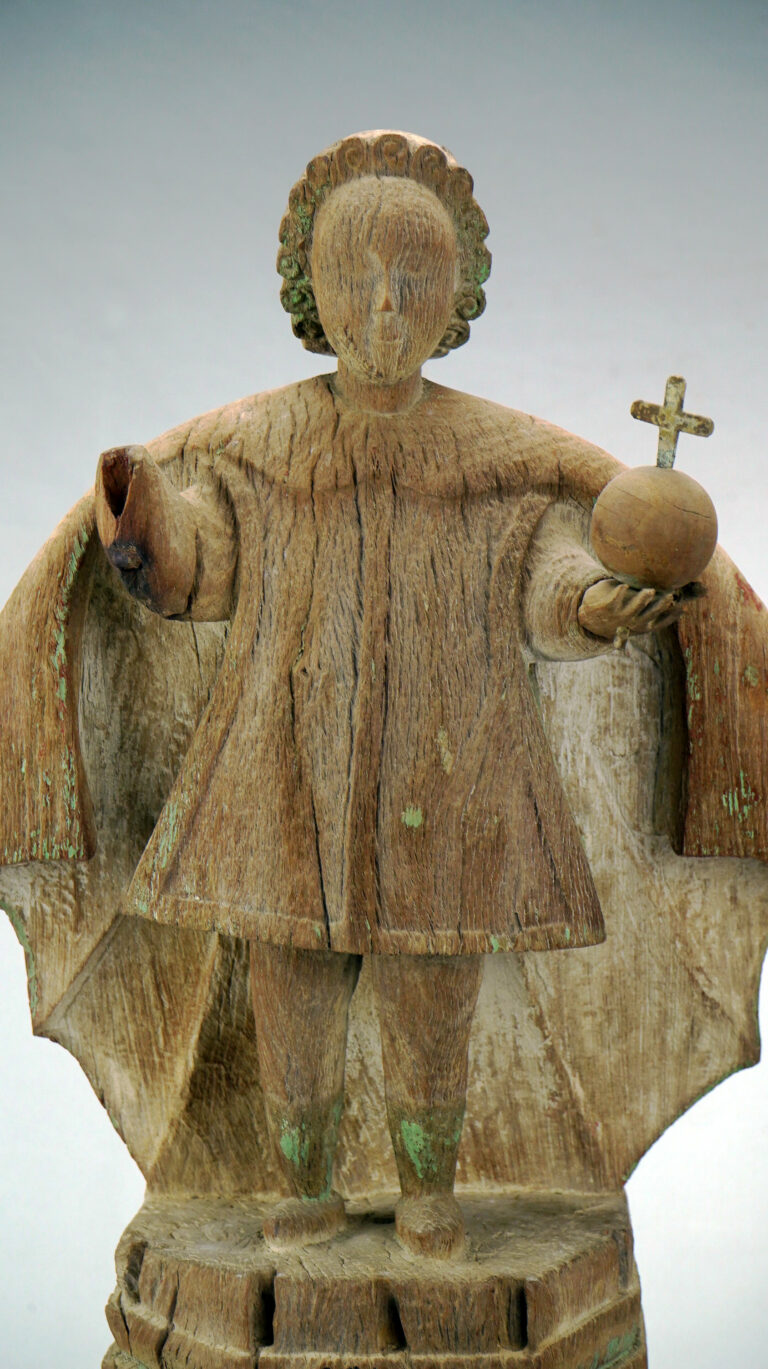
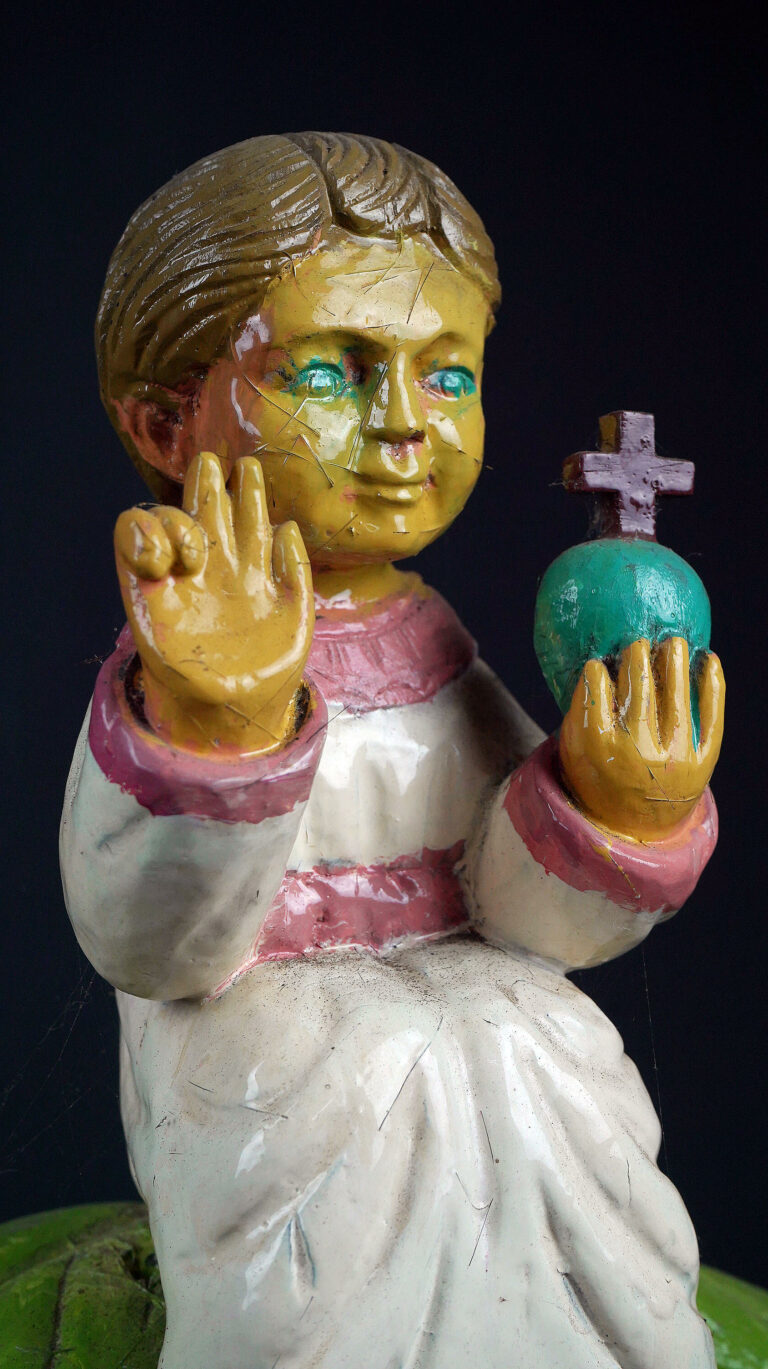
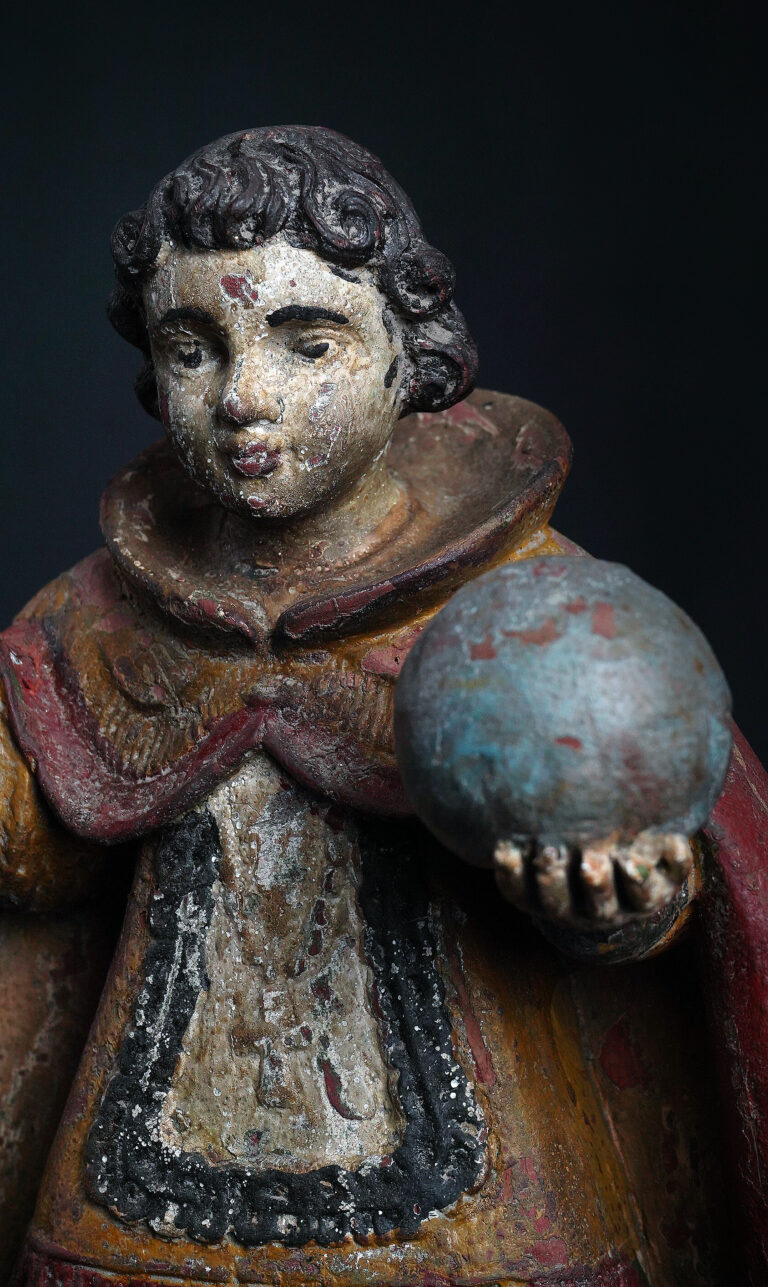
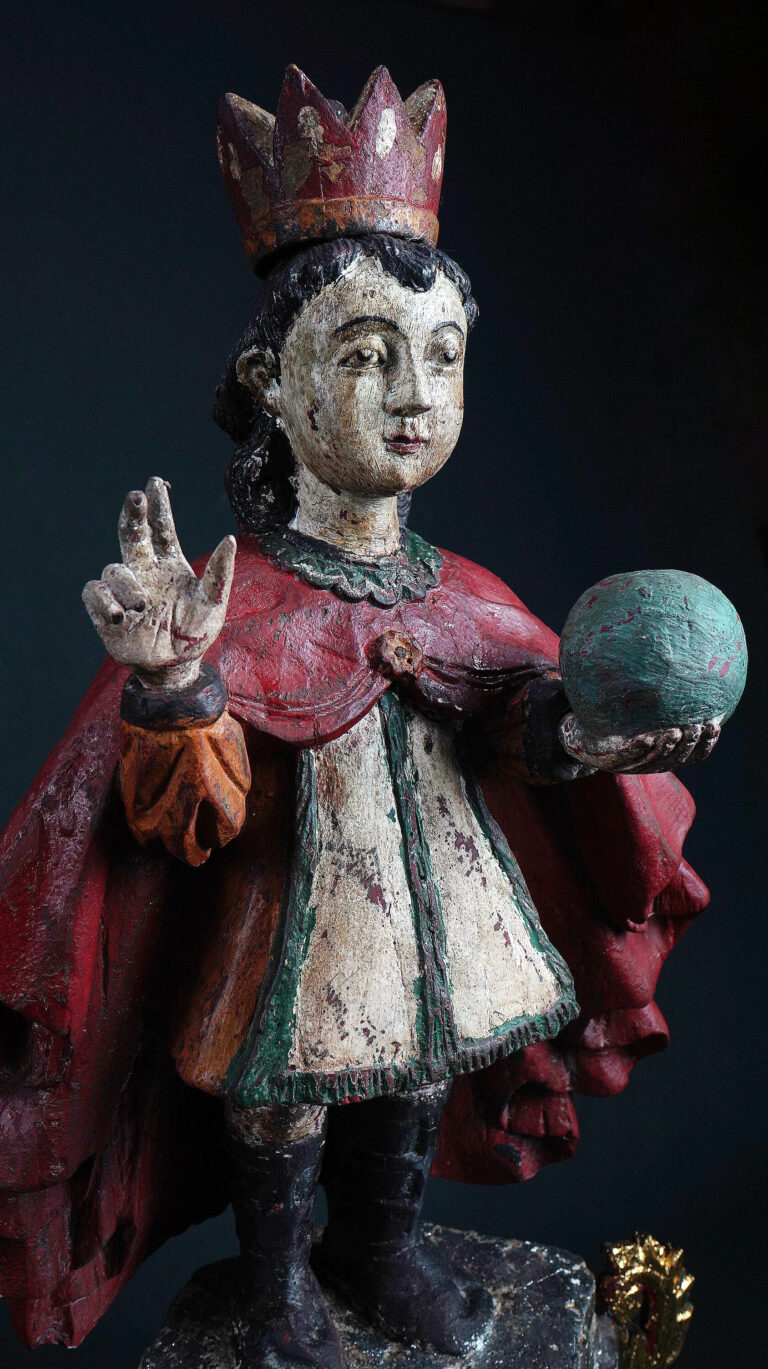
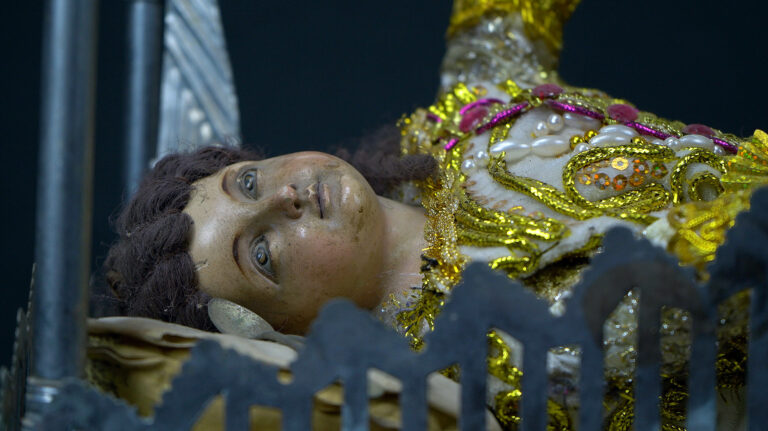
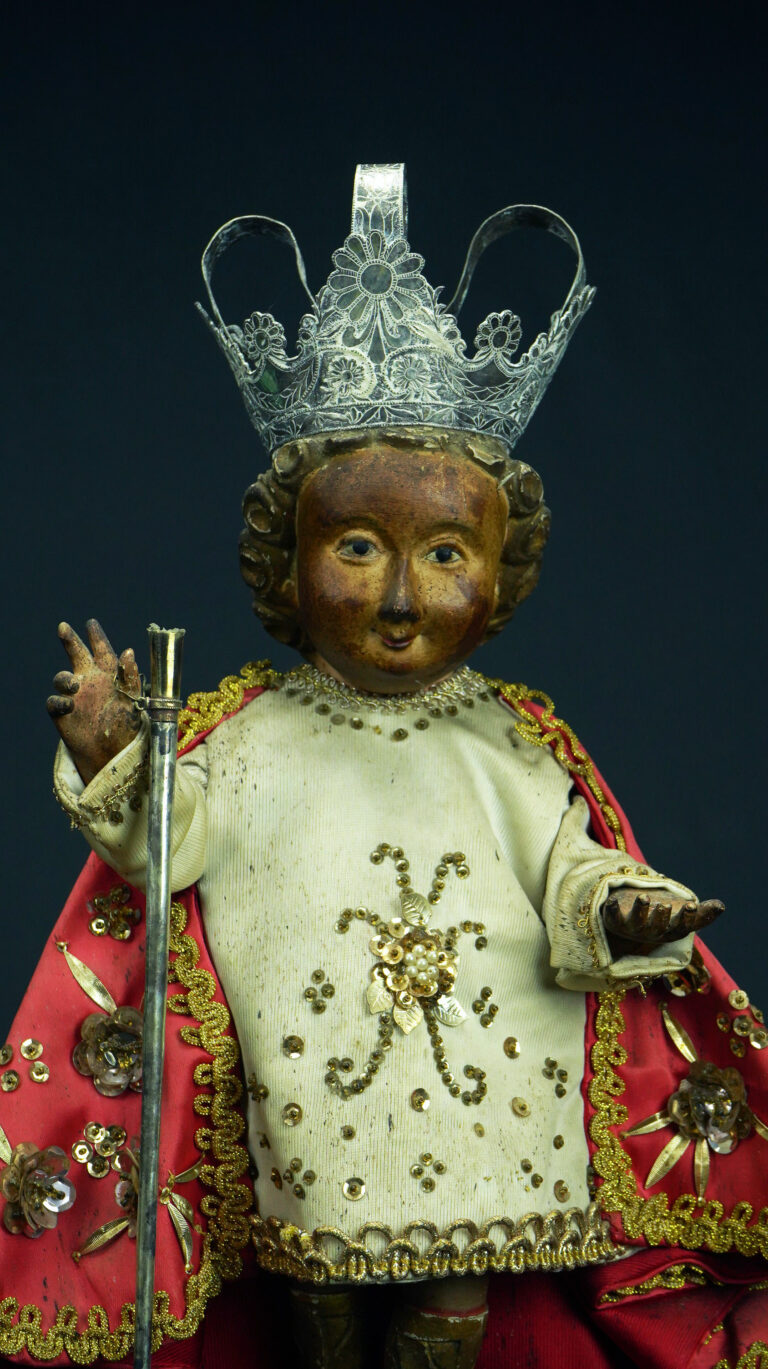
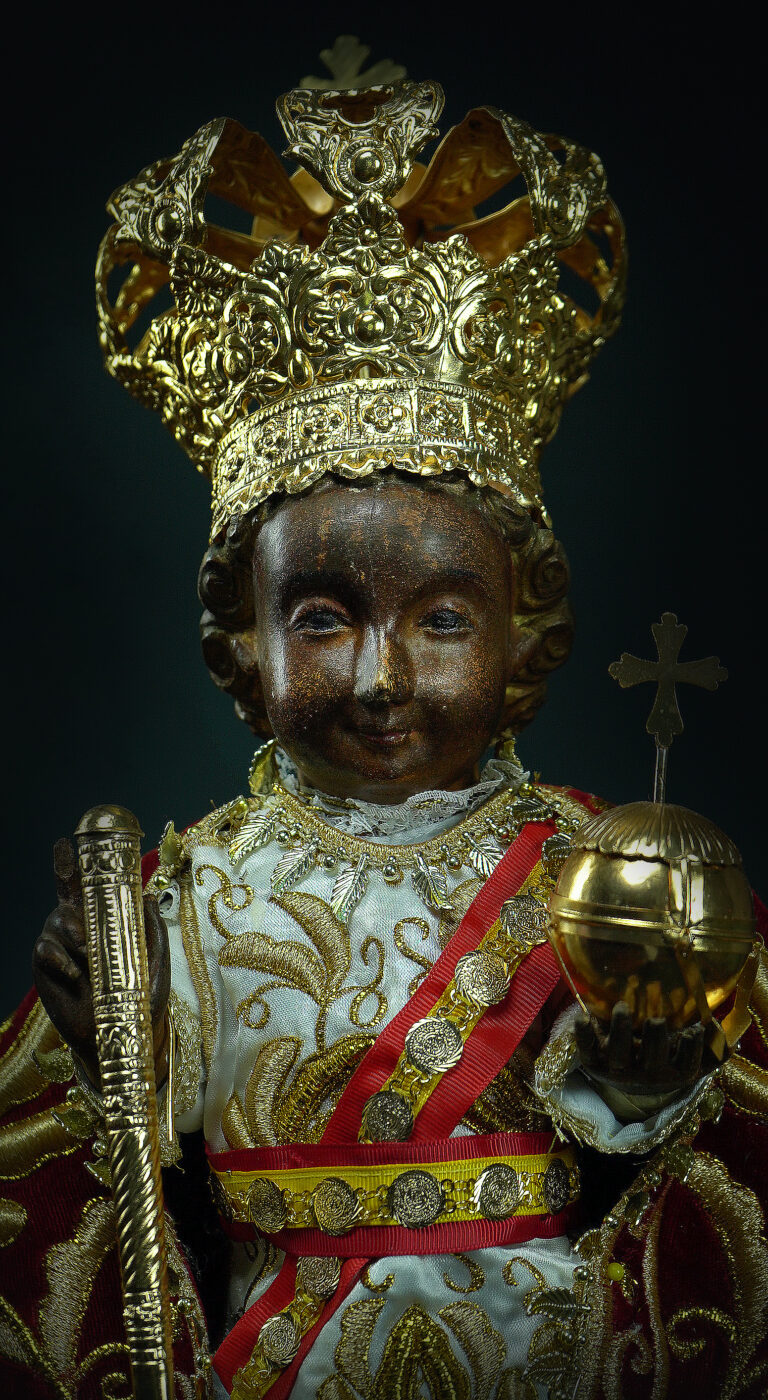
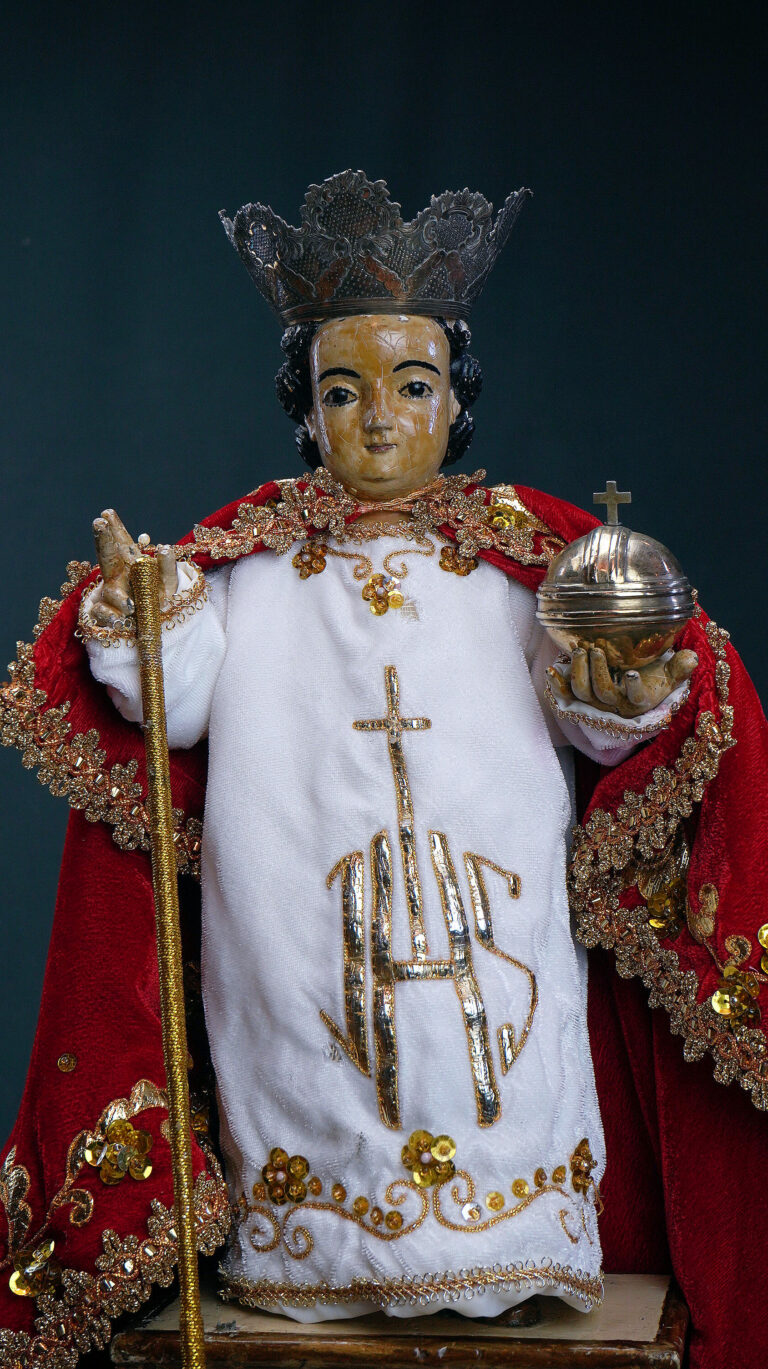
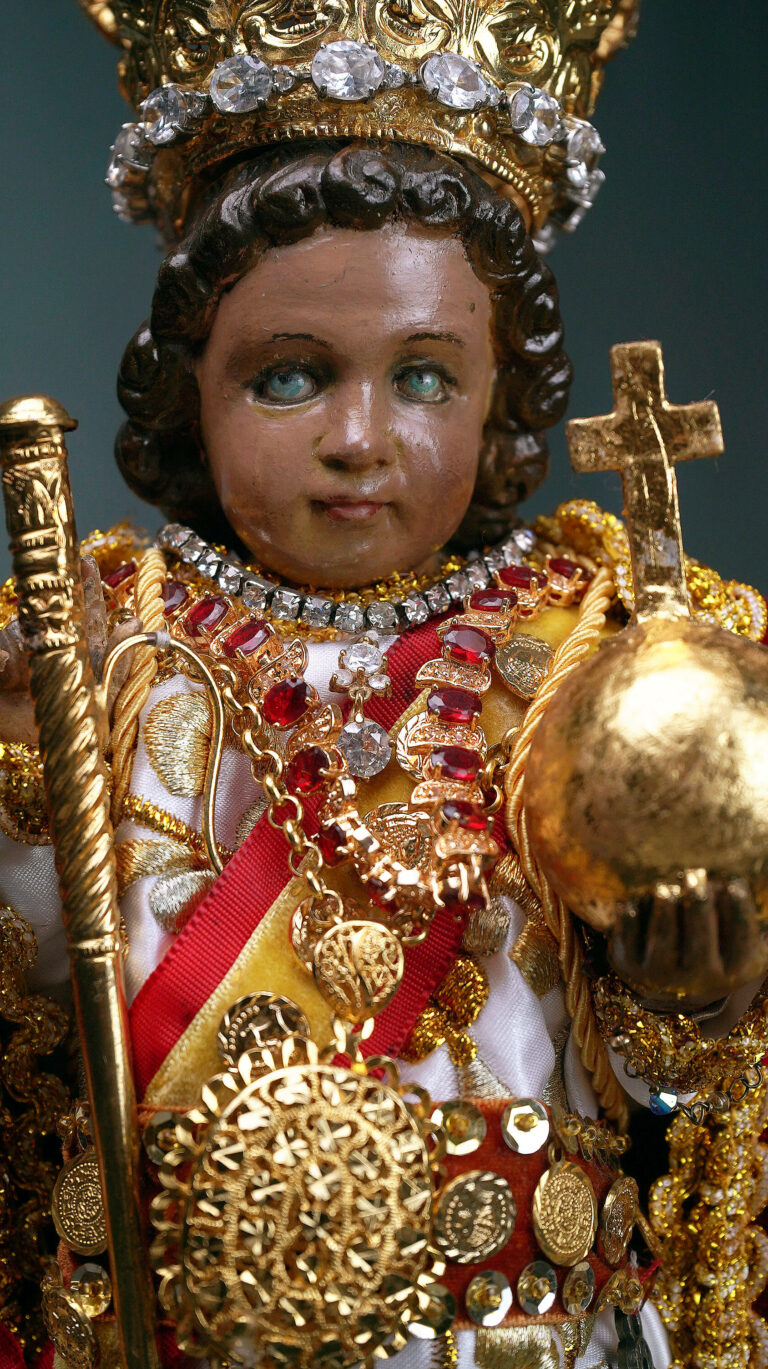
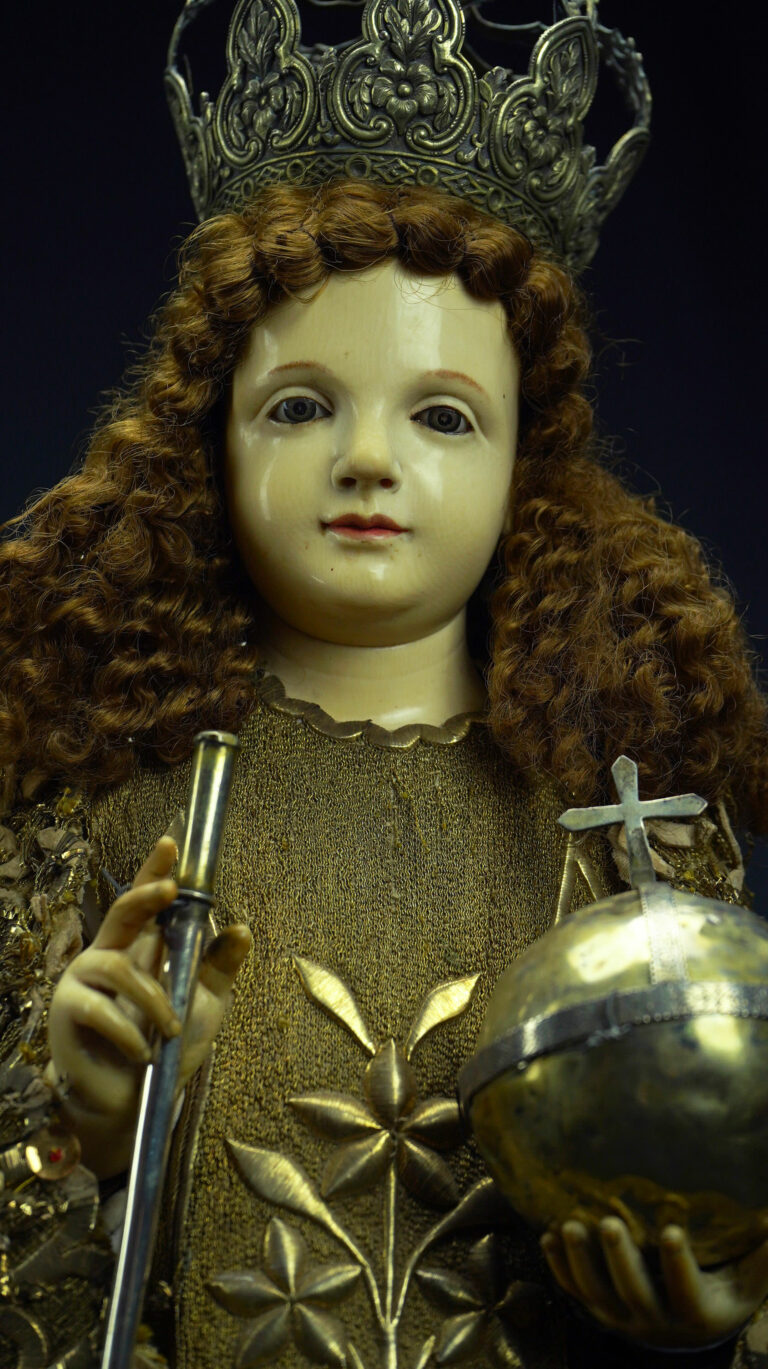
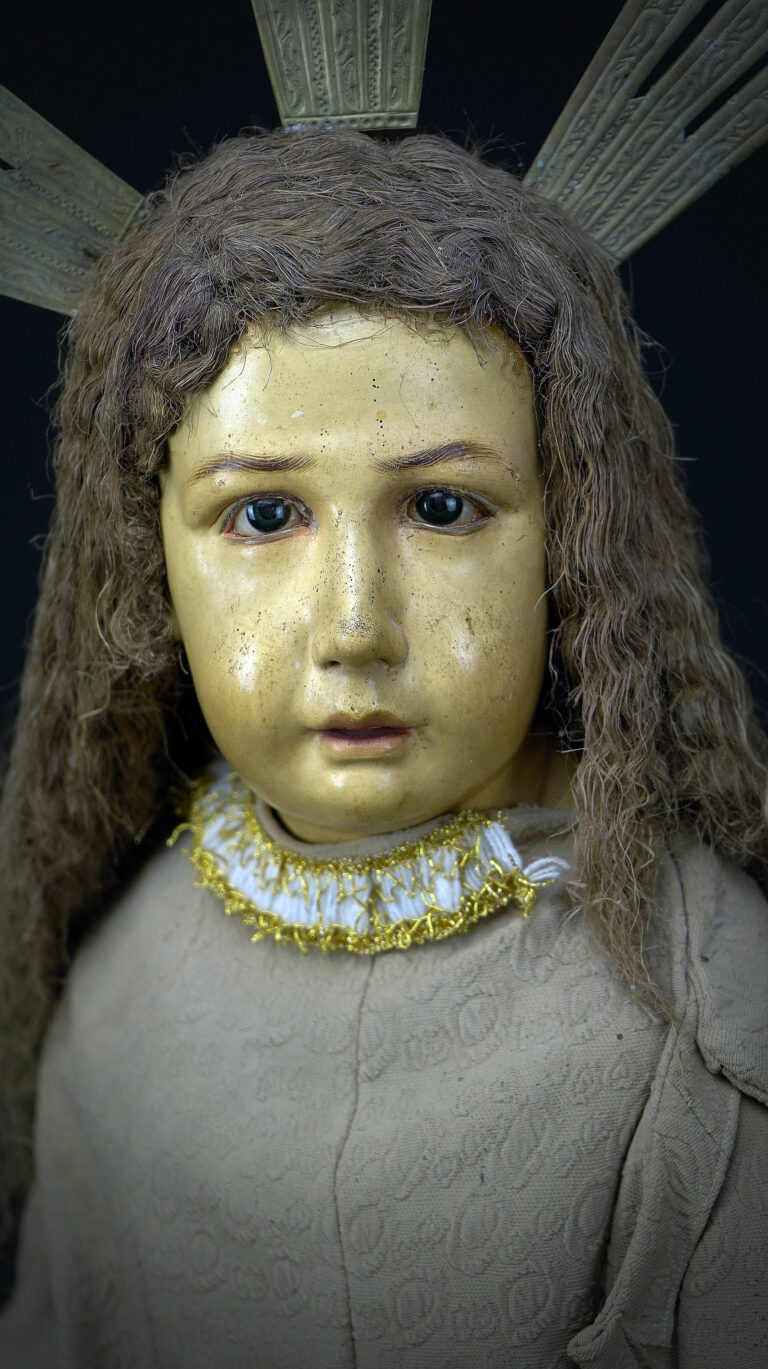
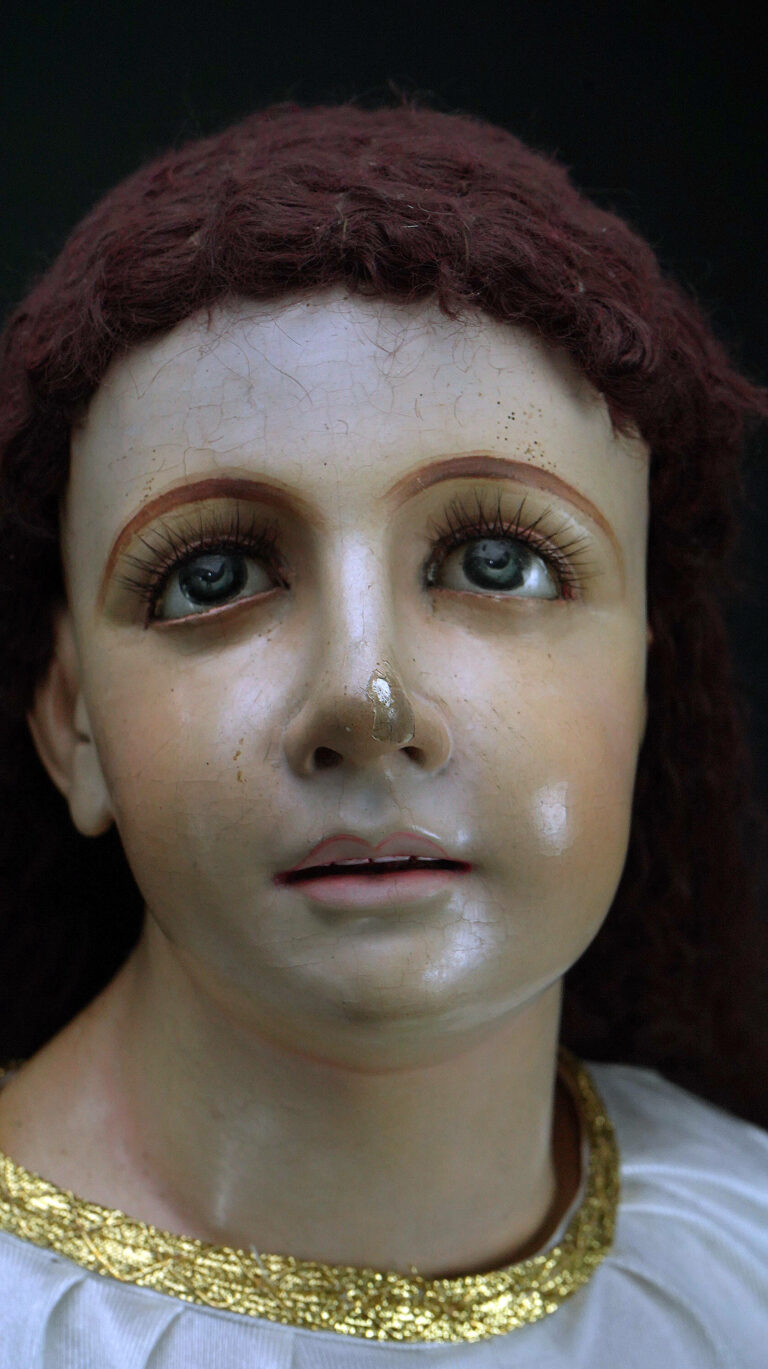
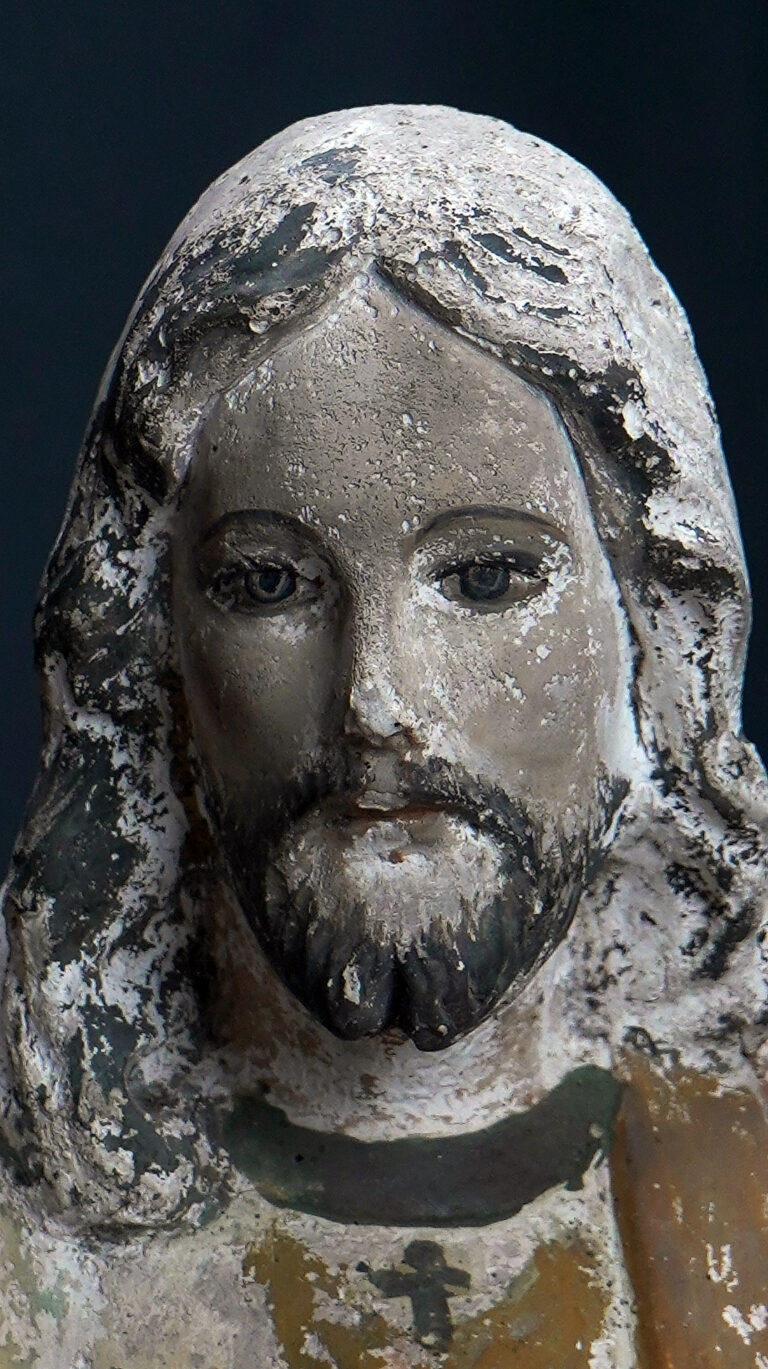
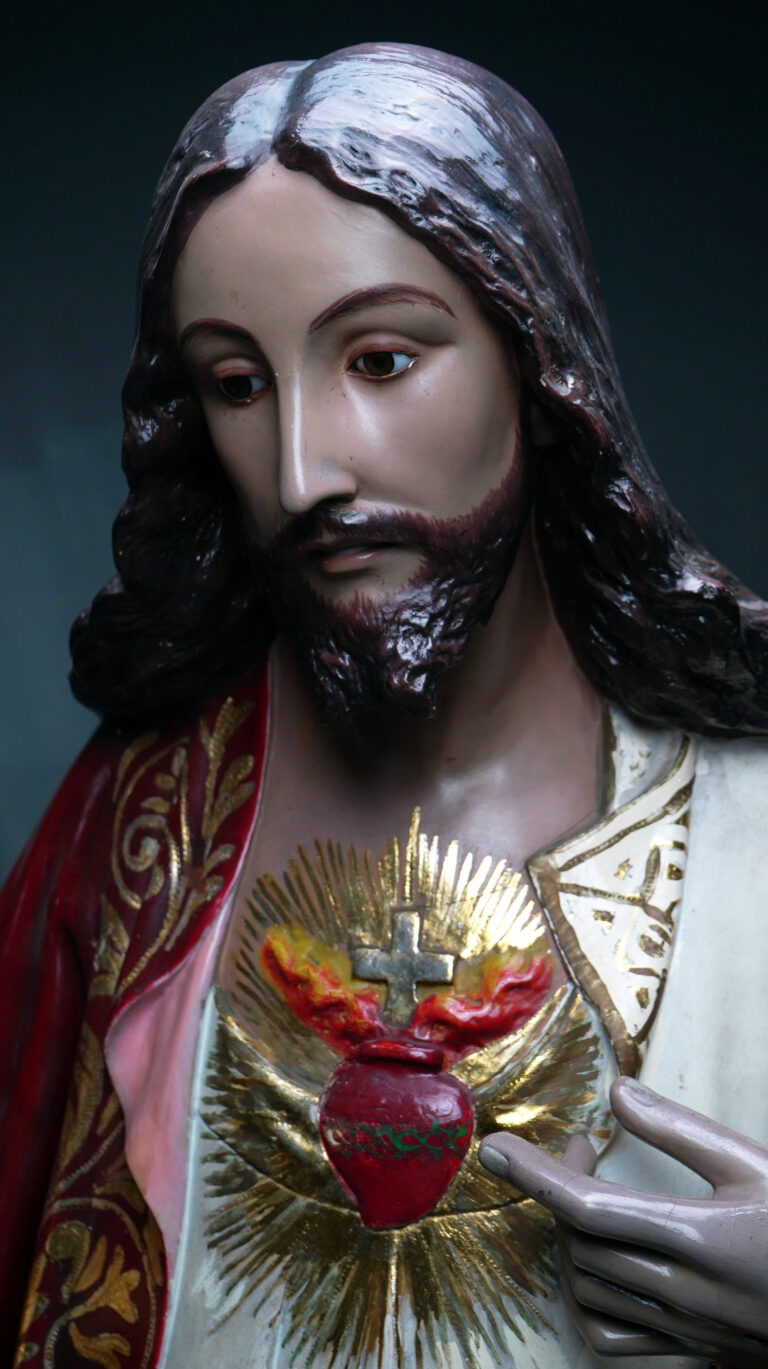
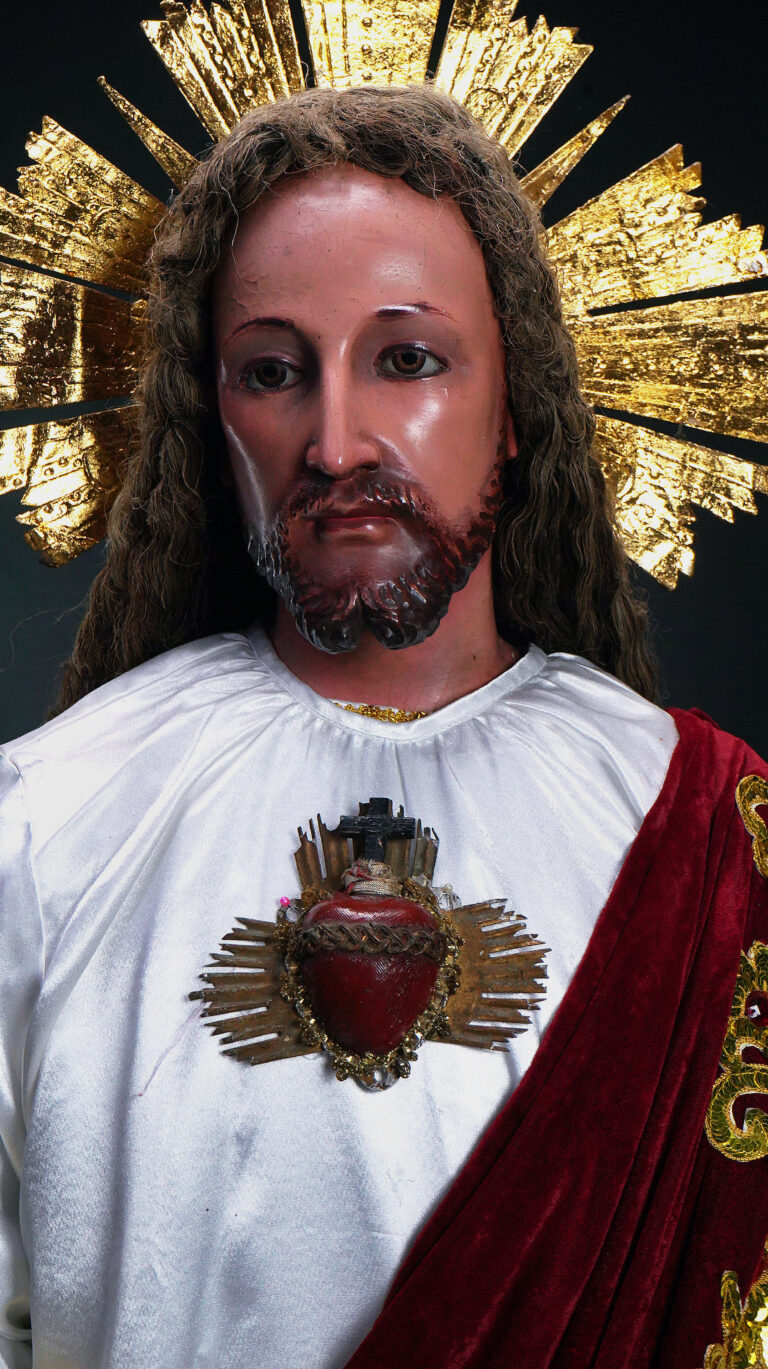
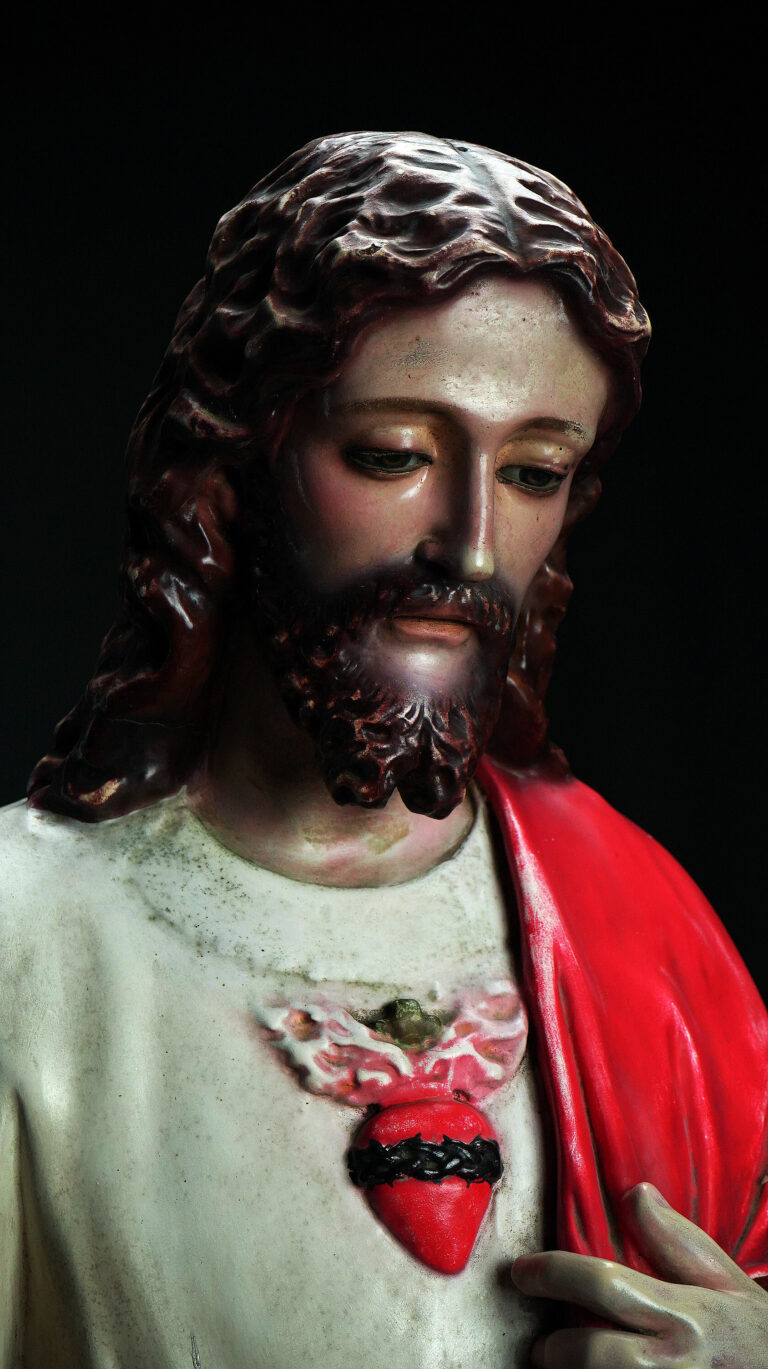
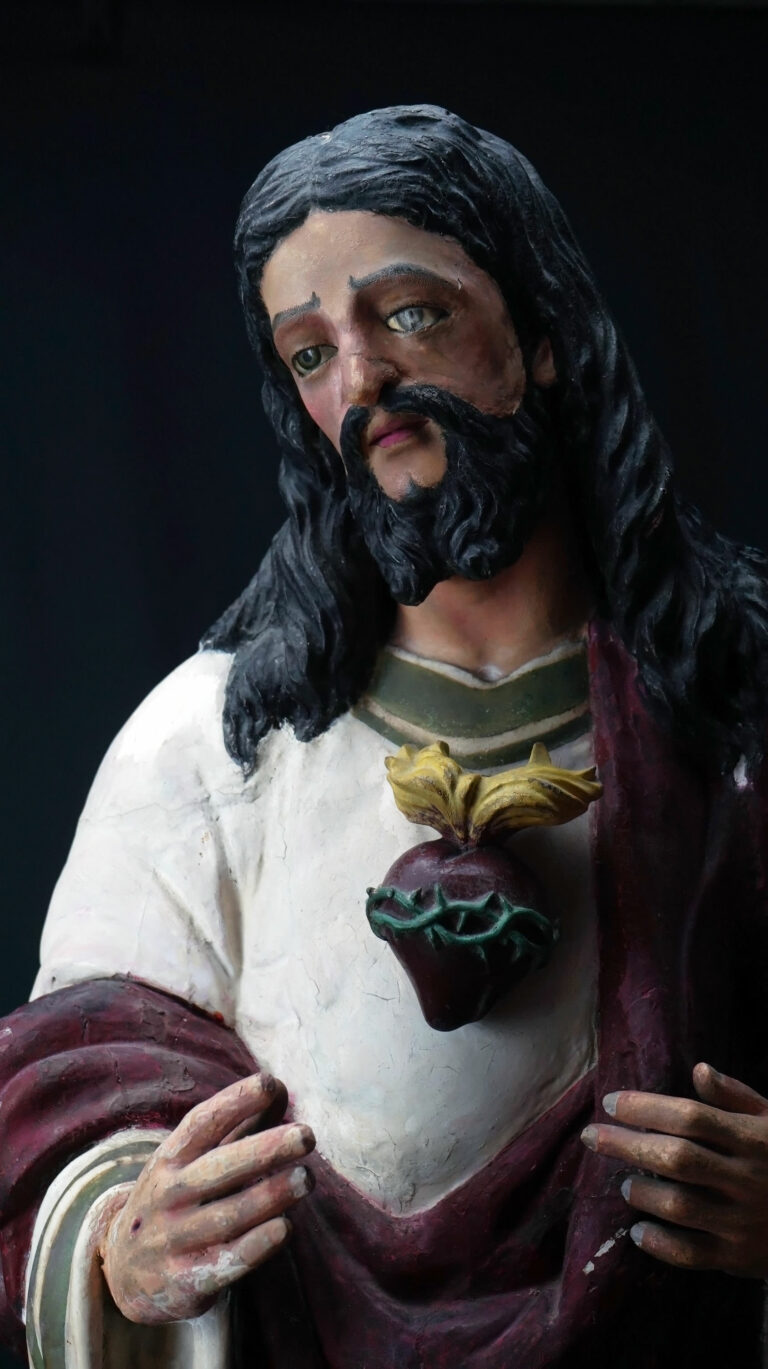
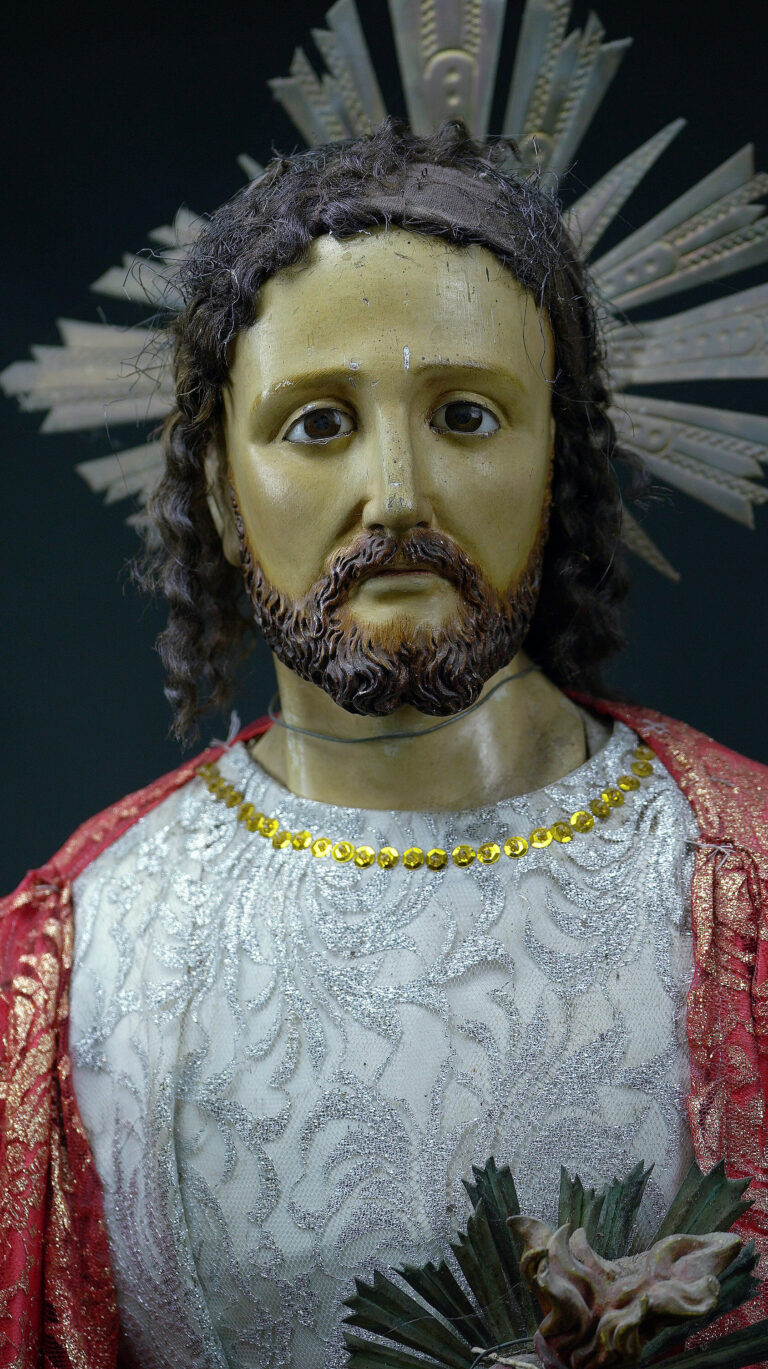
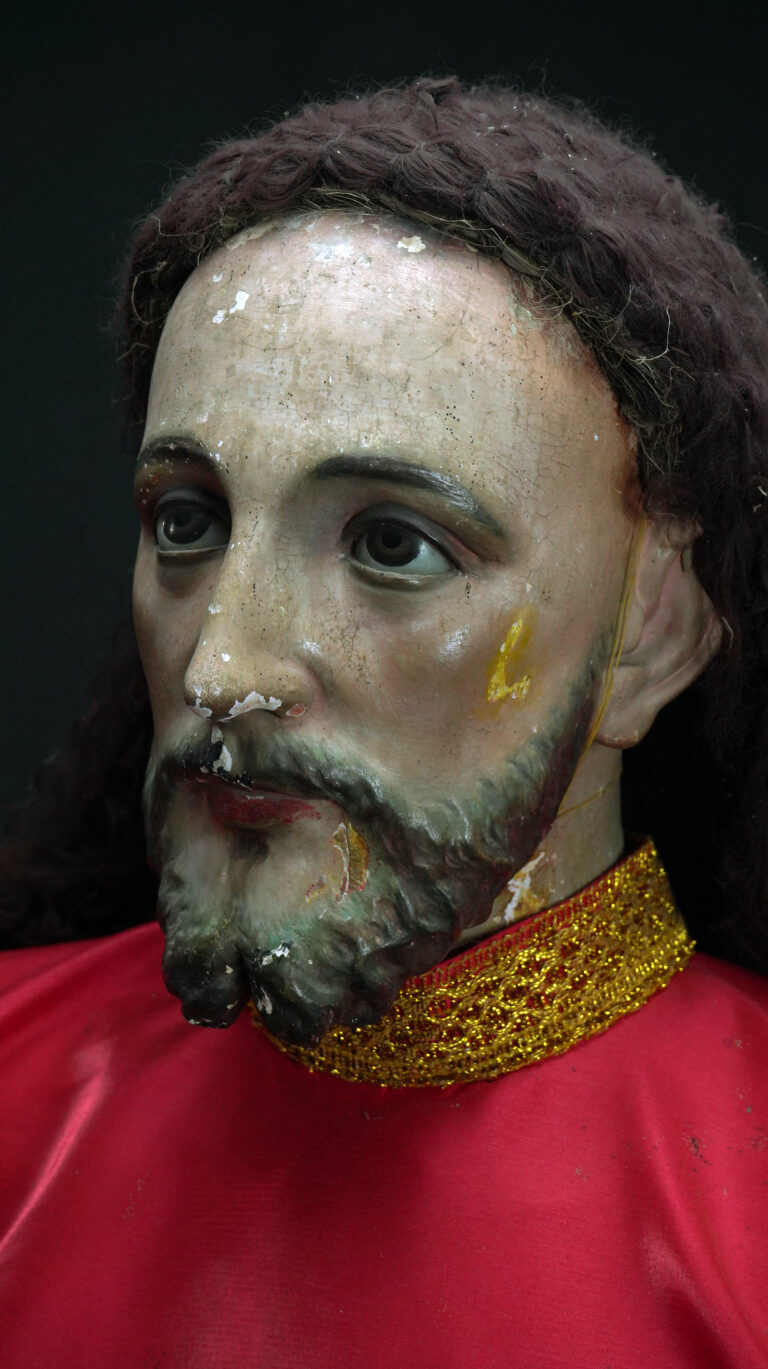
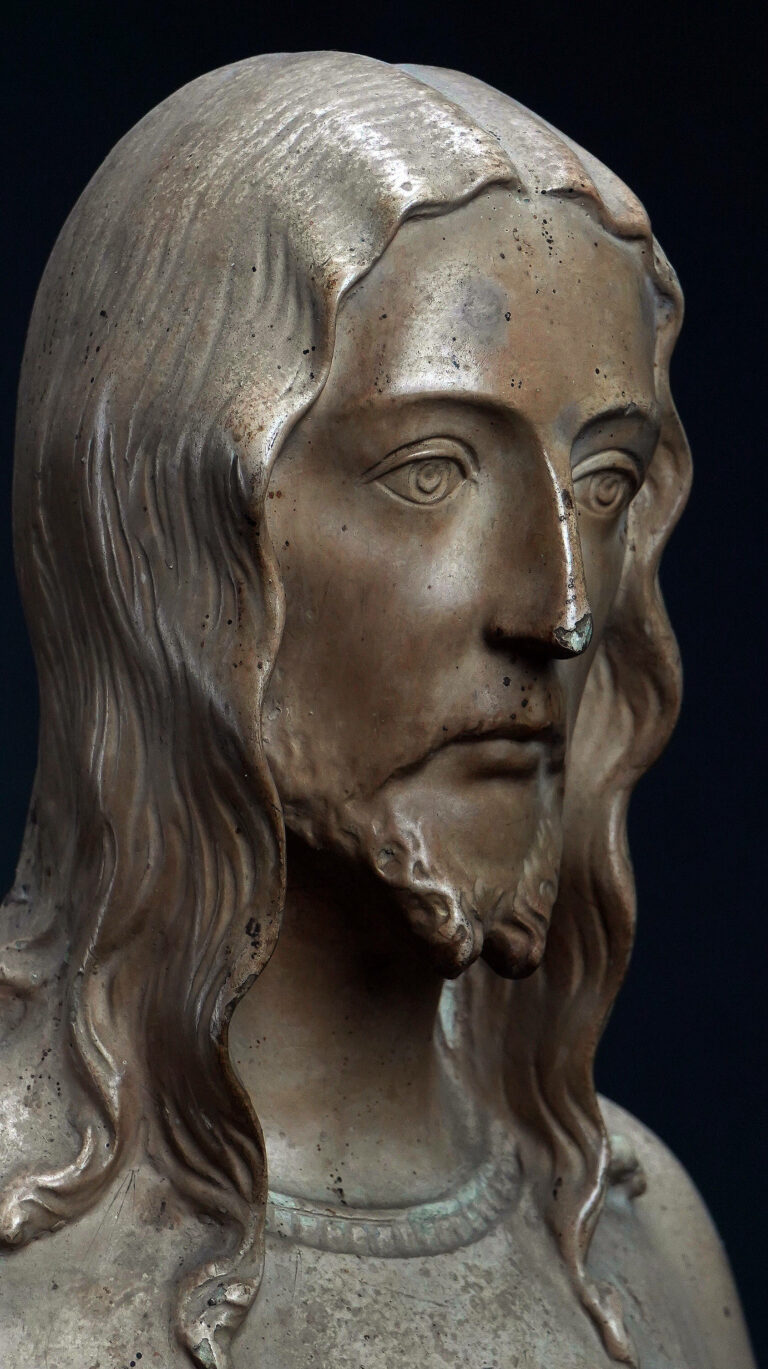
The devotion to the Sto Niño has become synonymous with Cebu. Thus, the first gallery under this theme features many reiterations of the image of the Holy Child Jesus. Noteworthy are the figures under the St. Theresa’s College collection and the interesting image of the Sto Niño del Teniente of San Nicolas Parish. Not to be forgotten is the one from Danao Parish which is an image of the Sto Niño that is holding a saw. This last figure is not easily accessible to the public, however, and so featuring the image here underscores the purpose of this virtual exhibition. John Mecca, devotee from Danao, describes this Sto Nino: “Mao nay gikasuyaan sa tanan nga dili na ipagawas kay pakopyahan man unta na. Siya na lang gyoy ingon ana og nawng sa tibuok. Mura siyag bata nga tinuod. Mao tong di na gyod na ipagawas, gitago na gyod na sa vault, naa man mi vault sa simbahan nga metal gyod nga purtahan gyod nga dagko.” (Many are envious of this image. We do not show it to the public because it’s going to be copied. This is the only statue that looks like that. He looks like a real child. That’s why it won’t be released anymore; it’s kept hidden in the vault. Our church has a vault with big metal doors.”
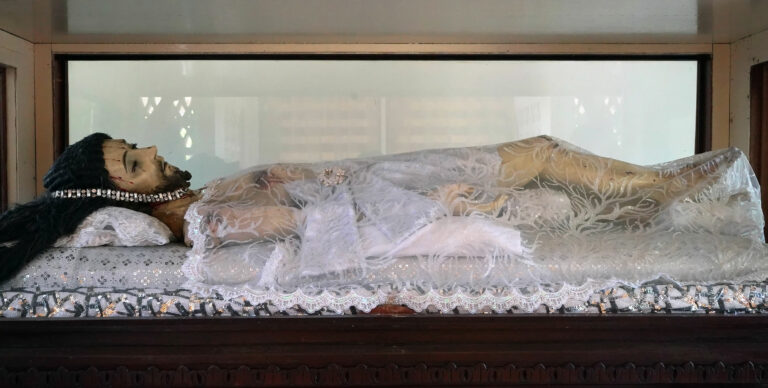
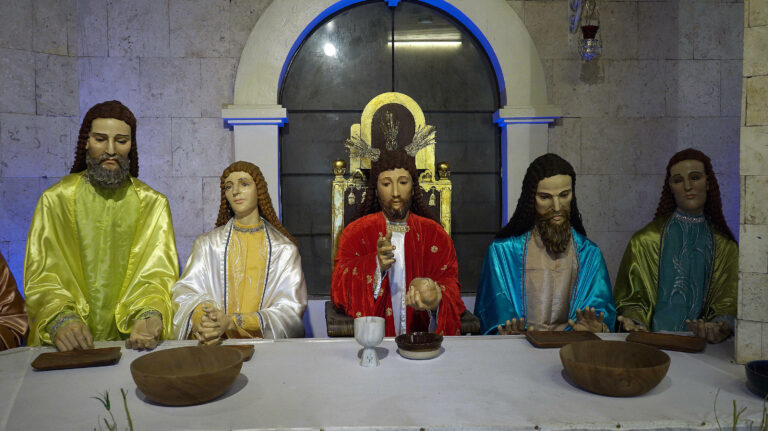
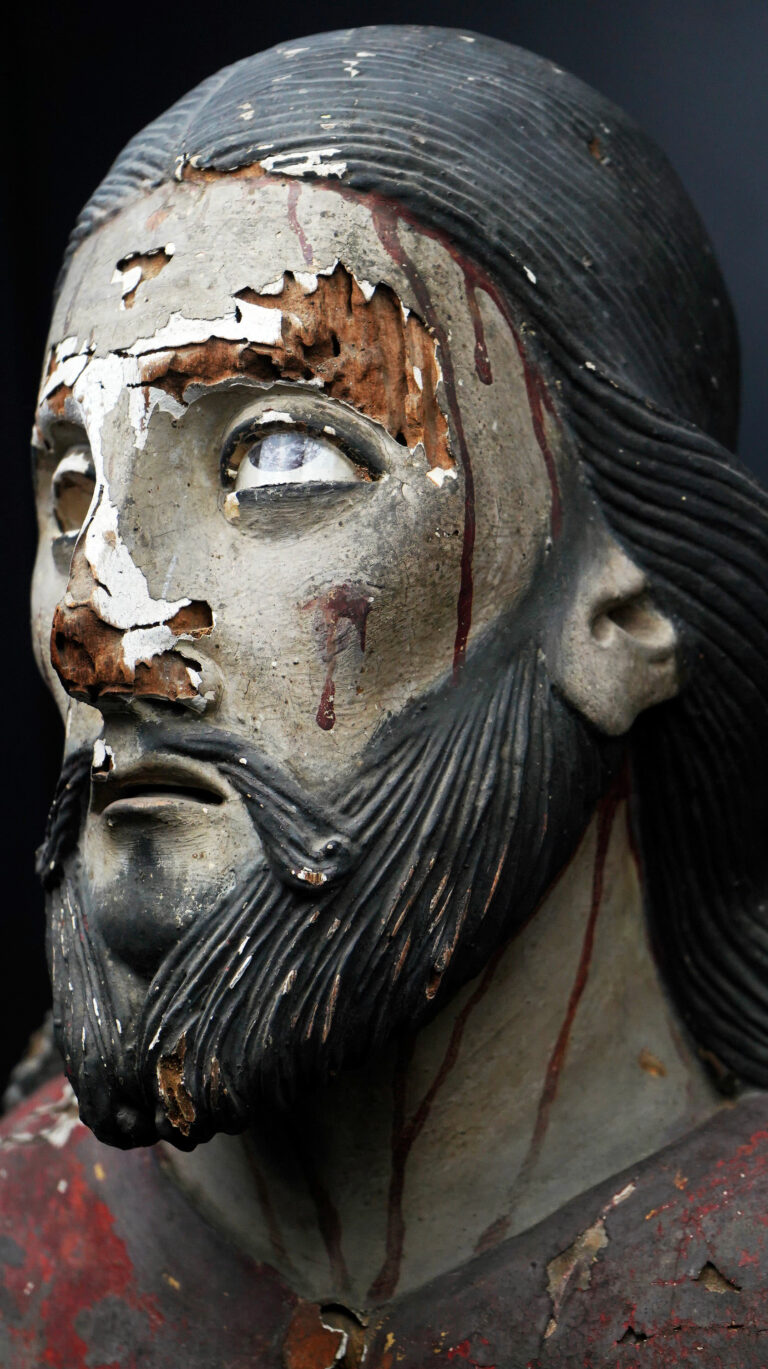
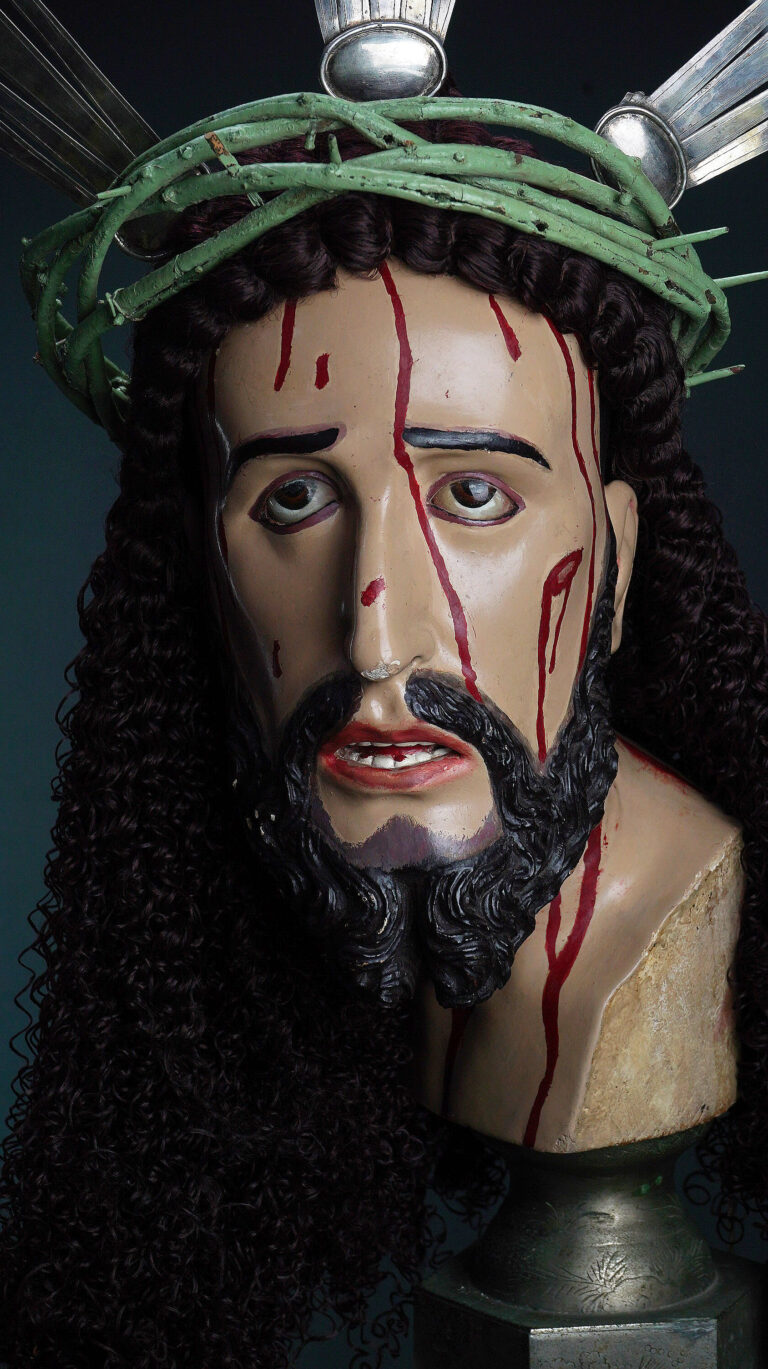
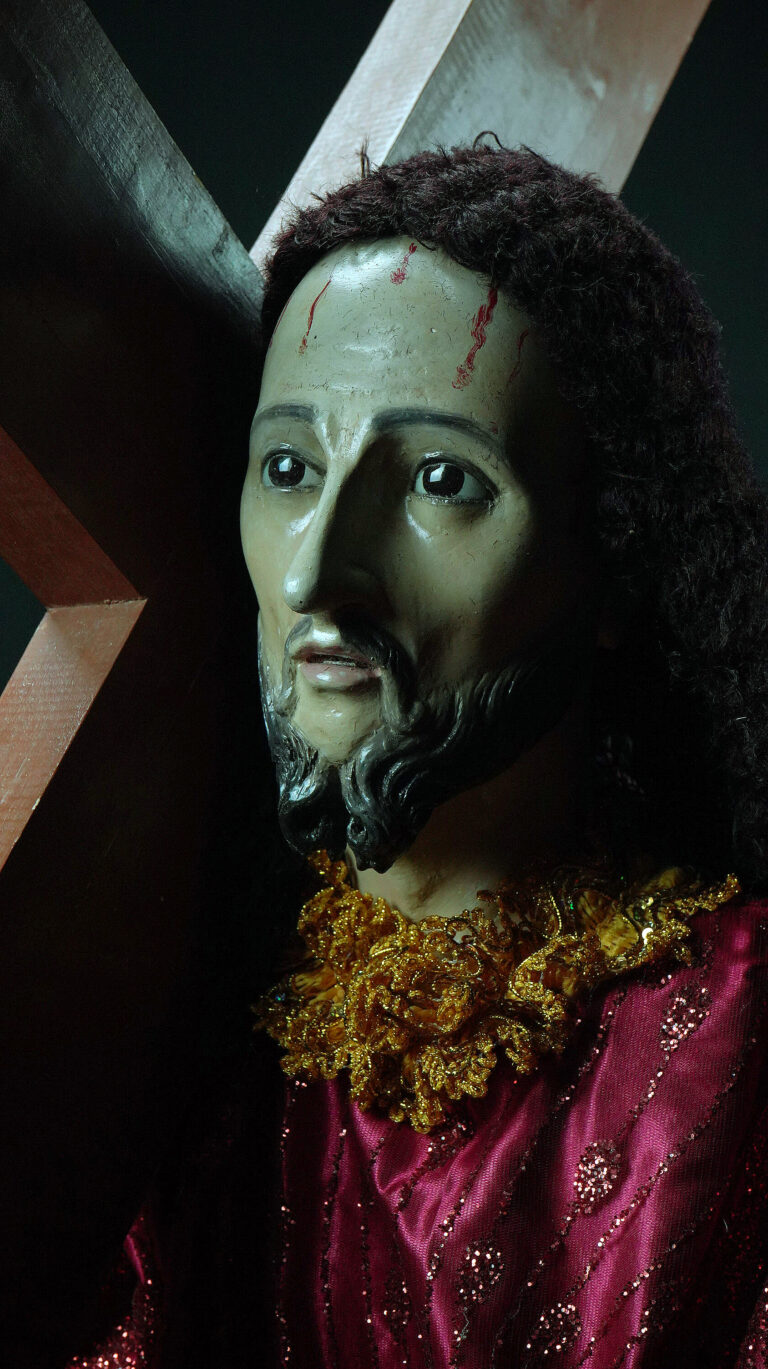
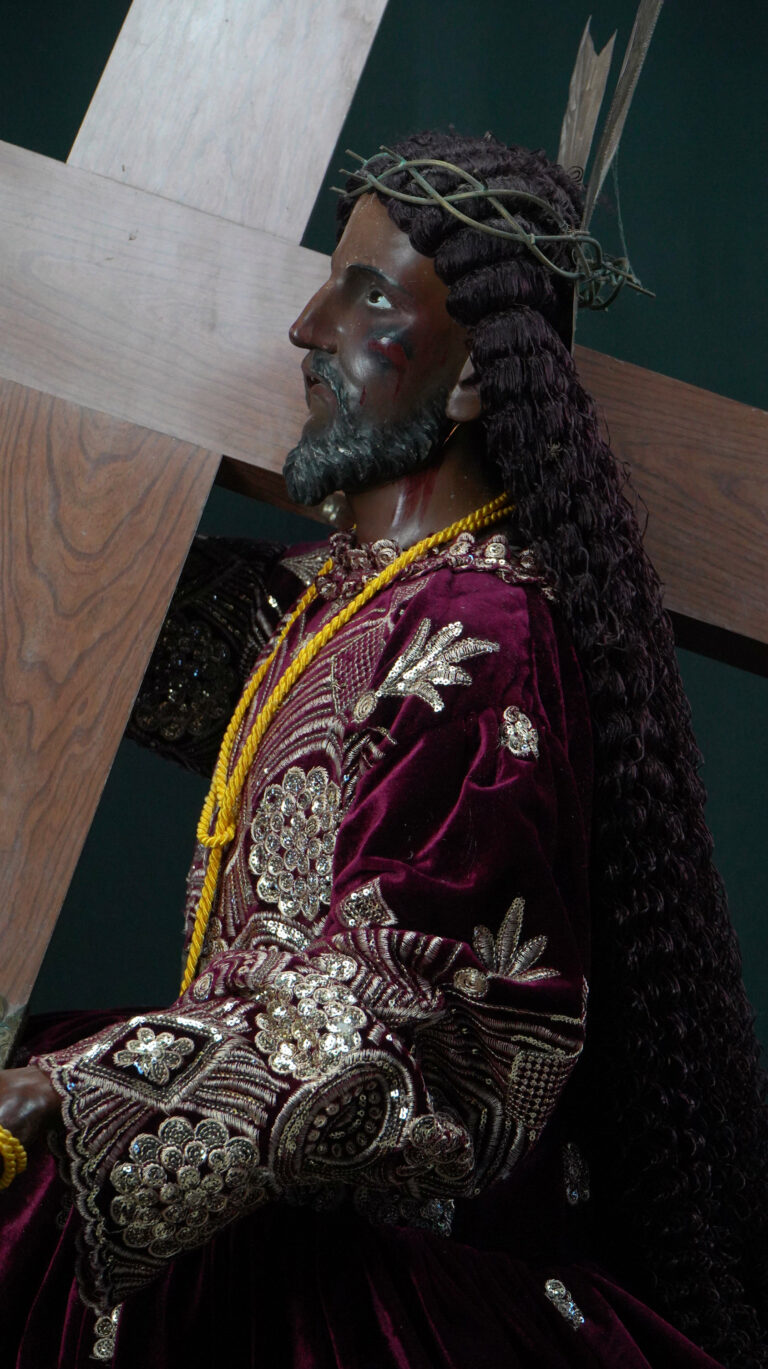
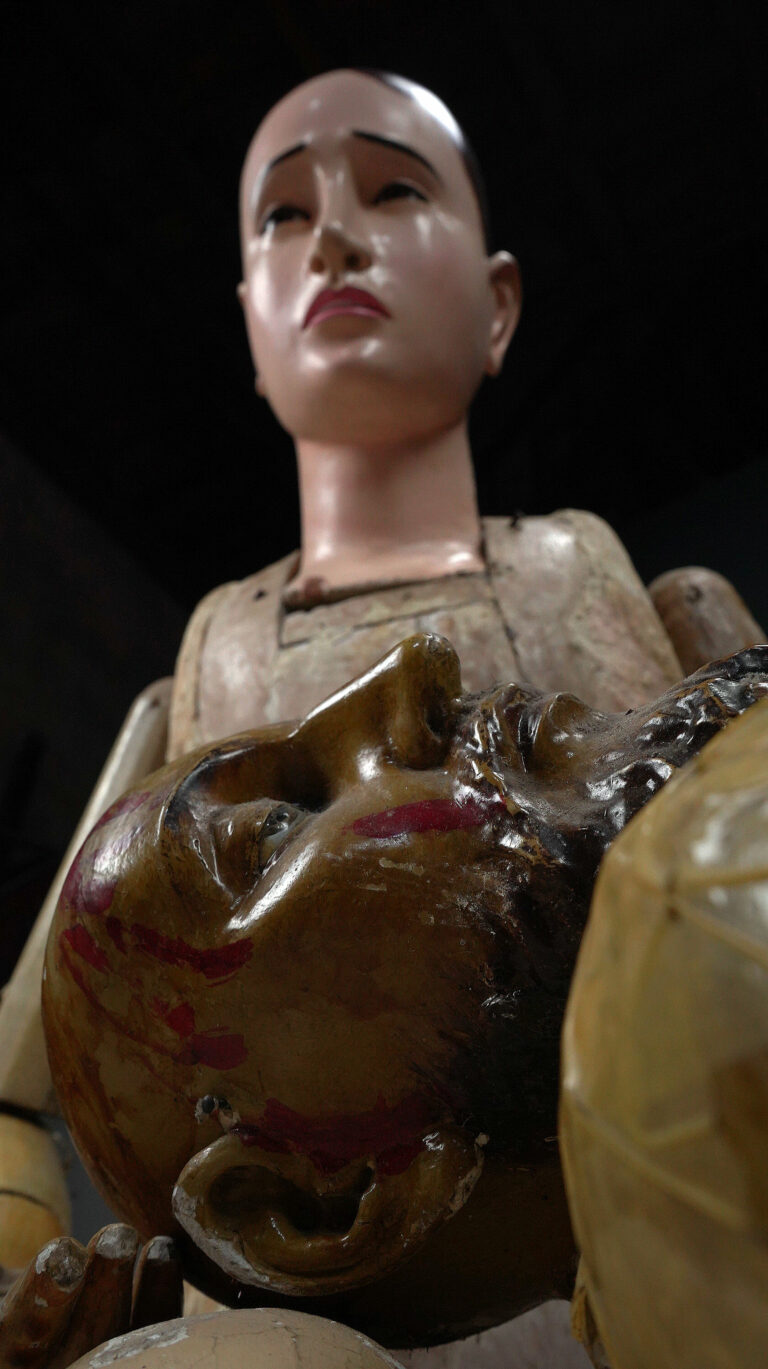
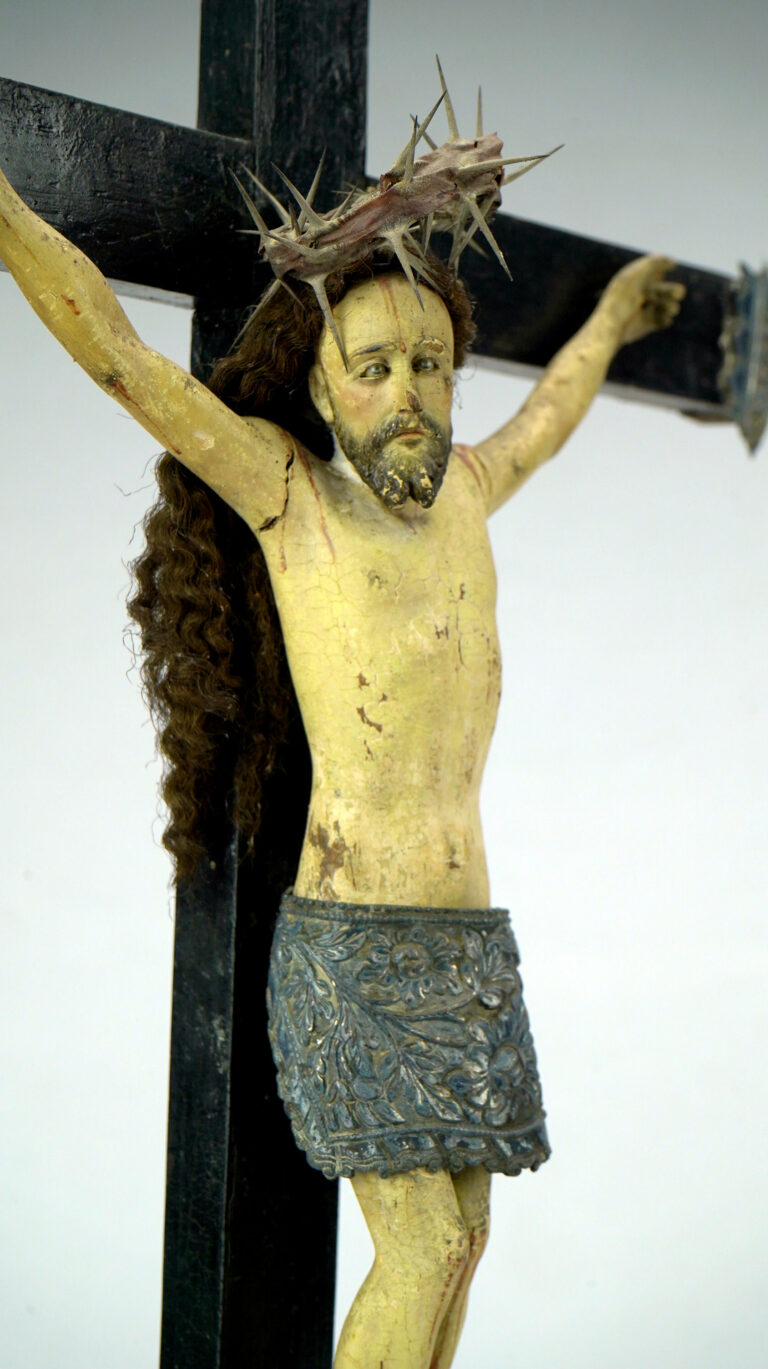
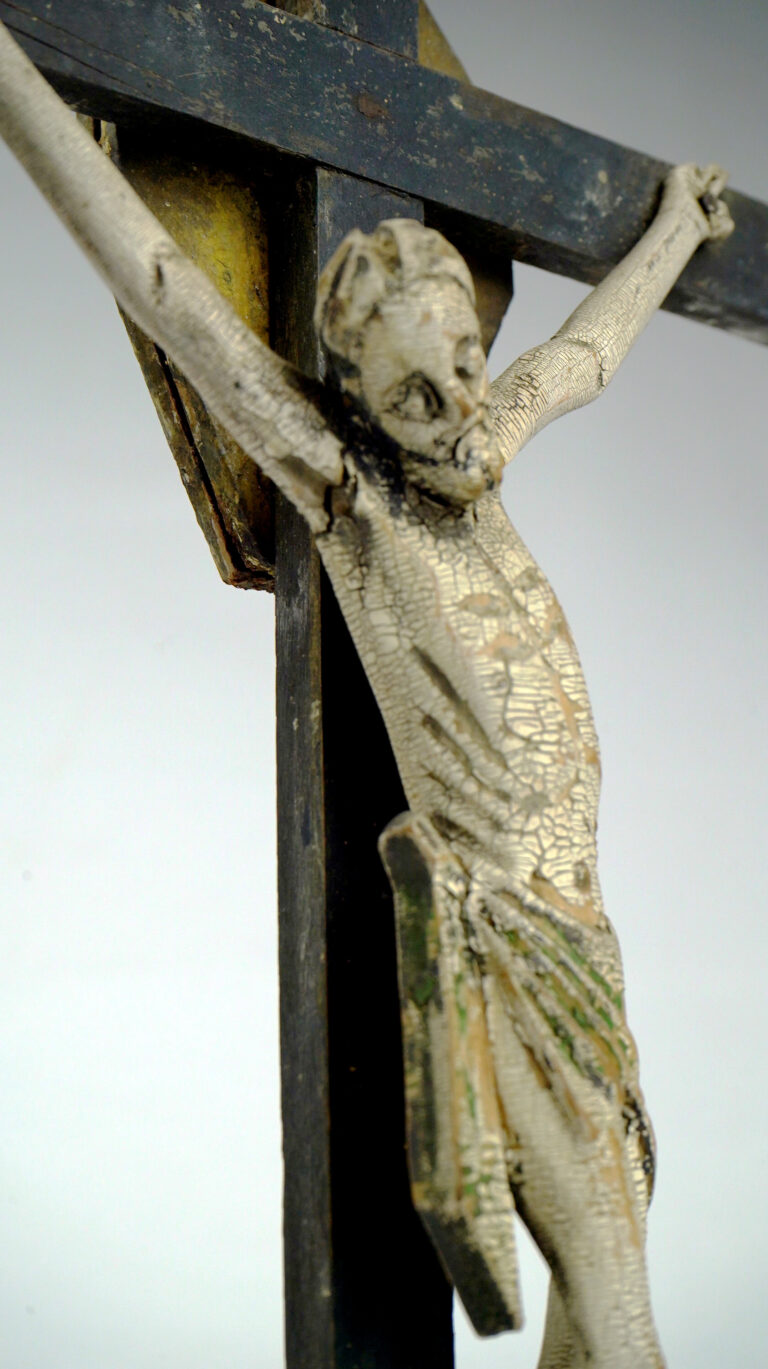
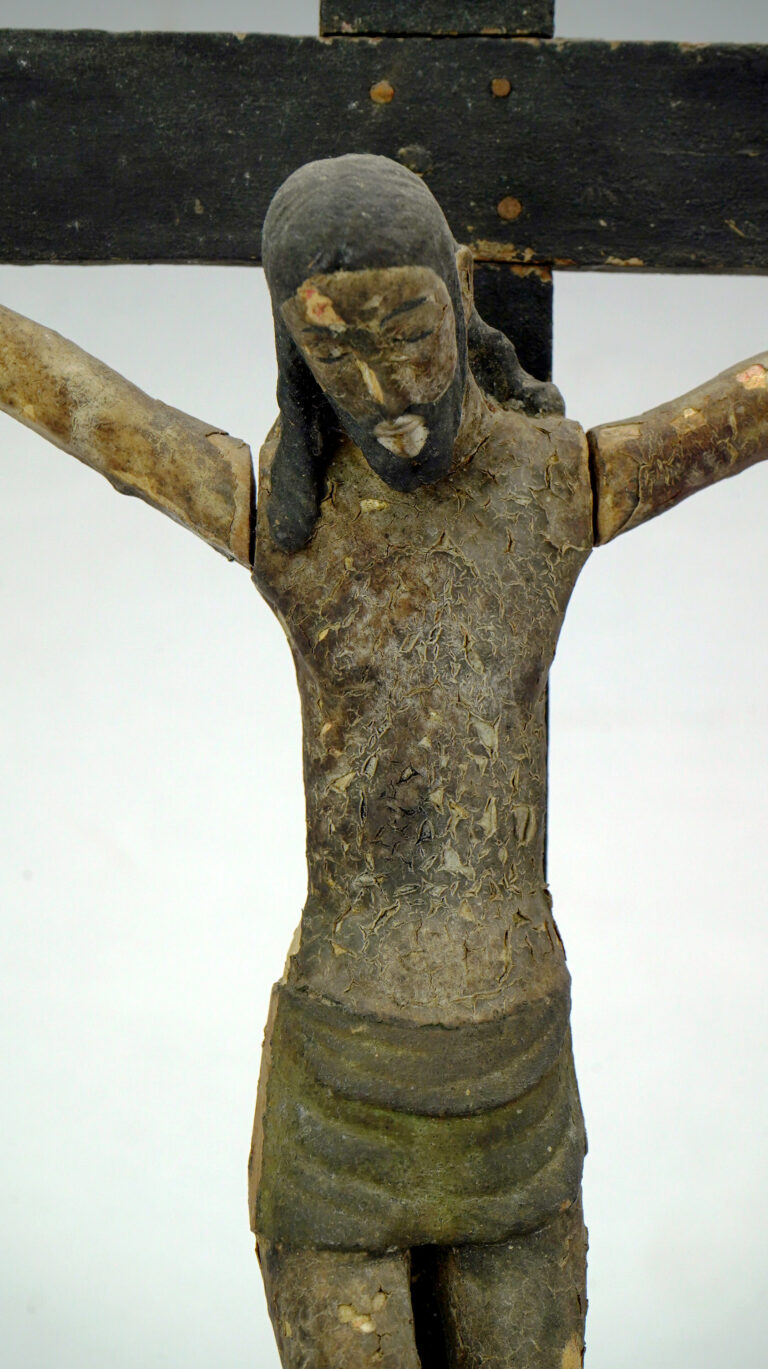
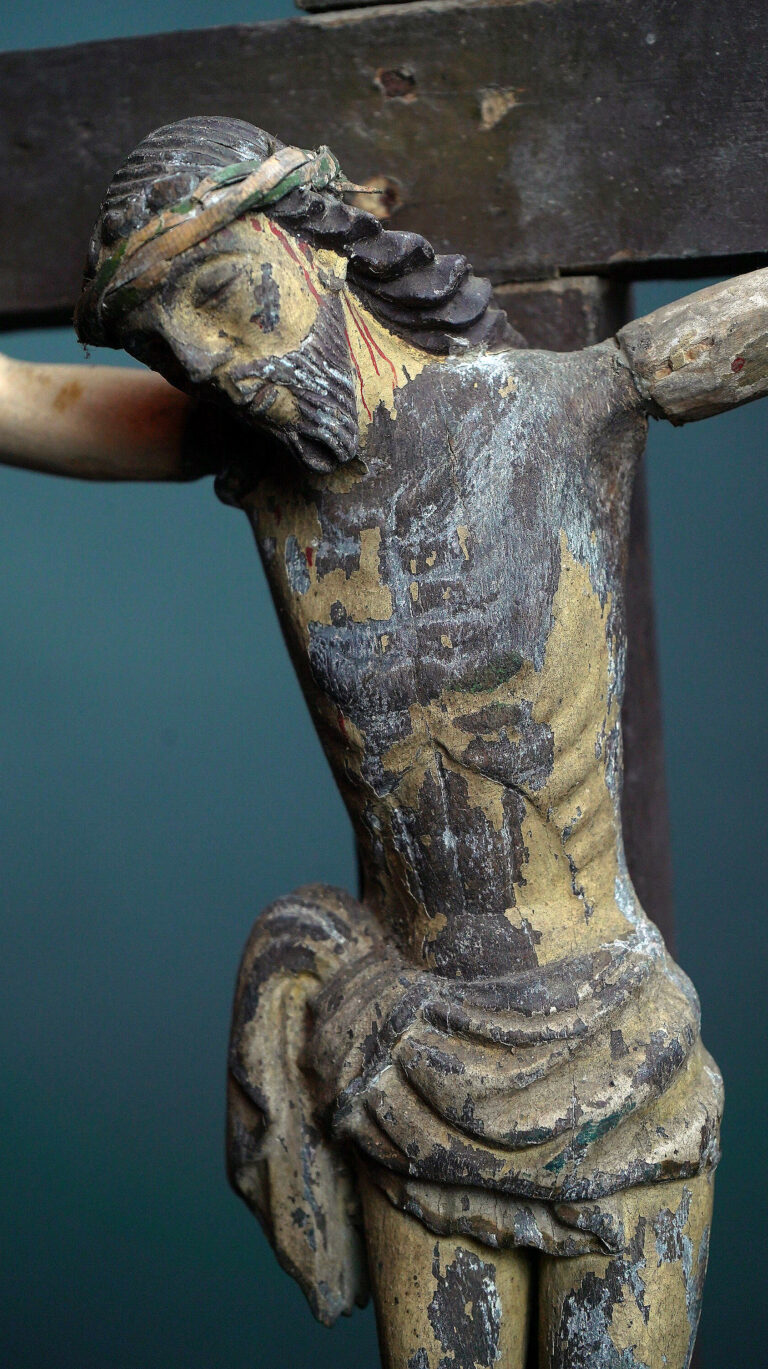
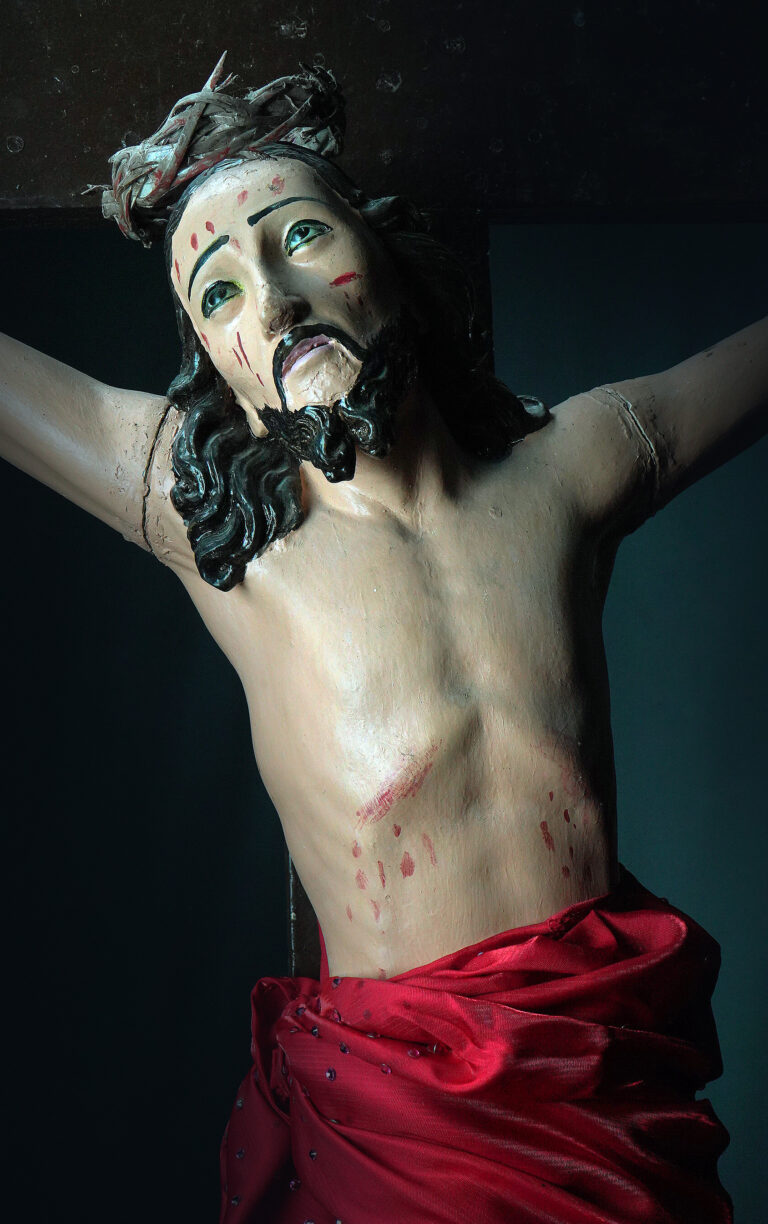
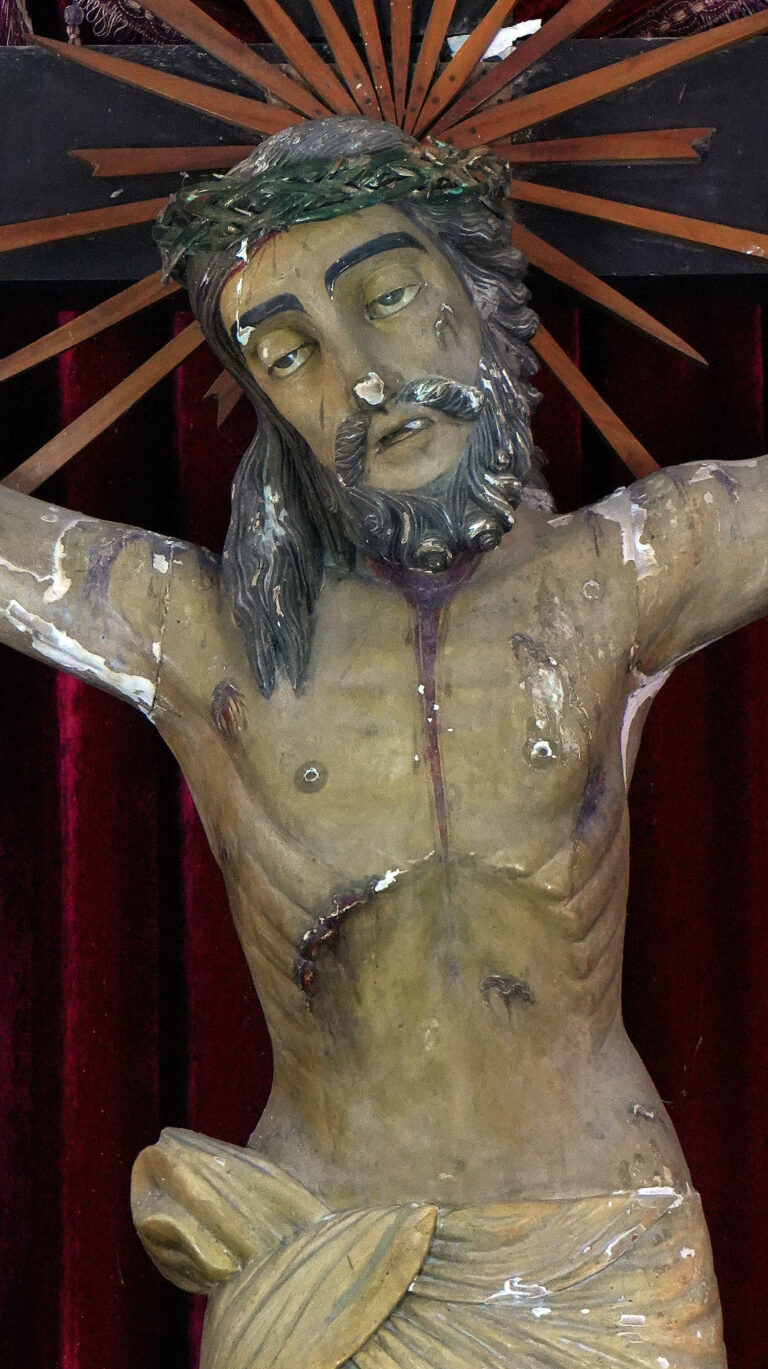
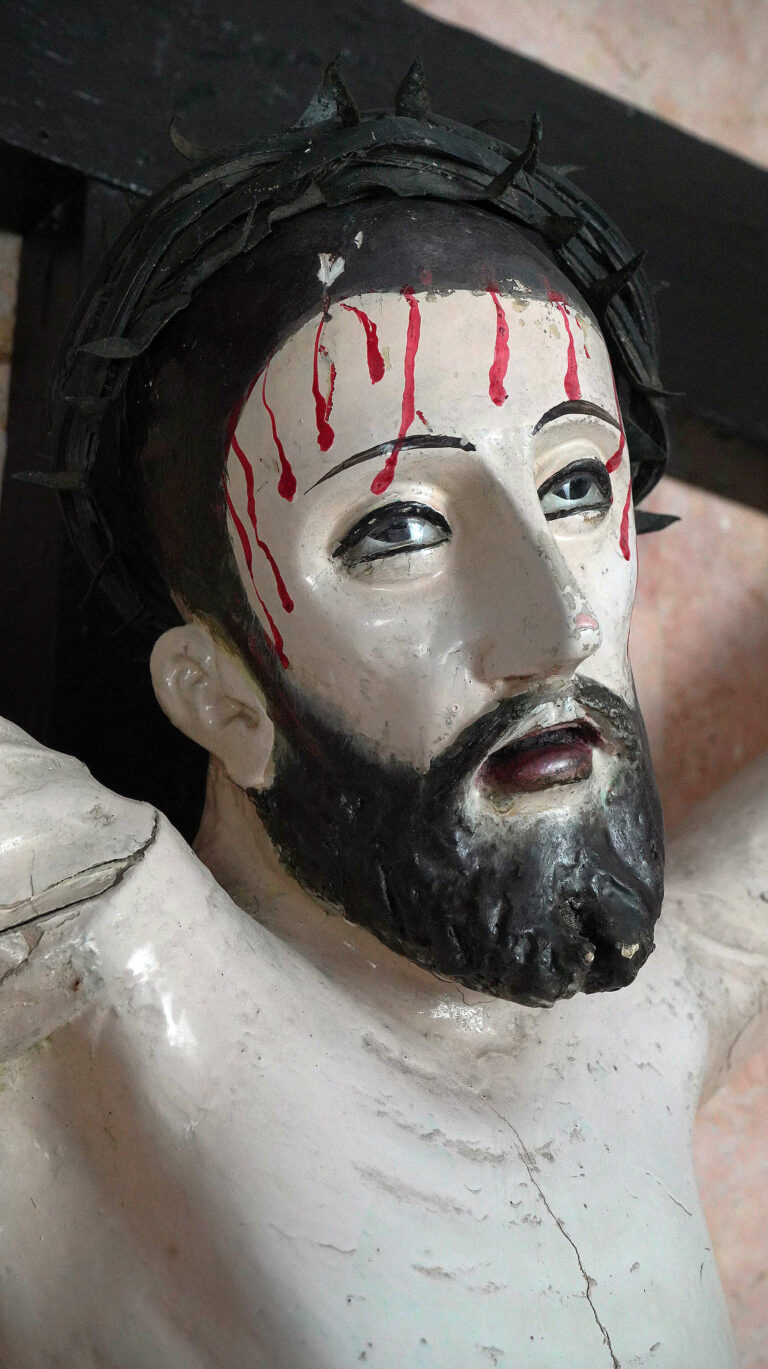
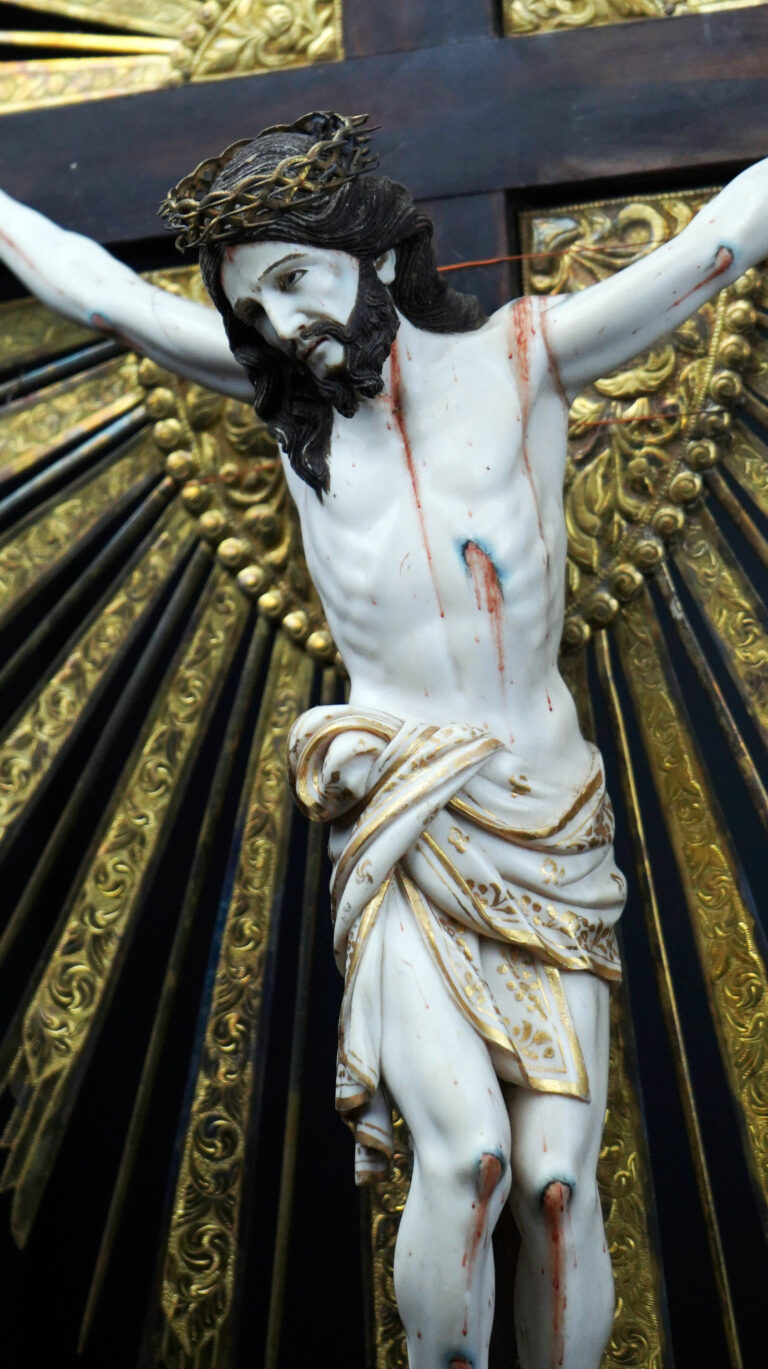
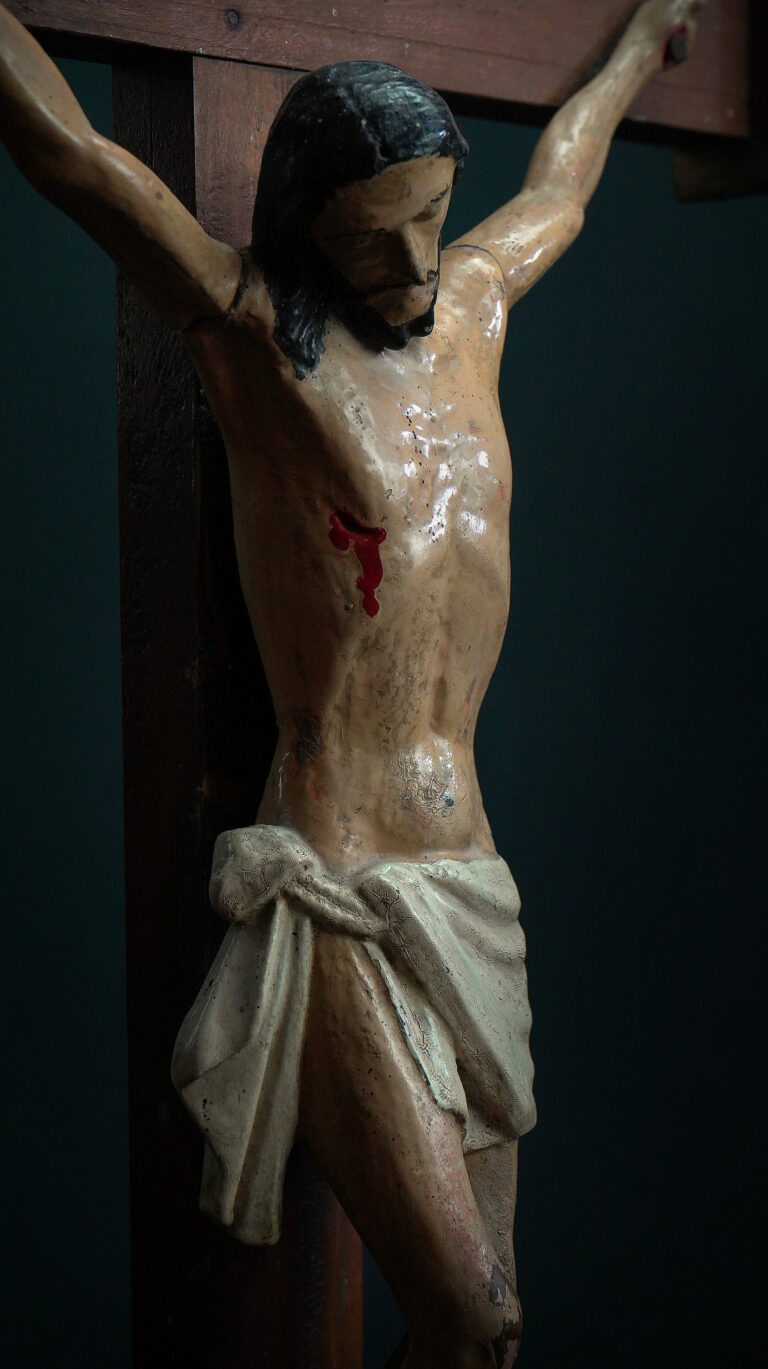
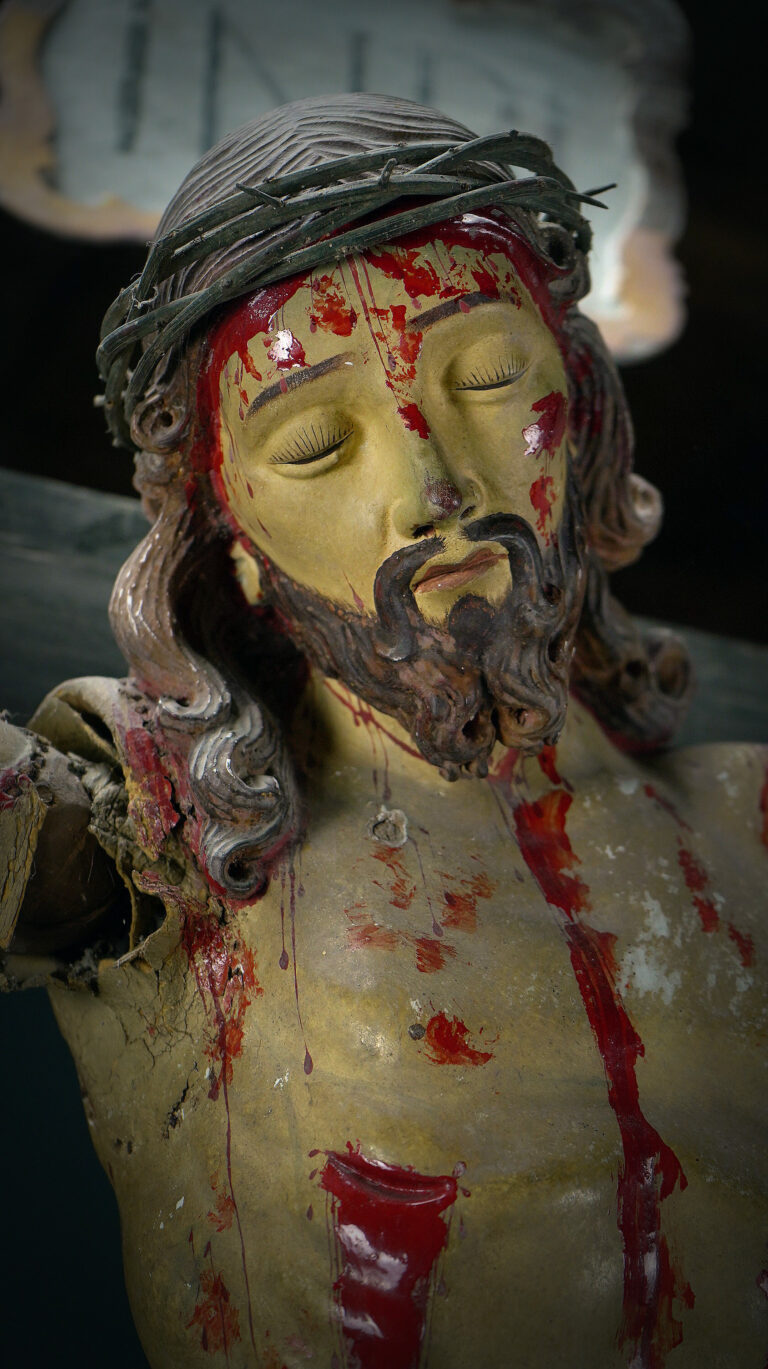
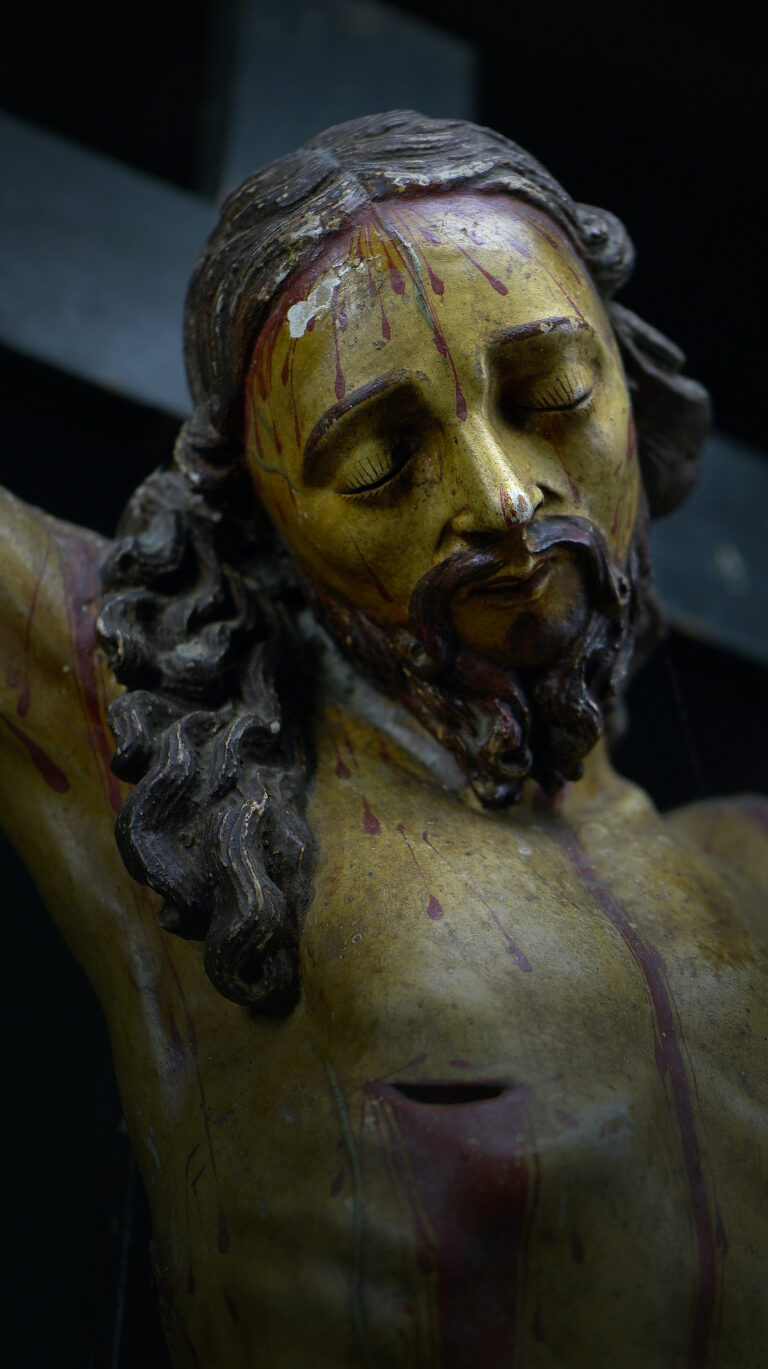
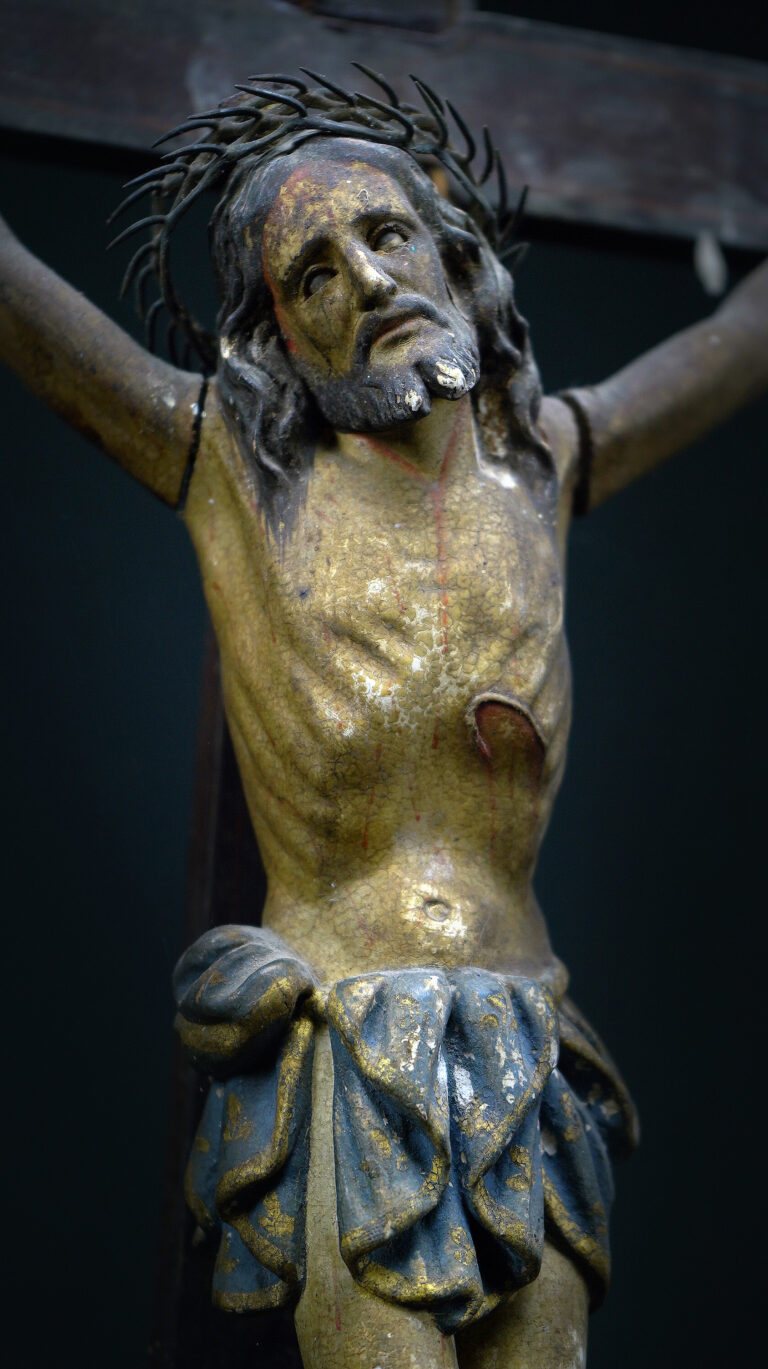
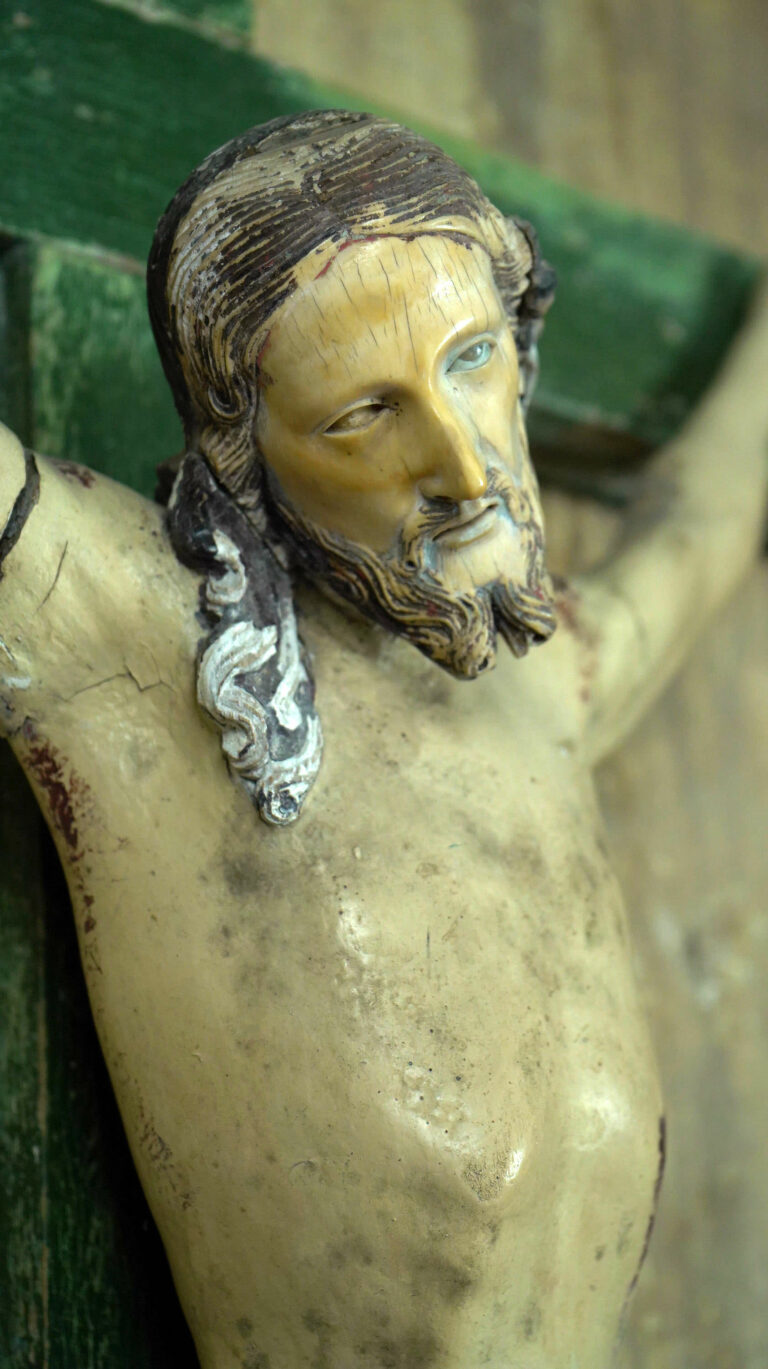
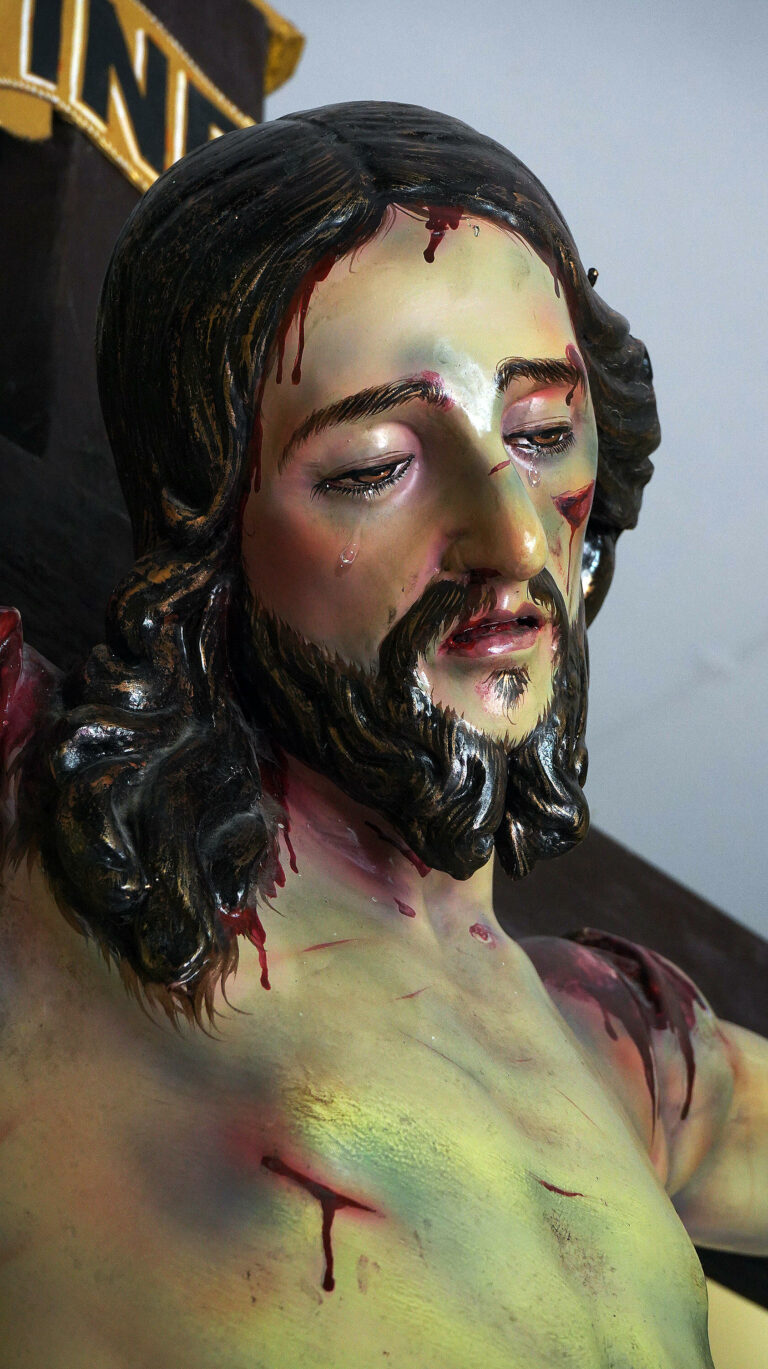
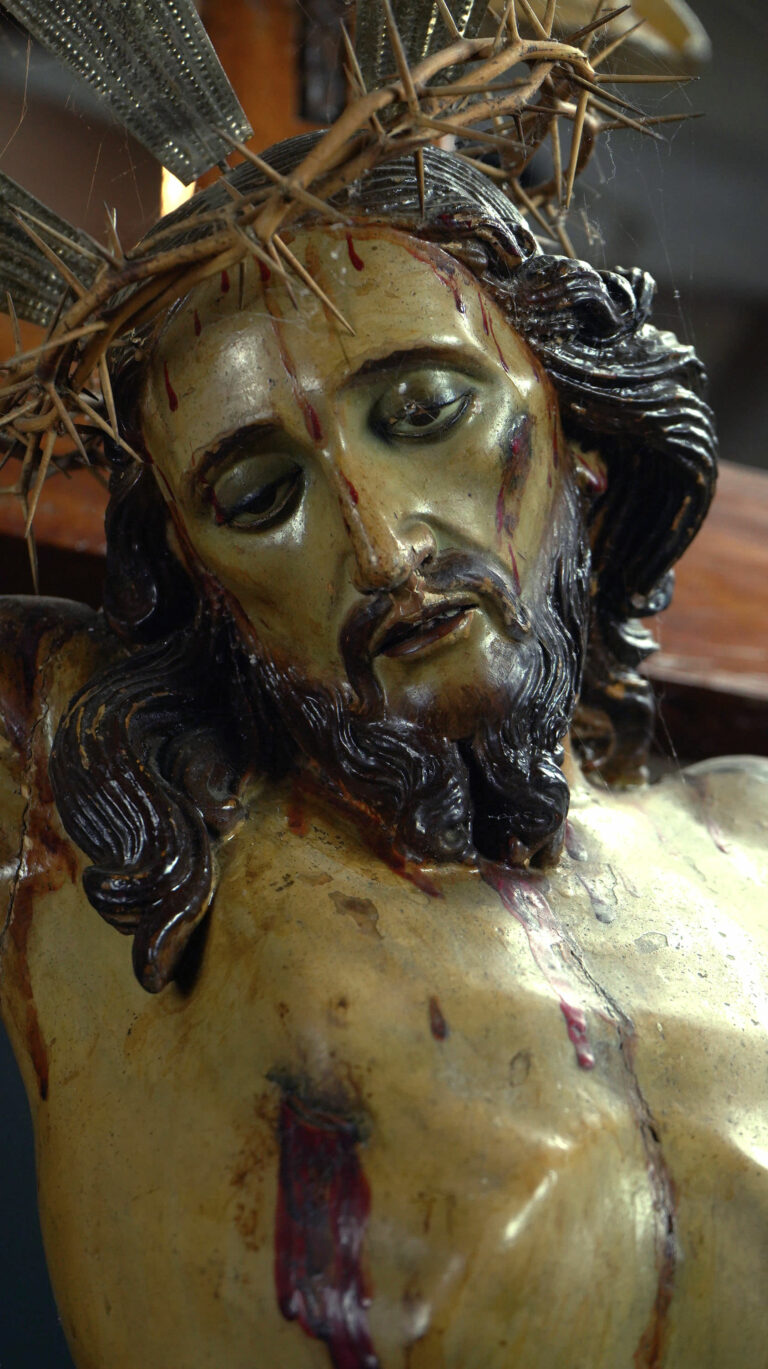
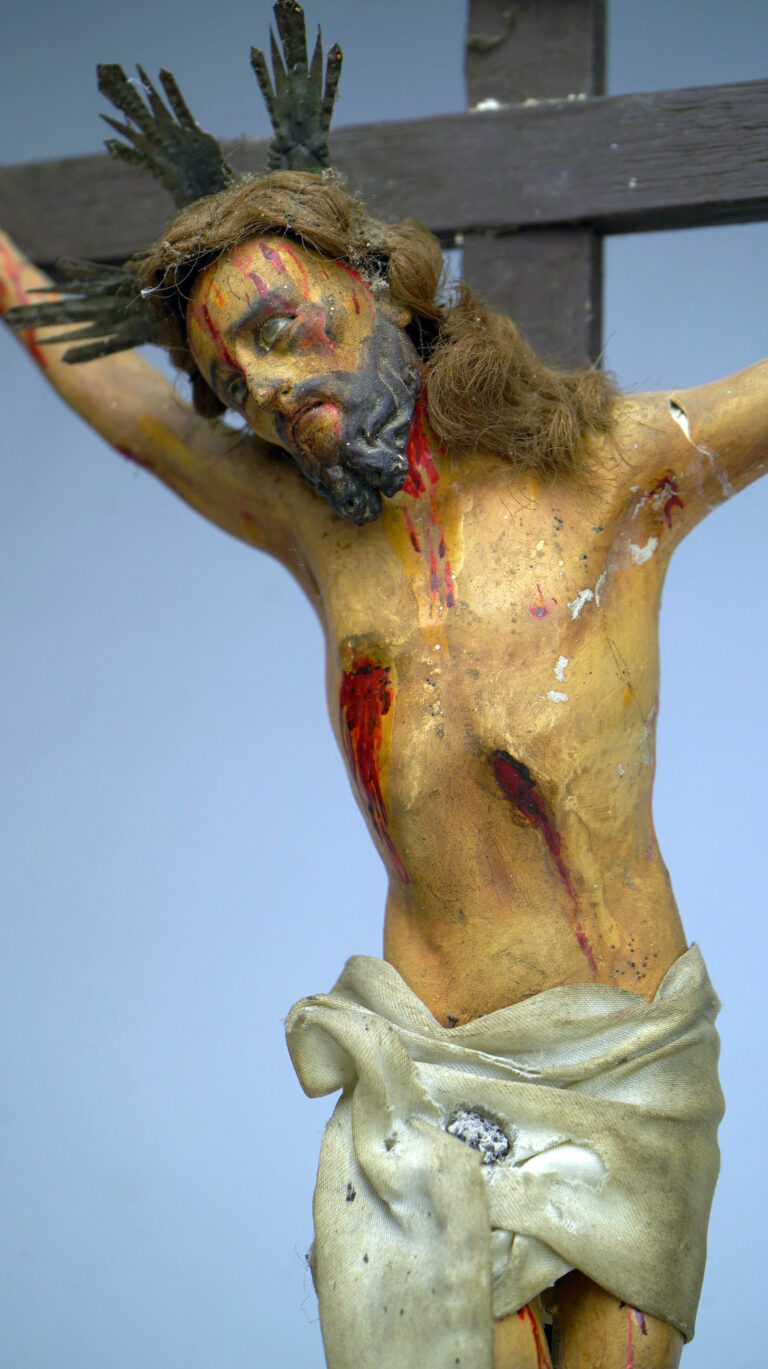
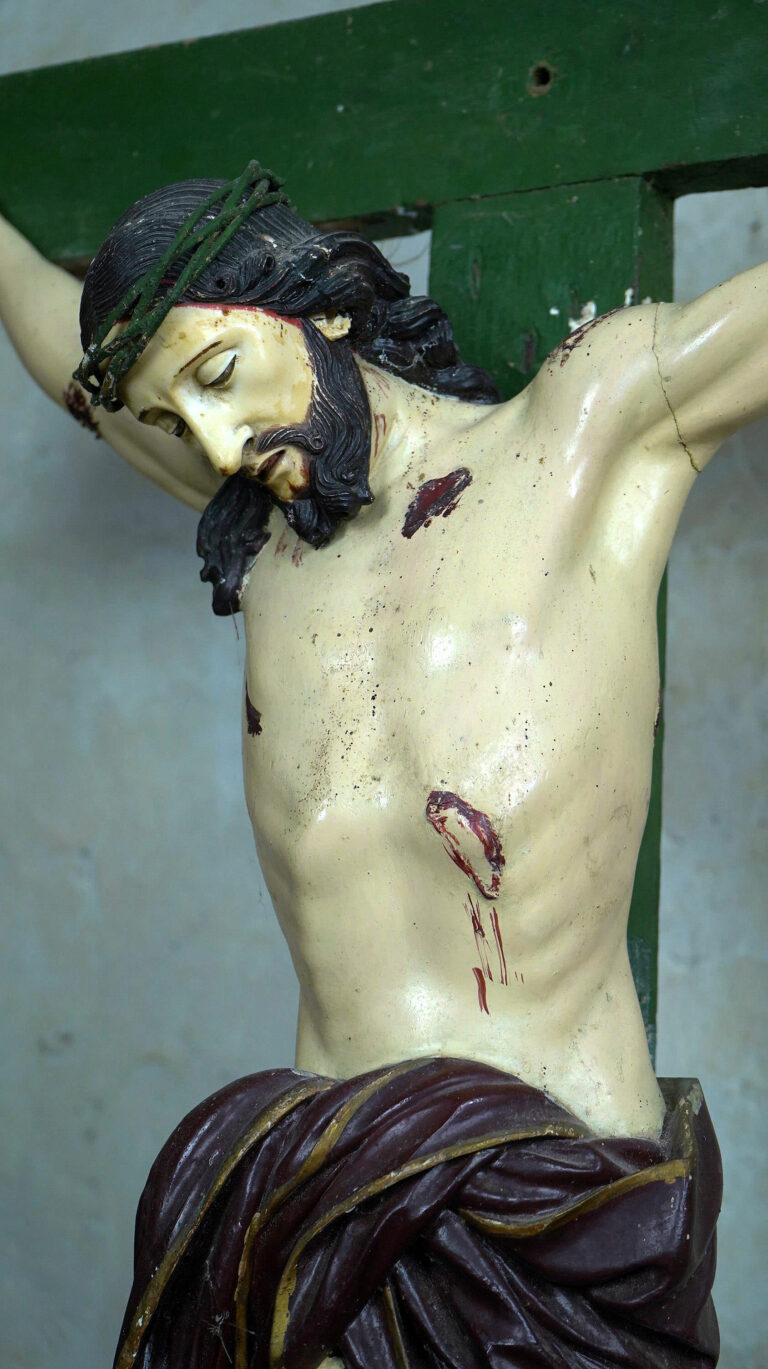
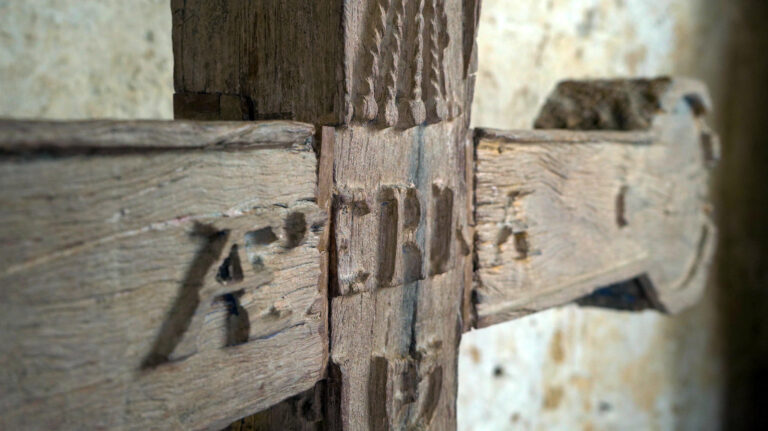
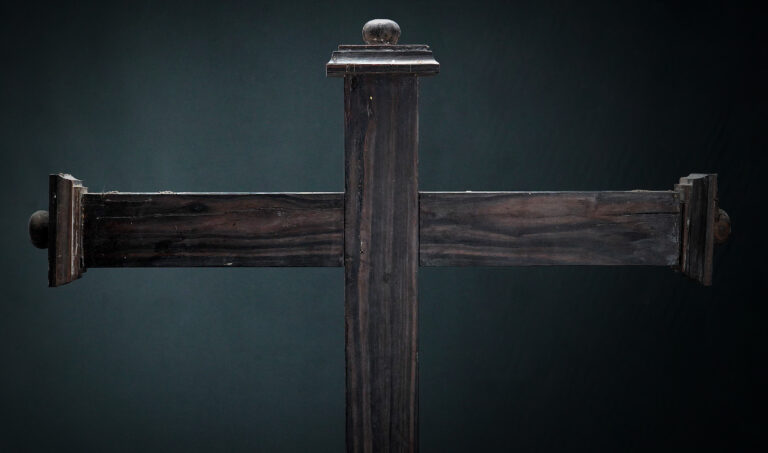
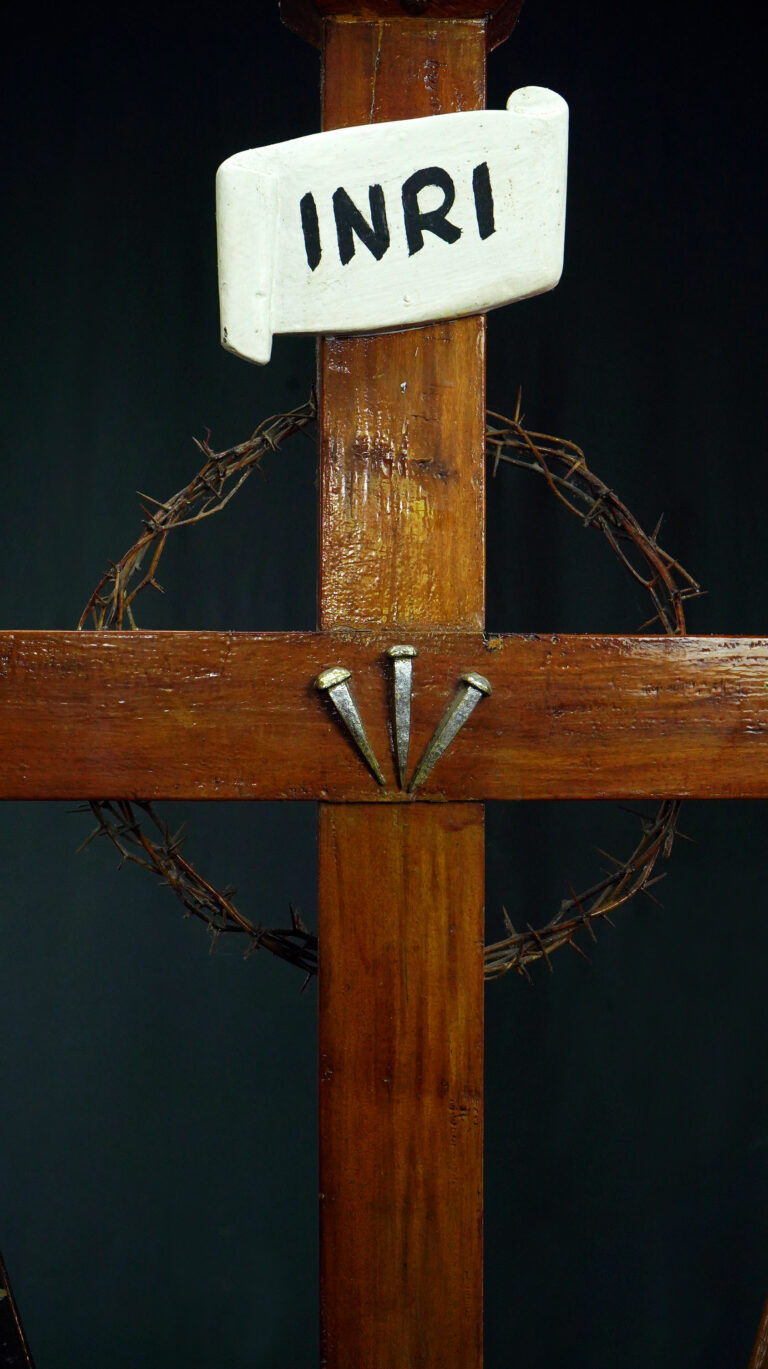
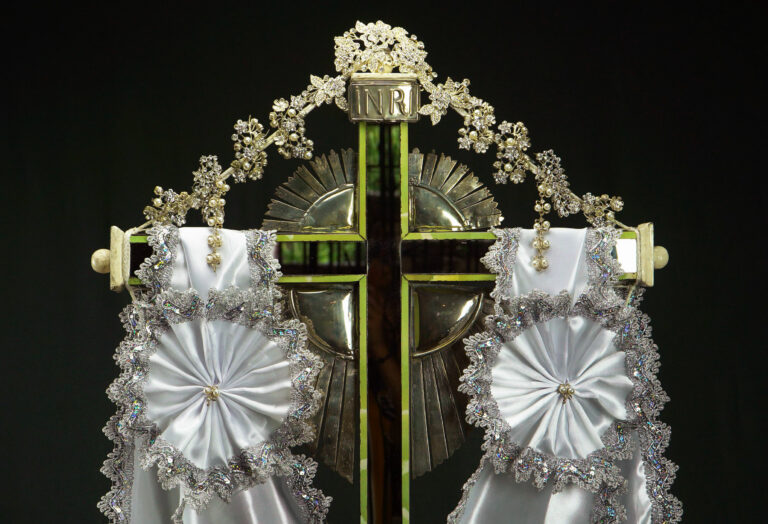
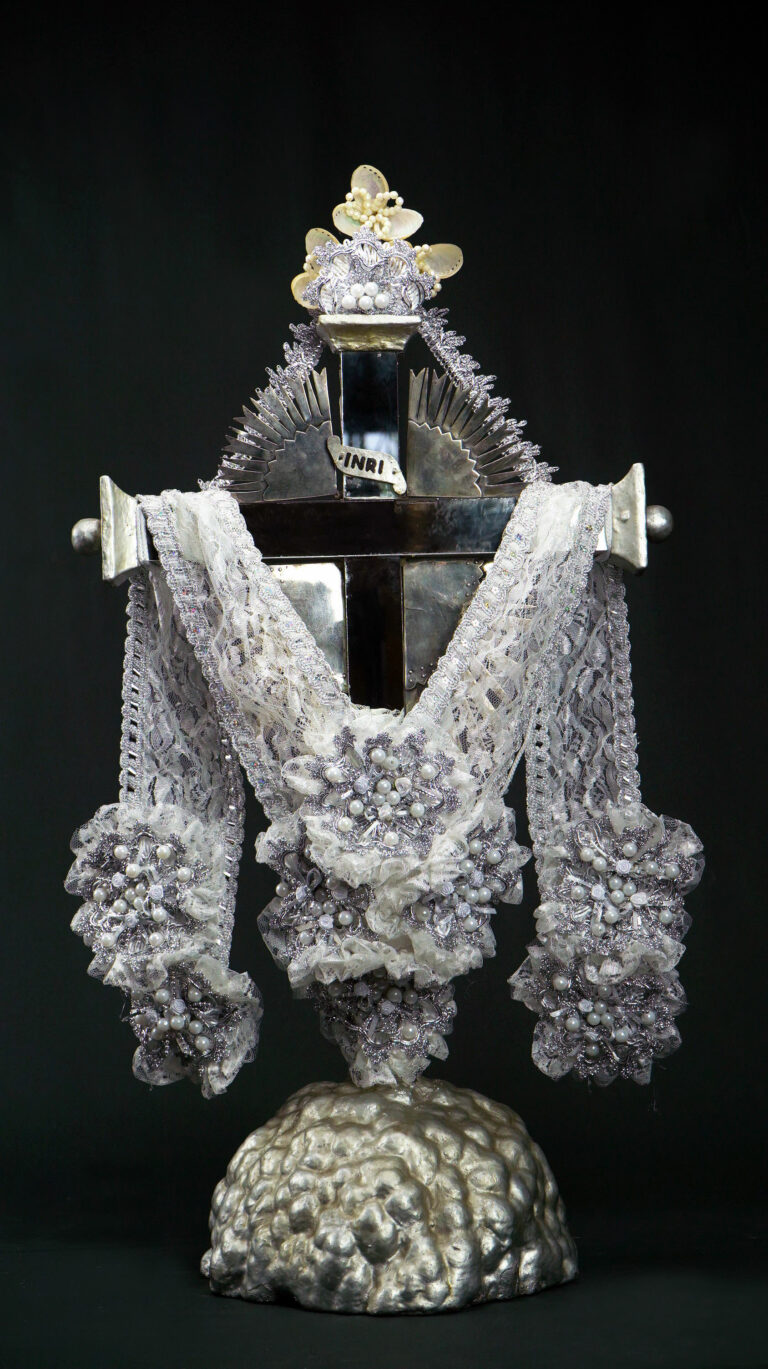
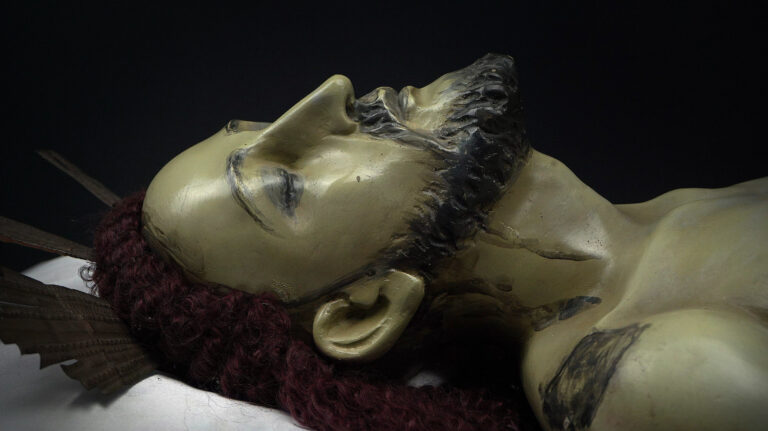
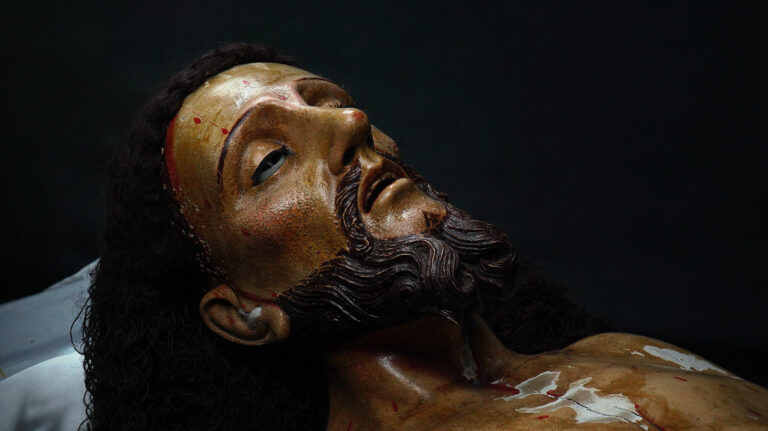
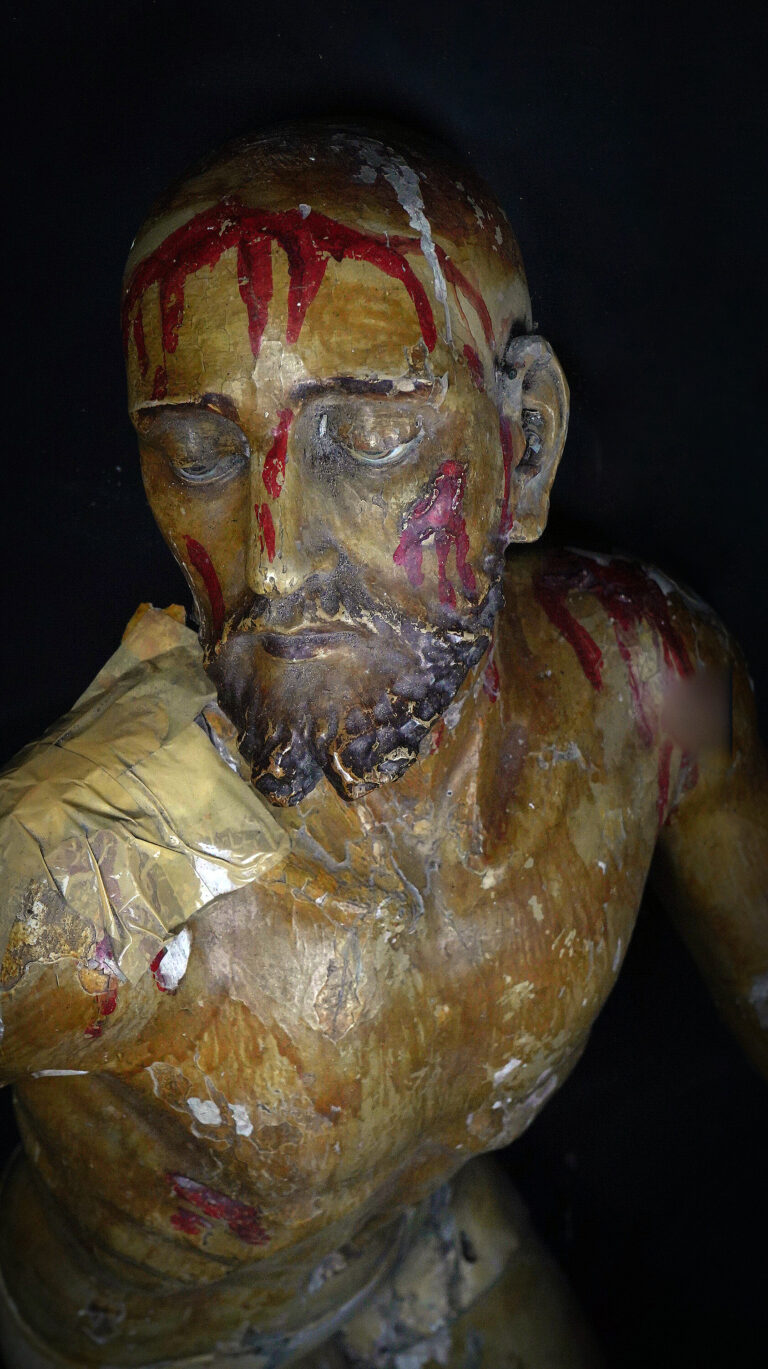
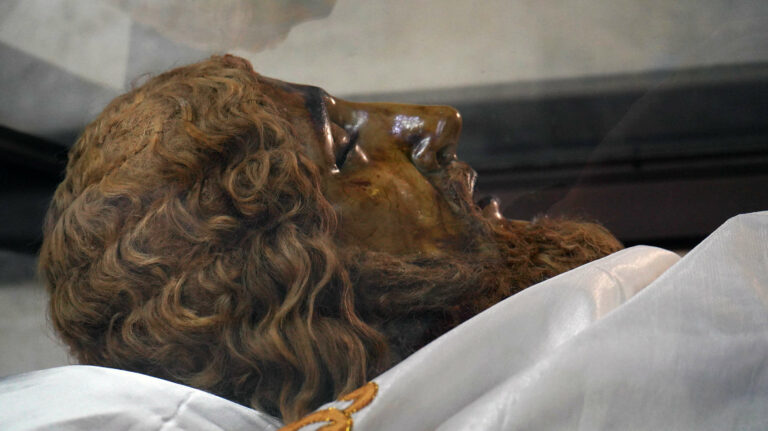
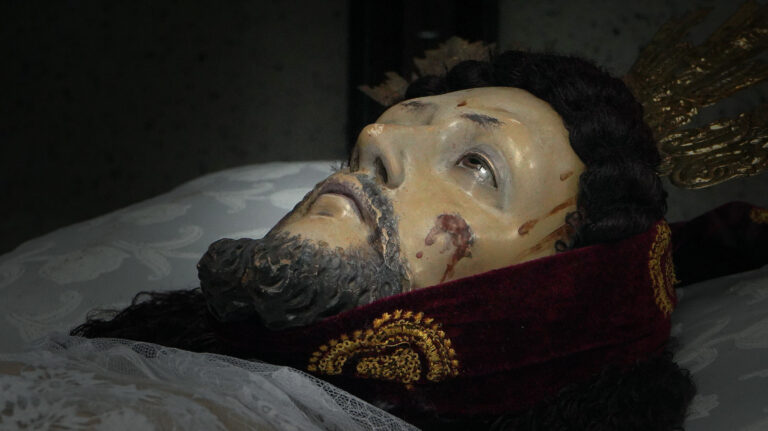
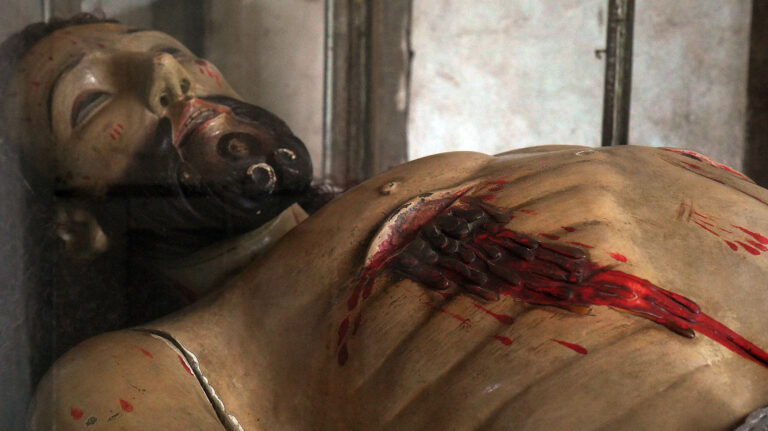
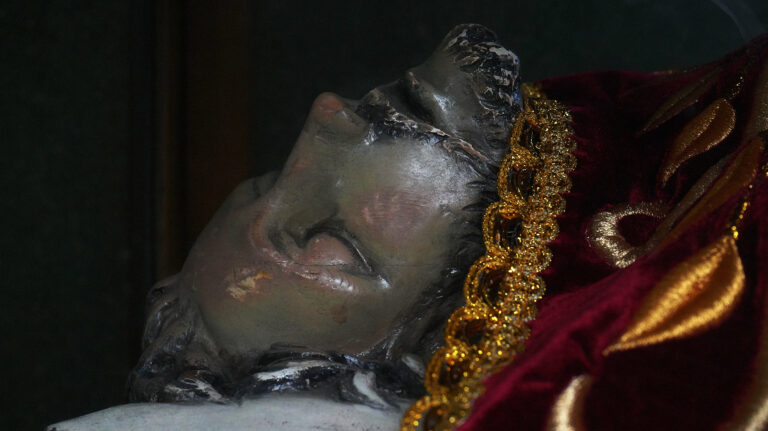
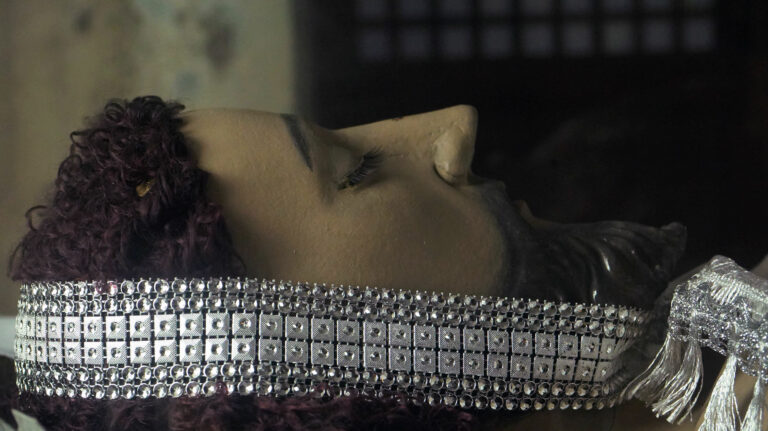
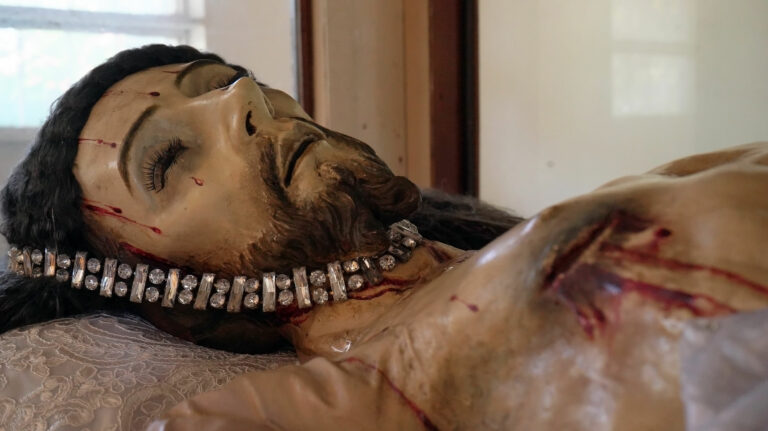
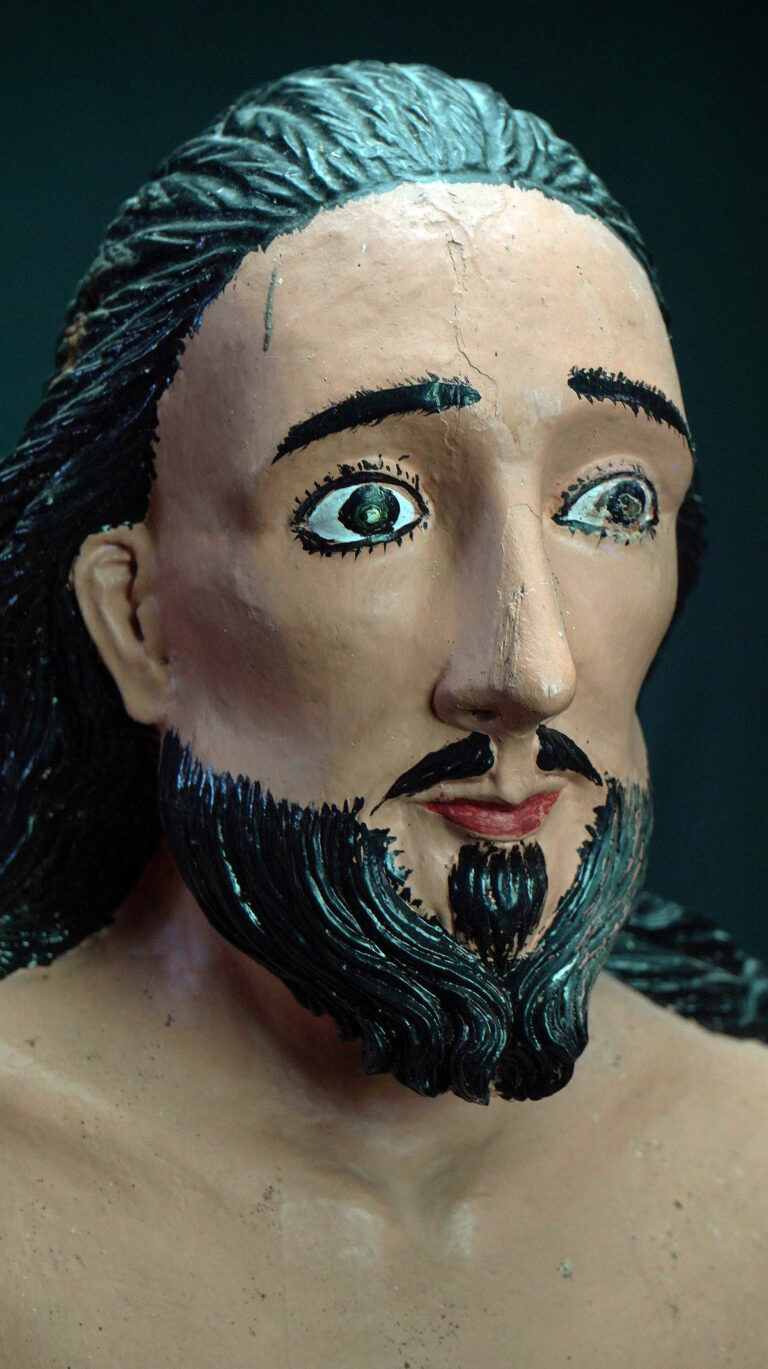
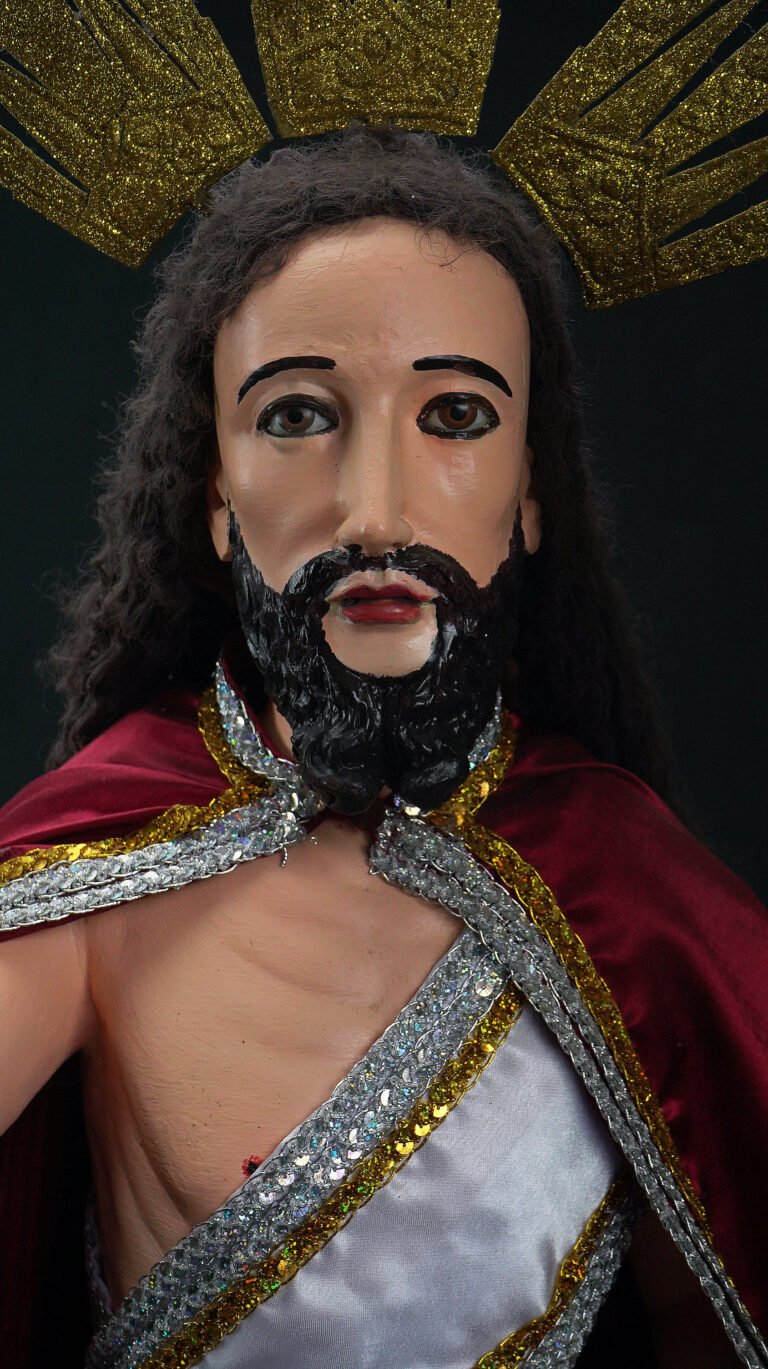
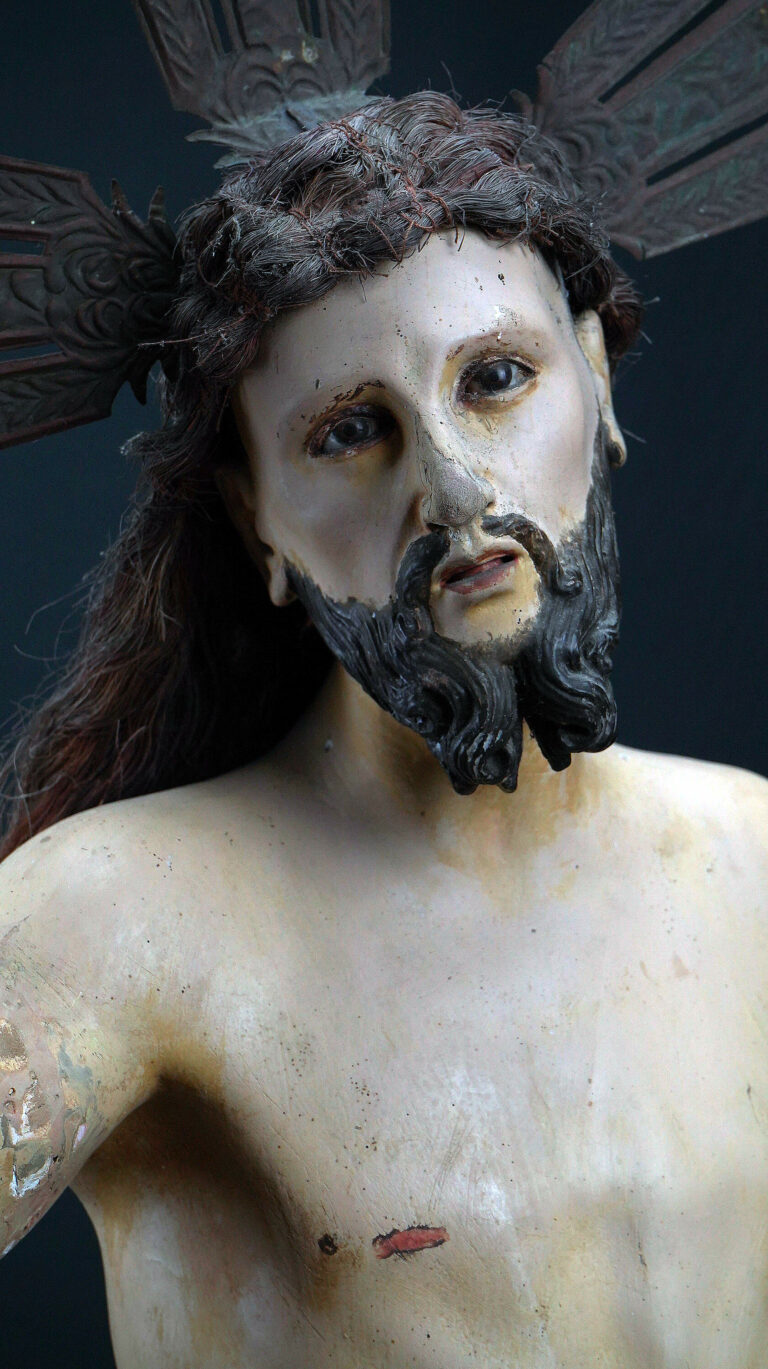
Various other depictions of the life of Jesus Christ are given attention in this gallery, with a numerous of the collection of the crucified Christ. Images used during Holy Week are housed in here; these images include several Santo Entierro and the Jesus de Pasensya.
Mildred Kitayan Mamites, Assistant Secretary of the Parish Pastoral Council and Representative of the Municipal Arts, Culture and Heritage of Argao, describes an aspect of her hometown’s Holy Week rites: “Kana siya nga crucifixion, sa una ipagawas na siya, ibutang og karo unya ikuyog sa Good Friday nga procession hasta ang Dolorosa. Kuan kaayo ang procession namo sa Pasos nga Wednesday ug Good Friday kay ang mga tawo nga nagtrabaho sa siyudad nga taga-Argao mo-uli gyod na sila kay mo-attend sa procession, sukad pa gyod sa una before sa pandemic, pero pag pandemic wa na man.” (Before, that image of the crucifixion would be taken out on Good Fridays, placed on a caro and then brought around in a procession, also including the (Mater) Dolorosa. We have a great procession for our Pasos on (Holy) Wednesday and Good Friday because the people who work in the city come home to Argao to attend the procession. That was before the pandemic, but during the pandemic we did not do this.)
An interview with Clifford Lumayag Barluado, Assistant to the Parish Youth Coordinating Council in the San Guillermo de Aquitania Parish in Dalaguete, reveals the Holy Week practices of the youth in Dalaguete.
“Ang treasure nga lain diri sa Dalaguete ang Santo Entierro nga mogawas ra pod na siyag Holy Week sa Good Friday ra pod na. After ana i-uli ra pod na dayon sa balay, hiposon ra dayon. Mogawas ra na siya og 12 sa udto, mobalik ra pod sa ilaha igka-after sa veneration sa Santo Entierro igka gabii. Kanang Good Friday kanang ang mga youth gyod ana ang mo-cordon sa Santo Entierro nga kanang imahin ig-procession until the end of the day nga i-uli na didto sa balay sa tag-iya o sa nag-amoma sa maong santos. Kanang Passion inig ka-Good Friday ug morning from diri sa simbahan hangtod mosaka mi og bukid mga youth na siya ang nag-act…live nga Station of the Cross. Kanang mga uban nga gi-treasure diri sa Dalaguete kanang mga Holy Week nga images, nga naa sa balay-balay sa mga family, ang mga family ang nag-amuma ana niya sama sa Pasensya, katong Ginoo nga gikoronahan ba siya. Hangtod karon gi-keep gihapon, kompleto gihapon siya hangtod karon.” (Another treasure here in Dalaguete is the Santo Entierro, which only comes out during Holy Week on Good Friday. After that, it is just brought back to the house where it is kept. The image would only be taken out at 12 noon and would only be returned after the veneration of the Santo Entierro in the evening. On that Good Friday, the members of the youth organization would cordon the Santo Entierro when the image is in a procession up until the end of the day and would be returned to the house of the owner or the caretaker of that image. The same members of the youth organization are the ones acting during the reenactment of the Passion on Good Friday, in the morning from the church until we climb the mountain. There is a live Station of the Cross. Those others who are treasured here in Dalaguete, those Holy Week images, are in the homes of the families. The families are the ones who care for these images like the Pasensyado, that image of the Lord who is crowned. To this day, the Pasyensyado is still complete.)
These testimonies reveal the impact of images of Christ like the Santo Entierro and the Jesus de Pasensya.