I learned to pray the rosary when I was in Grade 1. This was my mother’s requirement. By the age of seven, my siblings and I must have already memorized all the prayers, the three mysteries (we did not have the Luminous Mysteries then), the responses to the Litany of the Blessed Virgin Mary and the Memorare. Like many families, praying the rosary was a time to be together.
Around that time, too, we transferred to our permanent family home in the part of the city that used to be a separate town. Then, our family was introduced to a community chapel devoted to the Sagrada Familia, and through this community, we were introduced to another way of praying the rosary, this time, with a larger community.
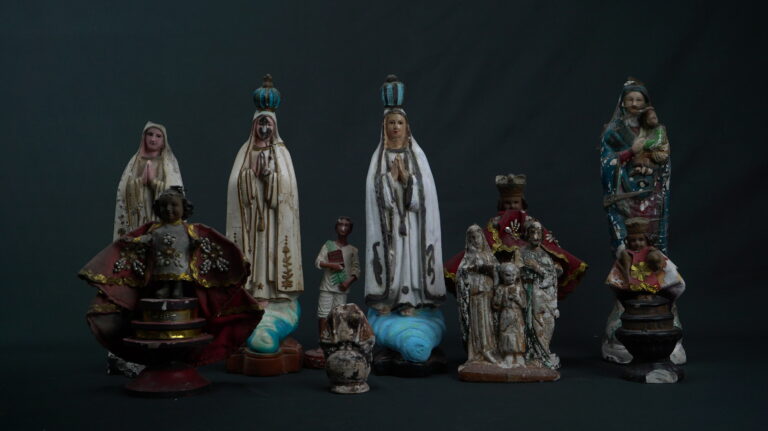
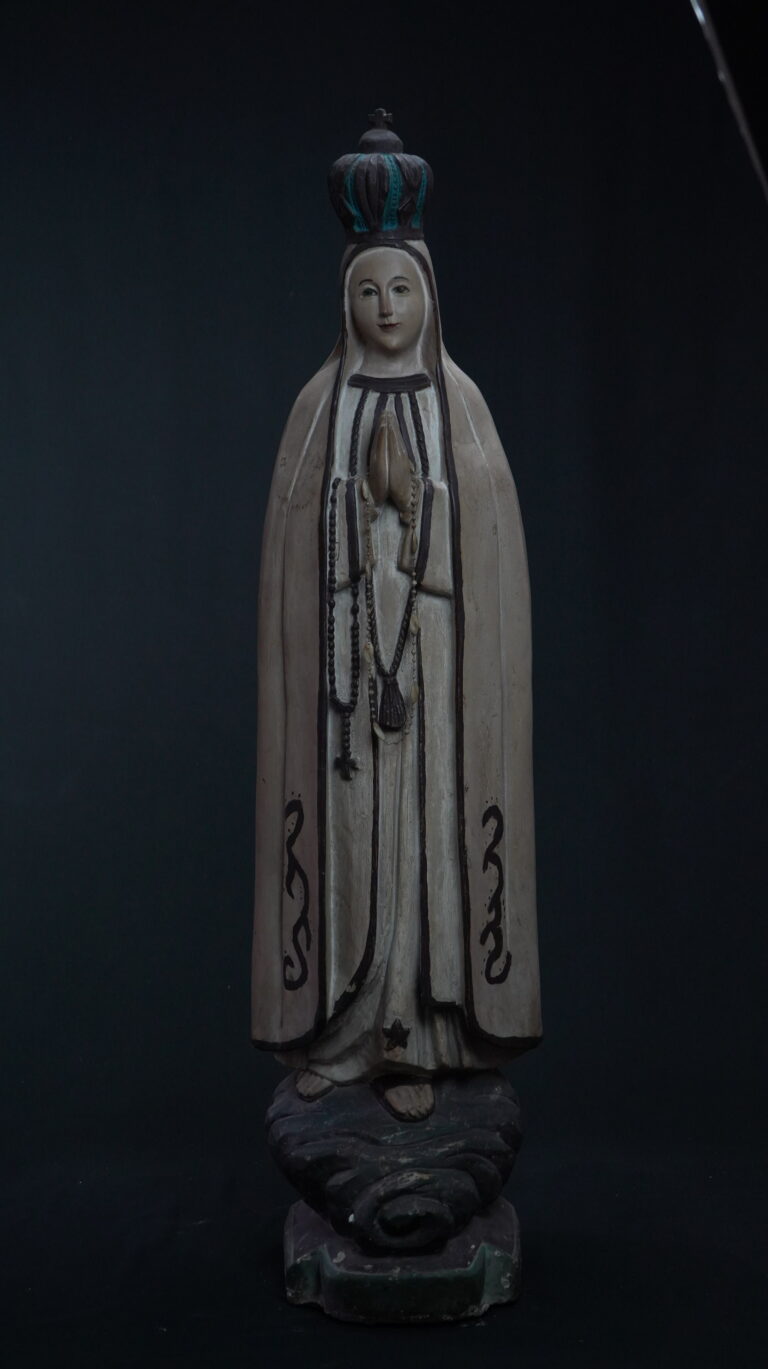
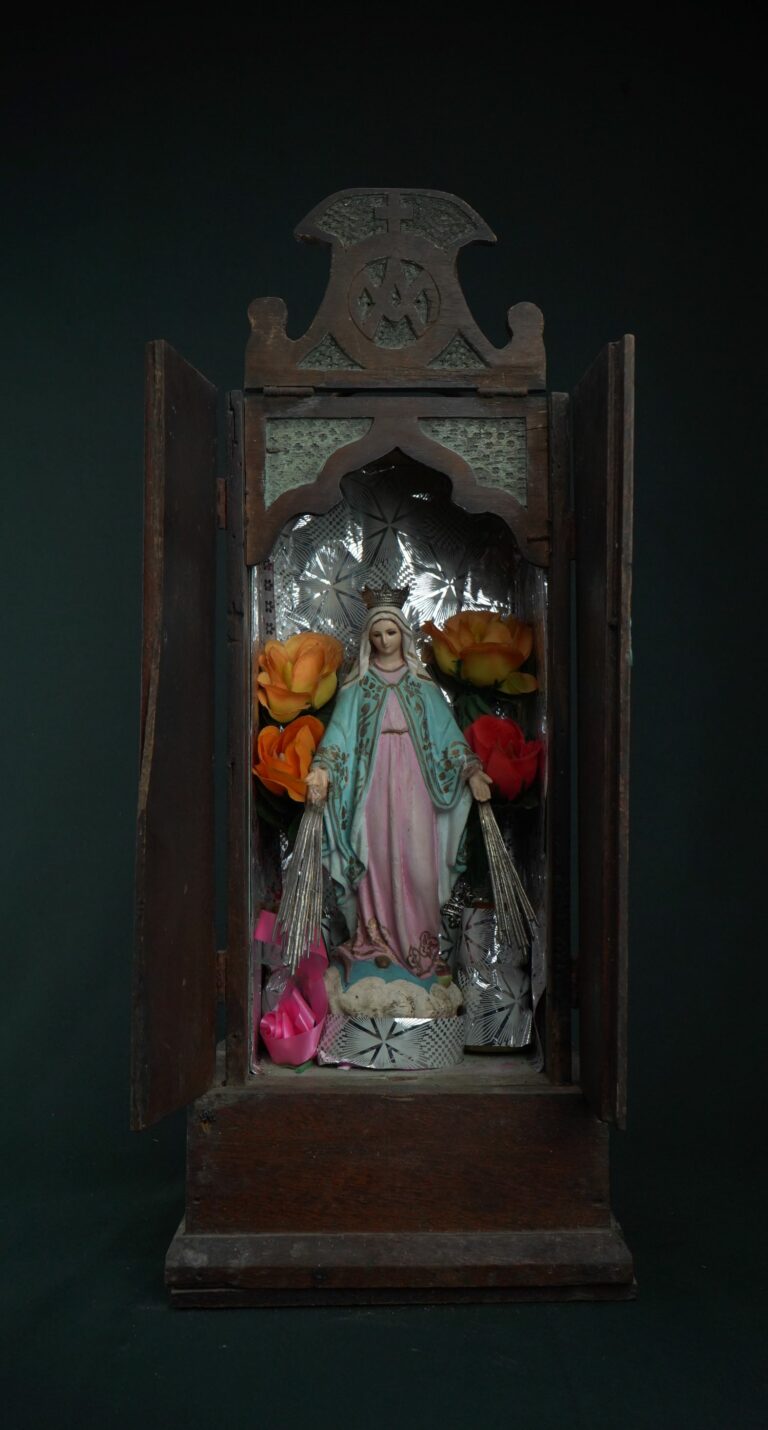
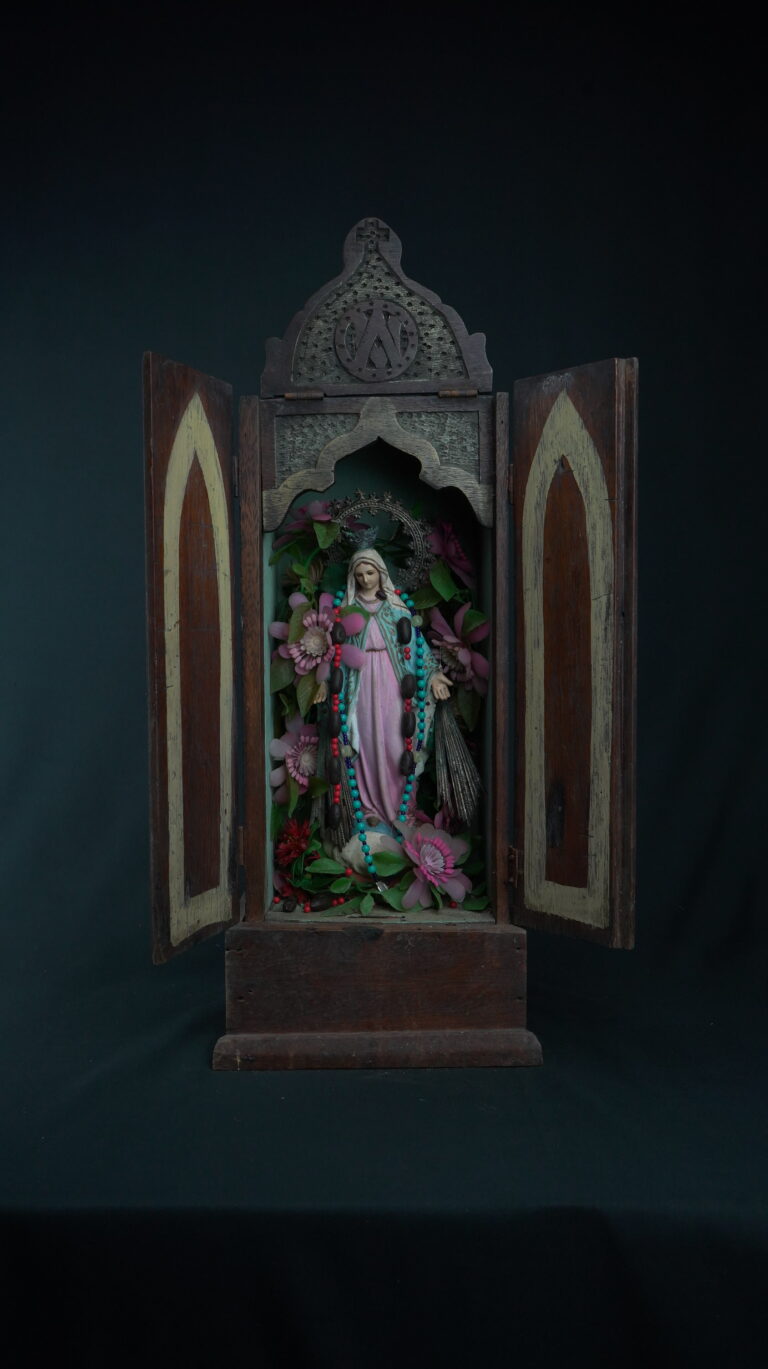
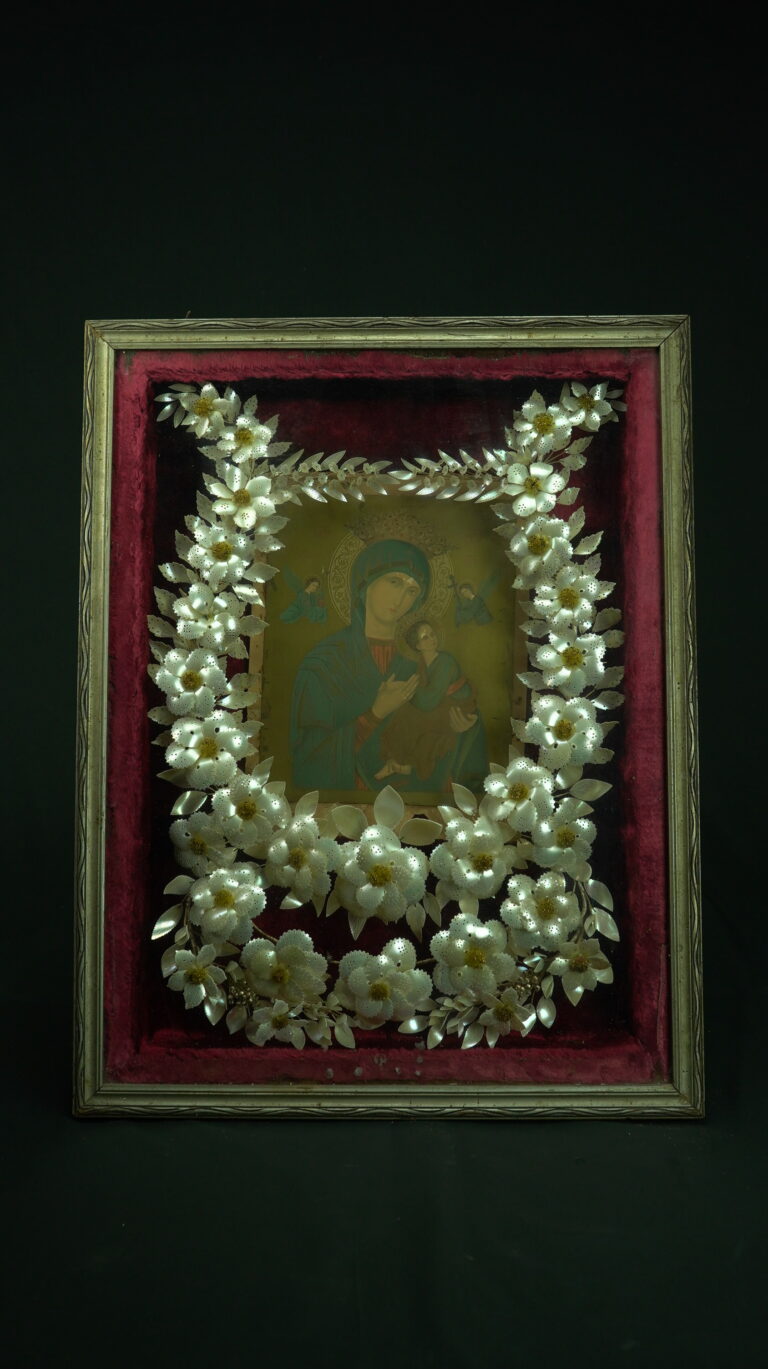
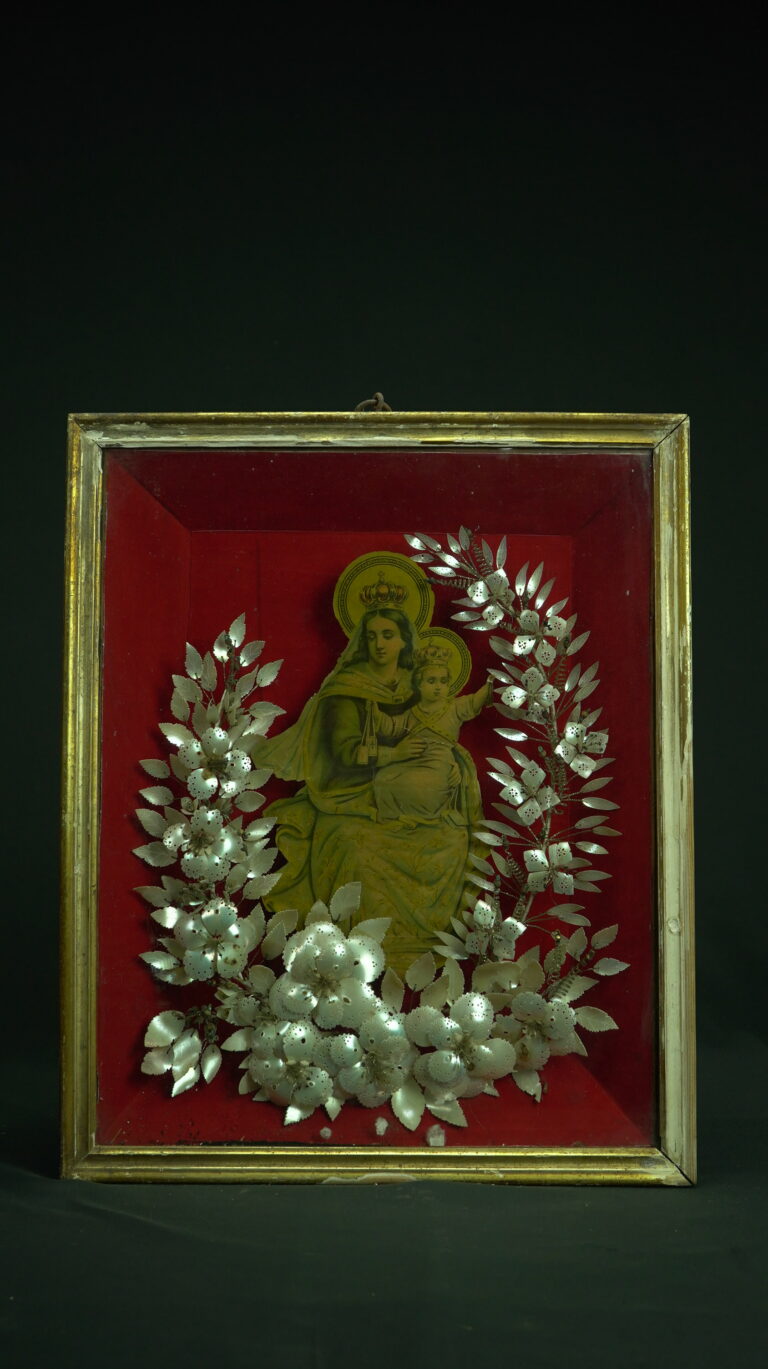
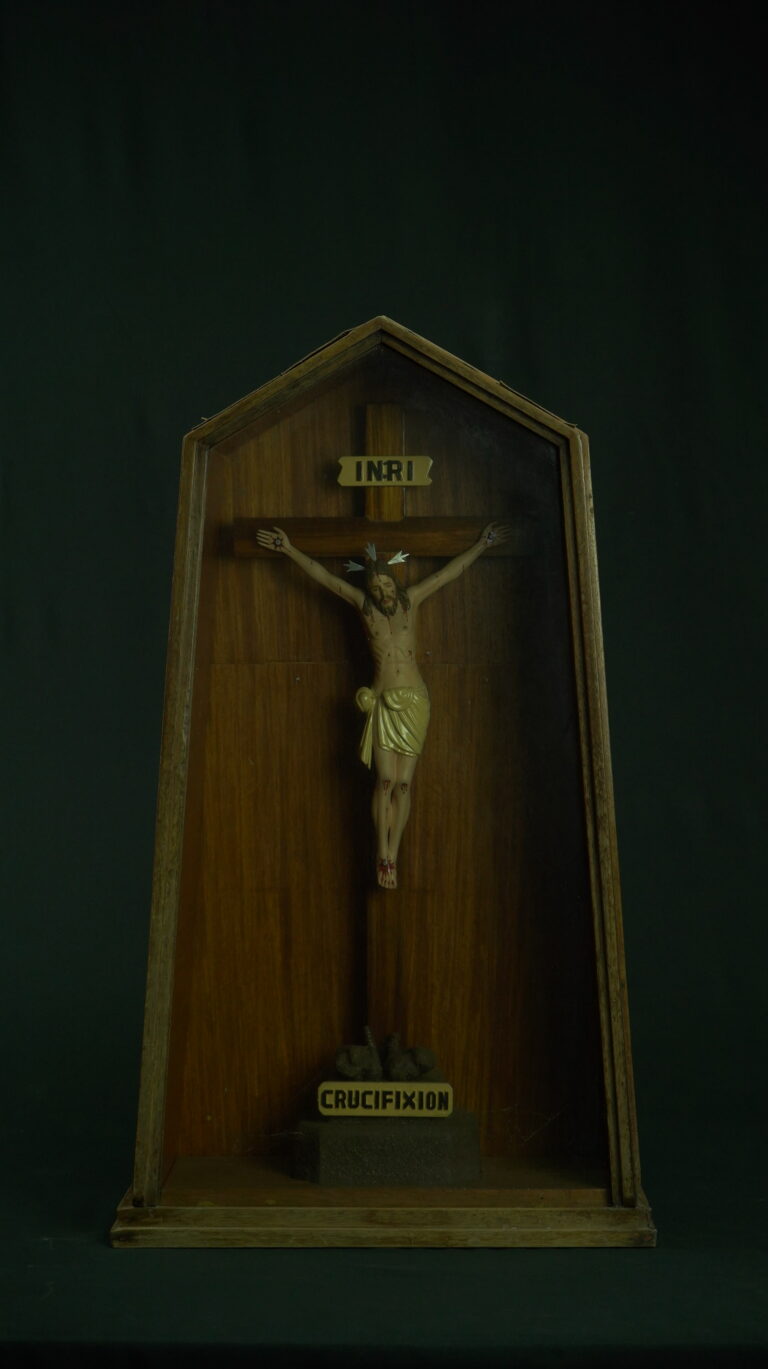
Three artifacts from the collection of the Santo Tomas de Villanueva Parish Church of Danao City, Cebu made me reminisce about the time that my family participated in the block rosary. From what I remember, the practice involved the transporting of an image of Our Lady of Fatima encased in a wooden box from one house to another. That image was in the care of an elderly lady who was in charge of arranging the schedule of the image’s visits, which would usually be within 24 hours. The family who previously hosted the image would bring the same to the next household and pray the rosary with that family. After which, the gathering would be capped with the partaking of conversations about community concerns and refreshments, which my young self truly relished.
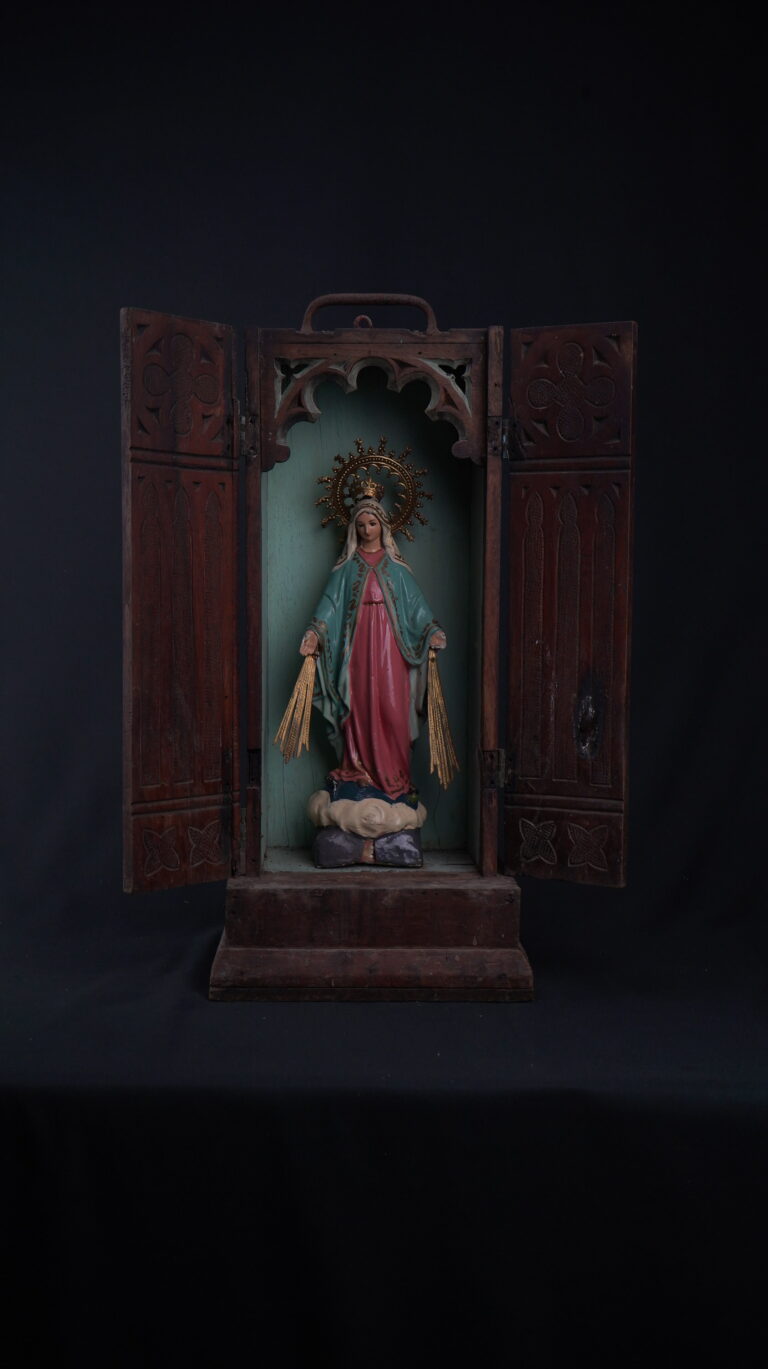
Indeed, the three images of Our Lady of the Miraculous Medal enclosed in wooden cases and decorated with silk flowers from the Danao parish remind me of the one that was passed from household to household within my community. These wooden cases are pragmatic as they keep the images inside safe while they are brought around the neighborhood. At the same time, the cinquefoil or ogee arches used and the movable coverings that look like doors make the case look like it is a frontispiece of a place of worship. Thus, the case also becomes a portable altar and the focus of attention during the communal praying of the rosary. Apart from the church-related activities, the practice is a means for the faithful to nurture each other ‘s faith and devotion.
The rosary is a Marian devotion that is well-loved by families. This Marian prayer is given a larger significance in the practice of the Block Rosary where families pray in community with other families. It is a means of community building as well; it is an opportunity for fellowship and to get to know one’s neighbors.
Nowadays, our community does not anymore have the Block Rosary. Maybe because the elderly lady, whose name I did not even know, had also long passed, and no one accepted her role. The events of the last three years have also made it next to impossible to revive the practice. Even so, with less and less restrictions, there is still a possibility to animate the community again and revive the Block Rosary.