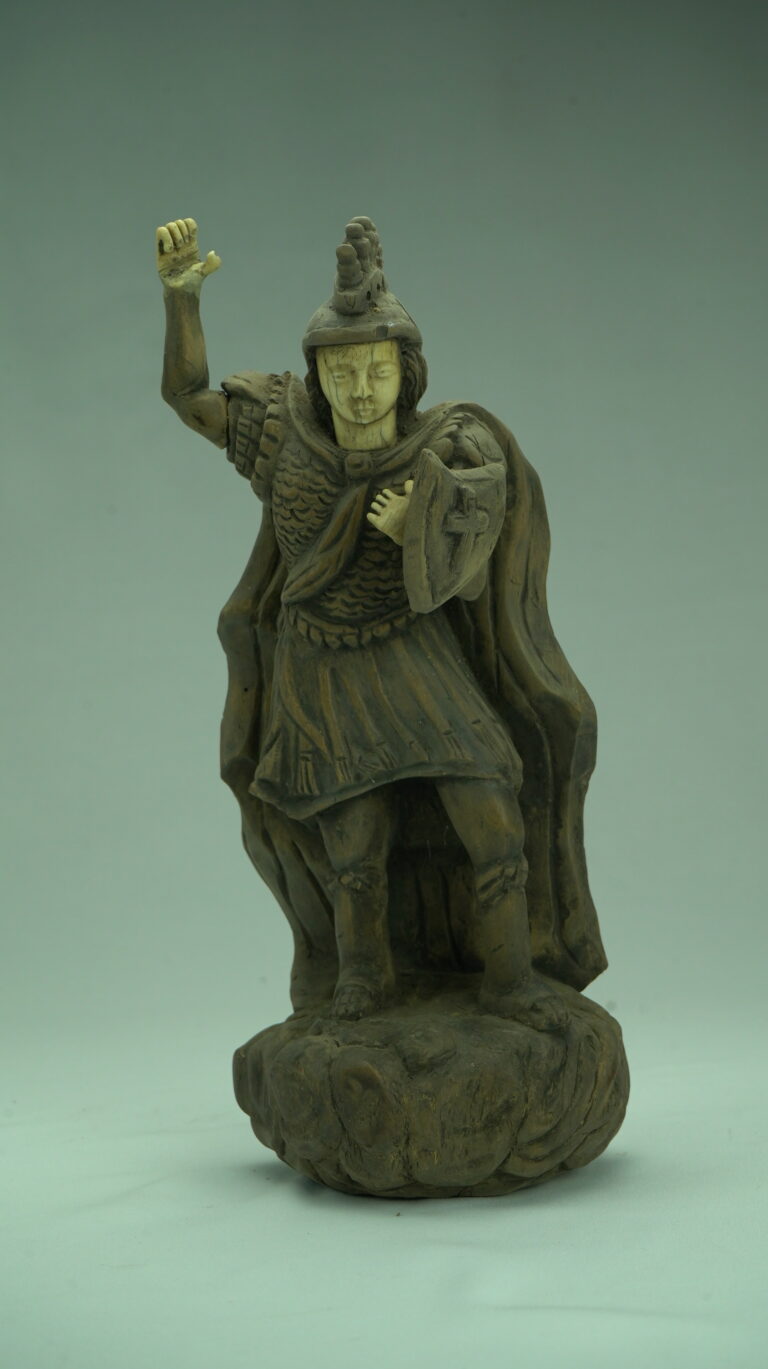
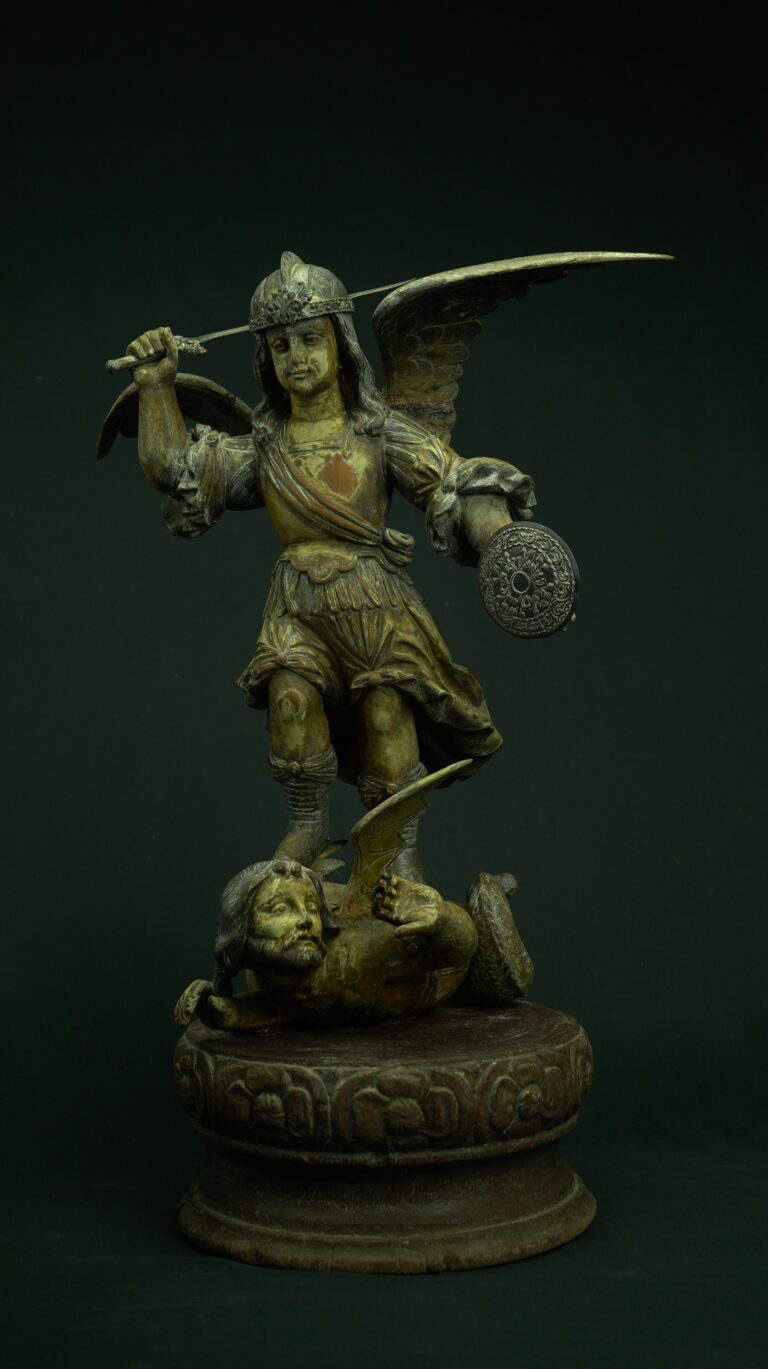
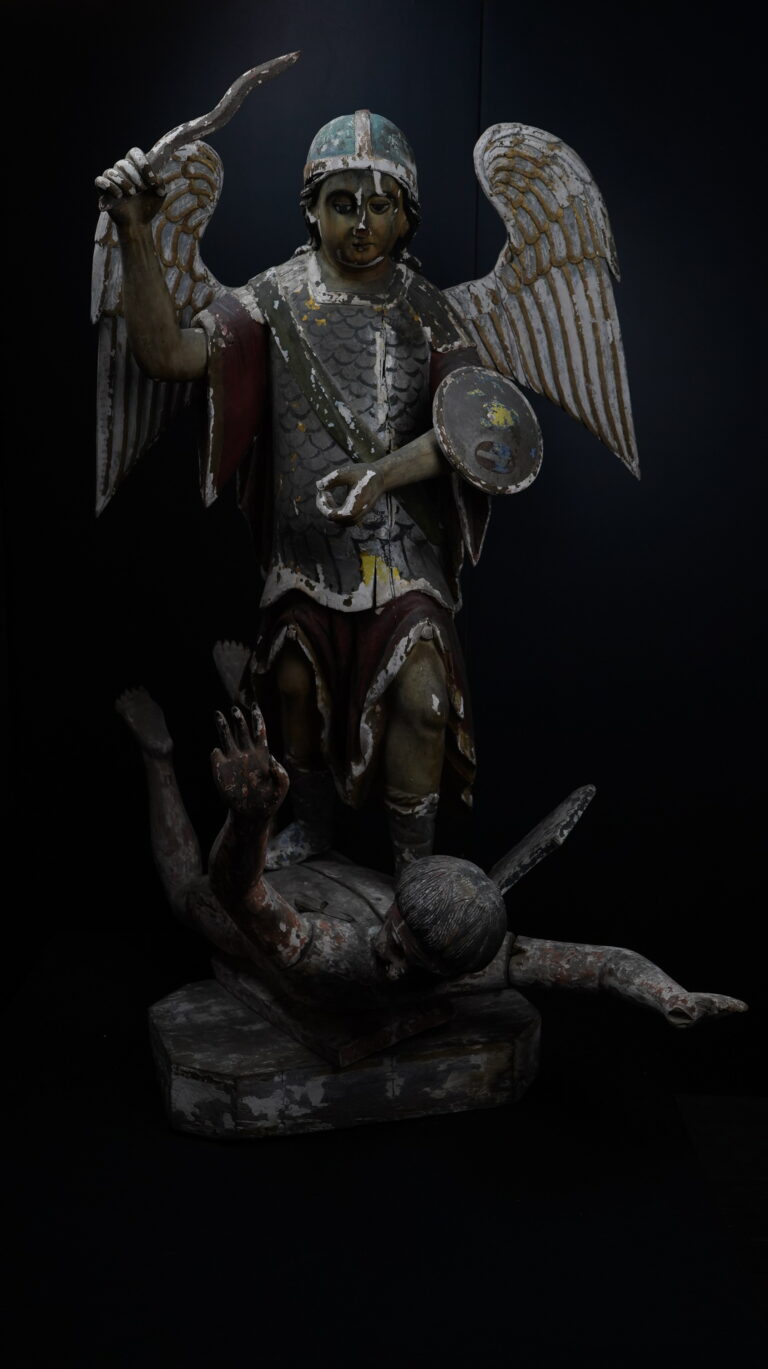
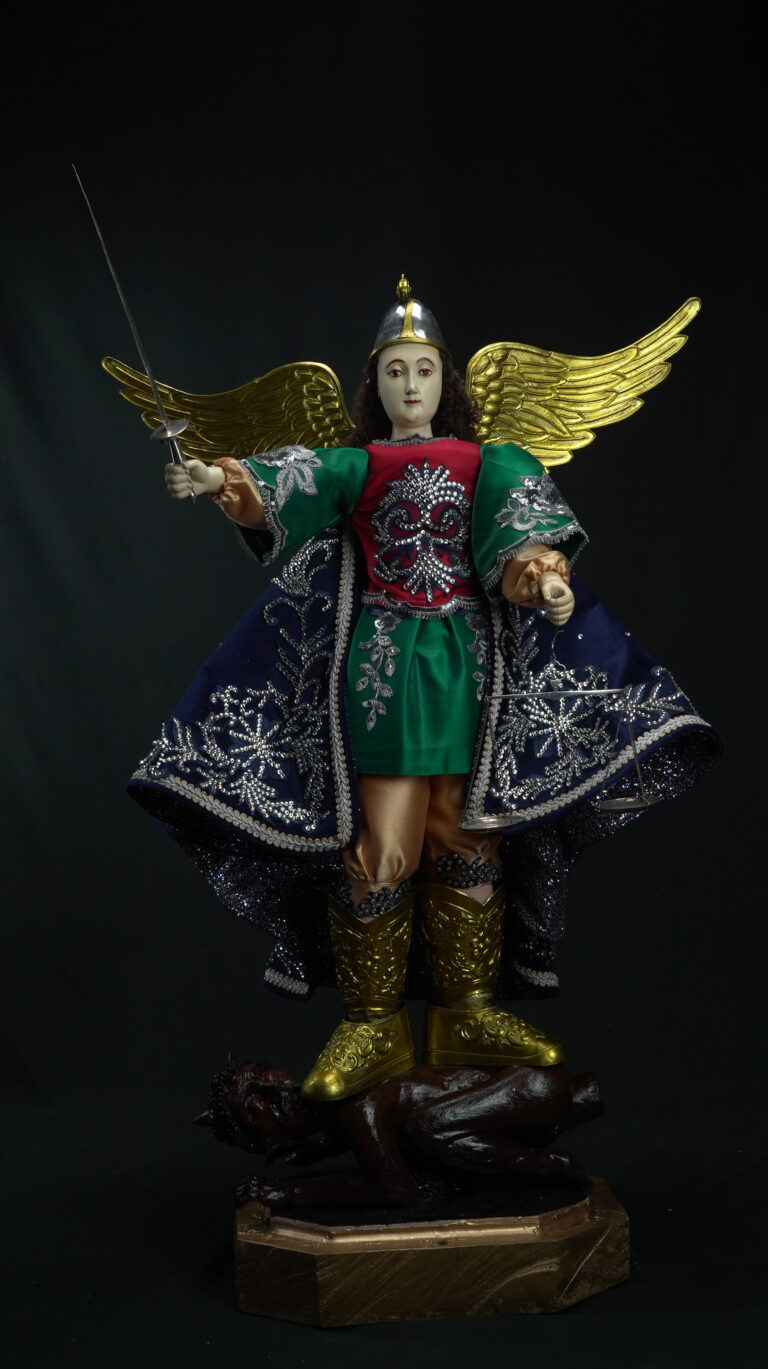
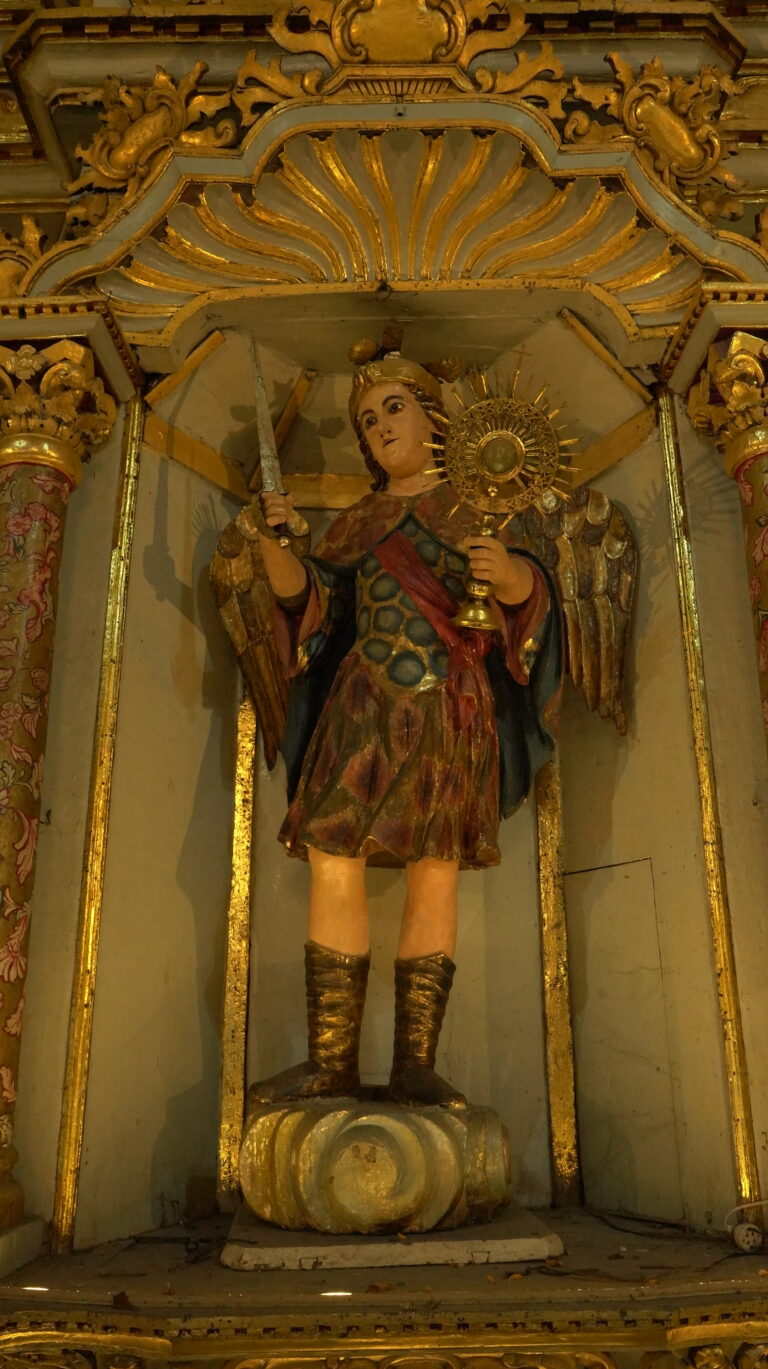
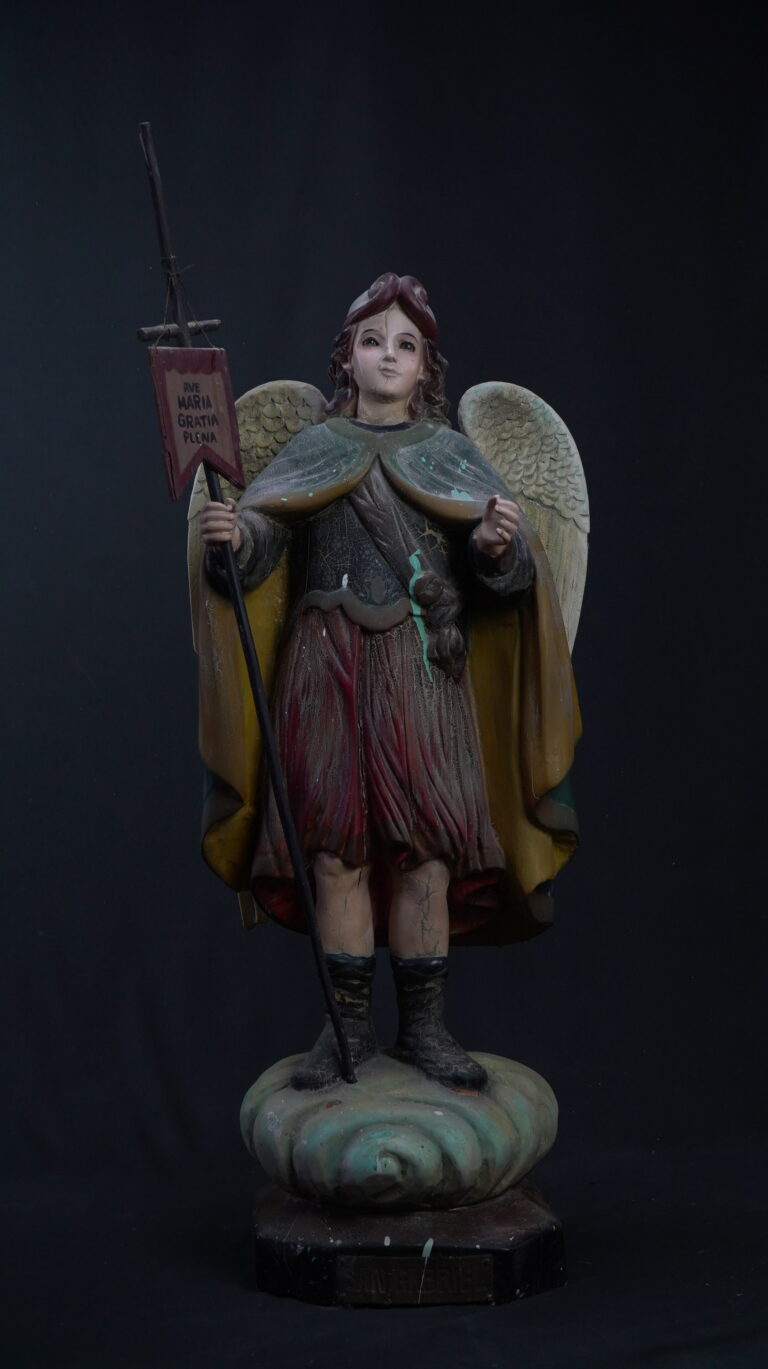
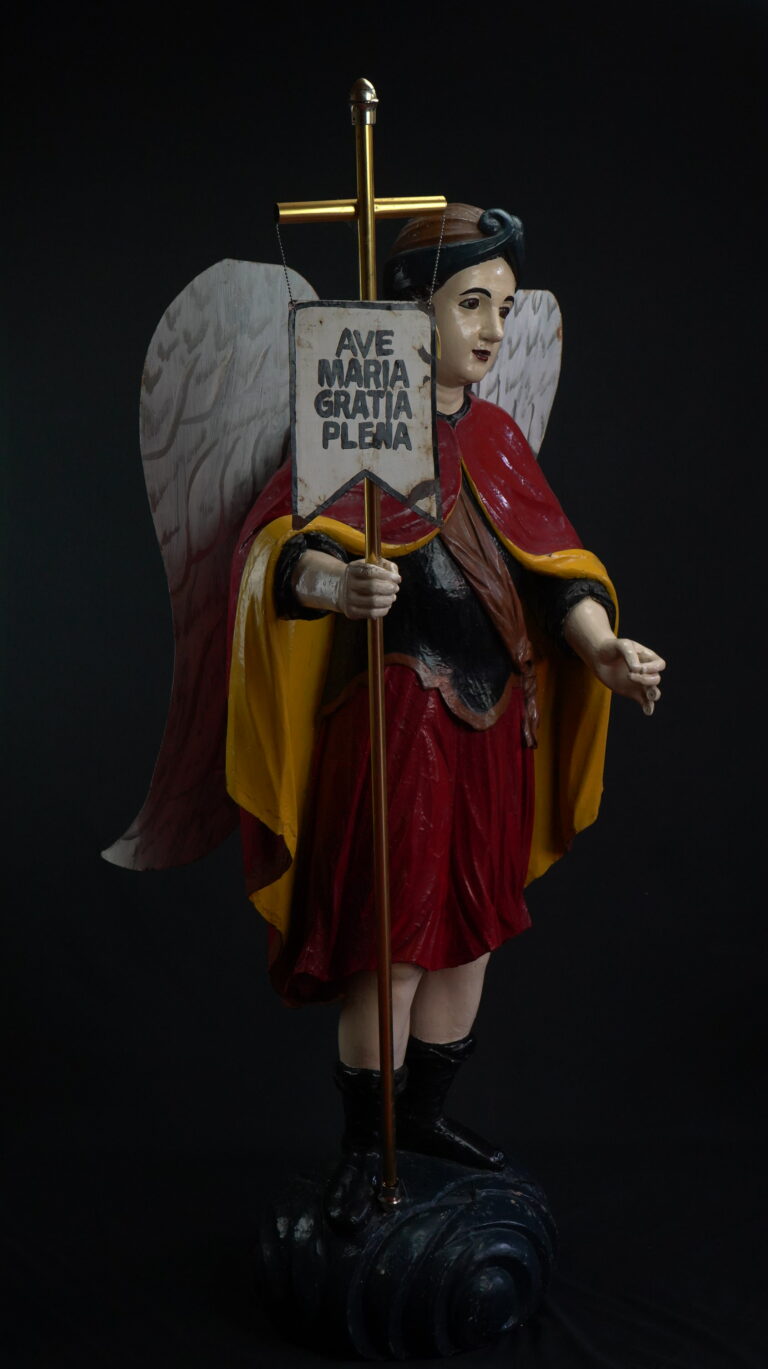
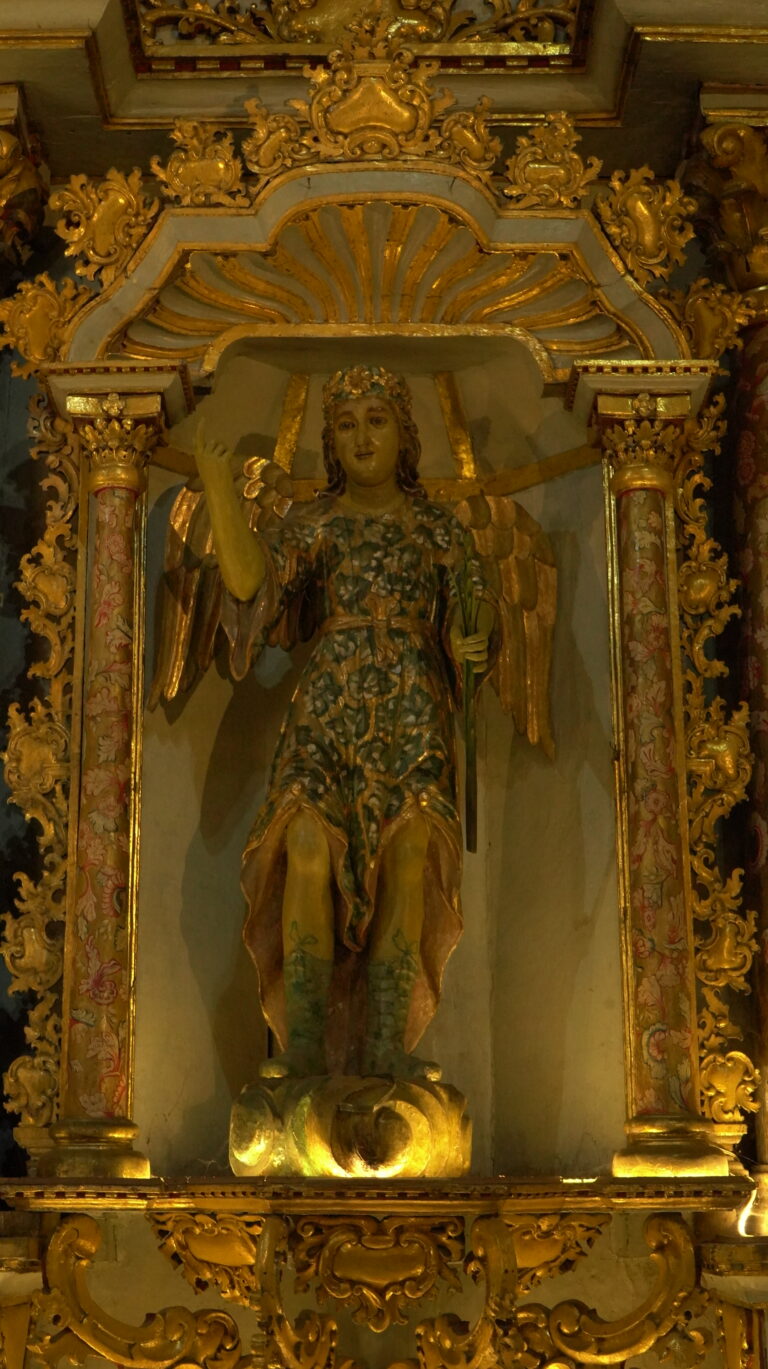
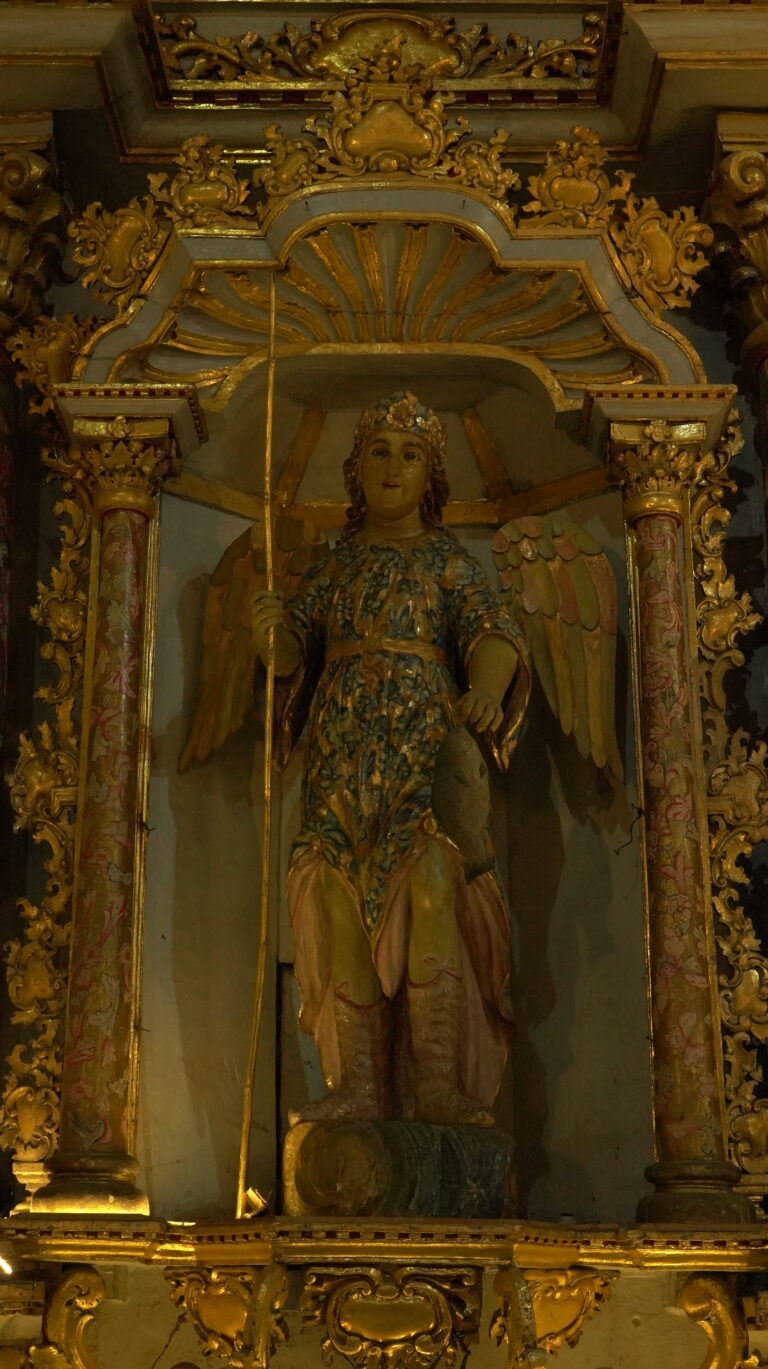
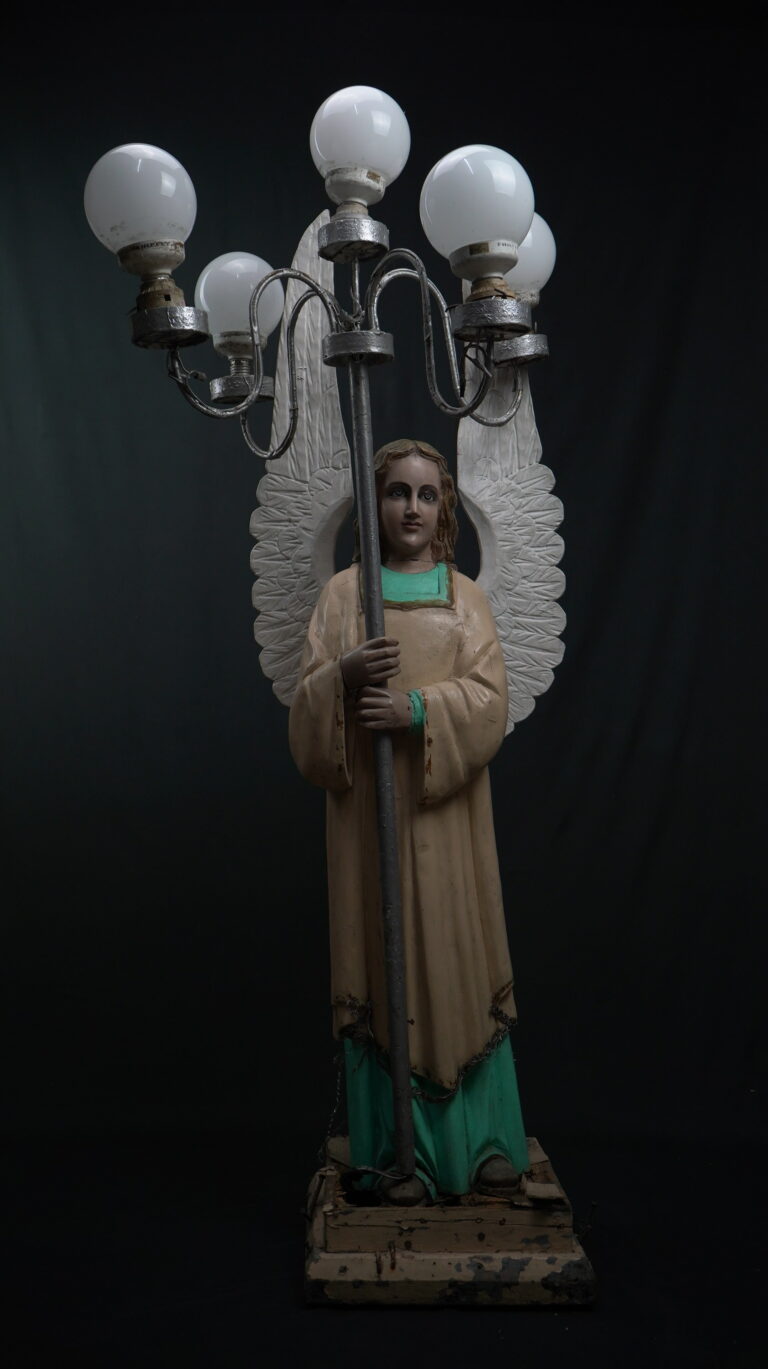
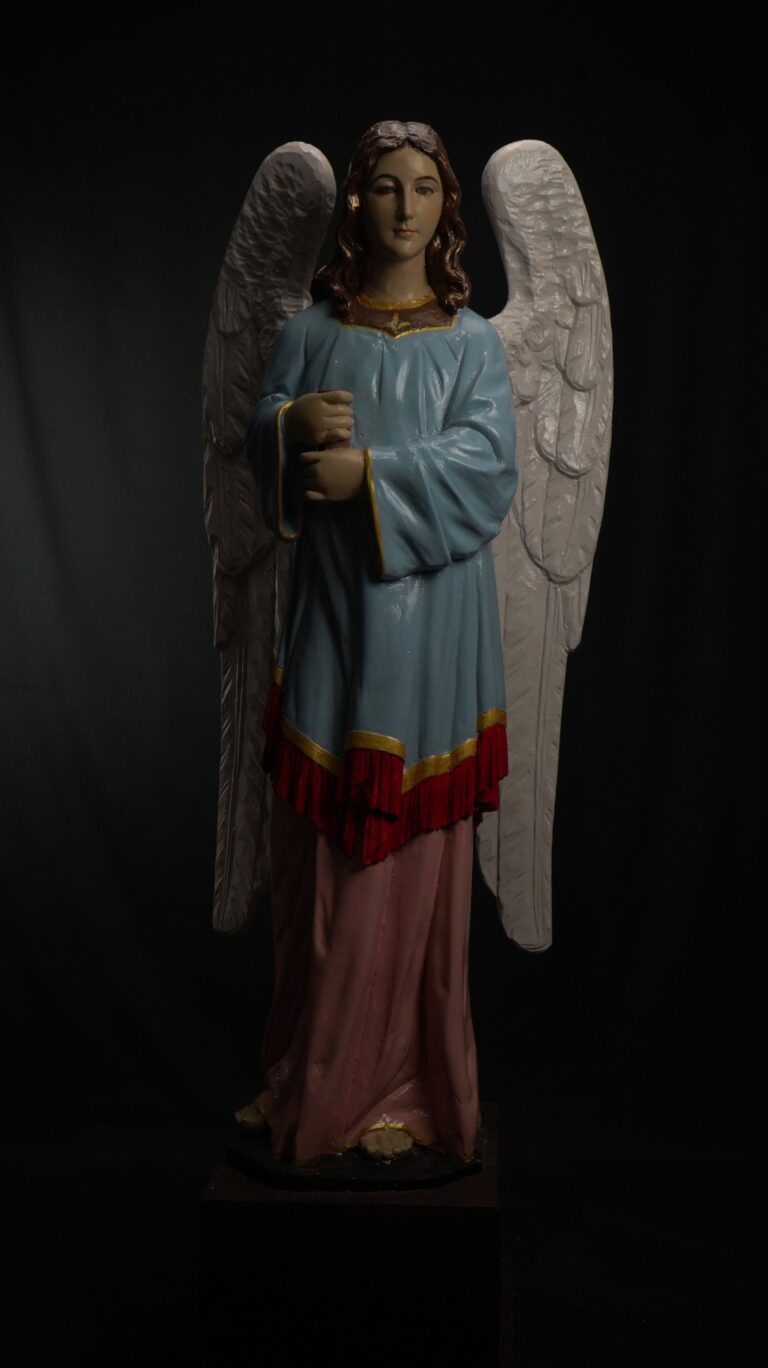
Six parishes within the Archdiocese of Cebu are named after the three archangels mentioned by name in the Bible. Four of these parishes have Saint Michael as their titular patron, and there is one each for Saints Gabriel and Raphael. These parishes all have grand and interesting images representing their patrons, but it is the Saint Michael the Archangel Church of Samboan, Cebu that holds in its collection three quaint statues of the three.
I am not certain if these three statues are originally a set. Most likely the ones for Saints Gabriel and Raphael are from the same source as they look more similar to each other compared to the image of Saint Michael. This is understandable; Saint Michael, after all, is the patron of the parish. The latter may have been acquired separately and before the other two for the purpose of having devotional images for the celebration of the Feast of the Archangels. For this reason, I would like to consider the three statues as a set. Additionally, all three statues are made of wood, and all feature glass eyes.
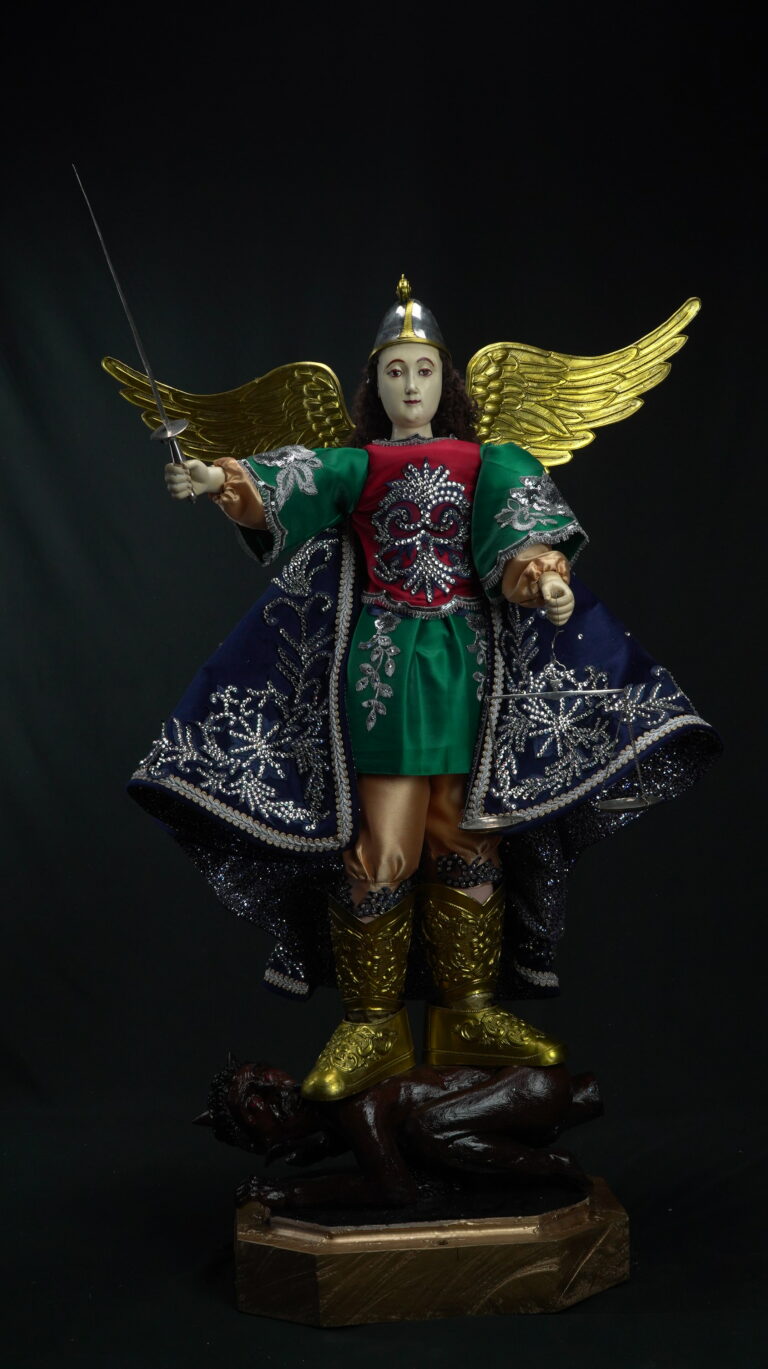
The largest of the three statues, at a height of 98 centimeters, is that of Saint Michael the Archangel. Among the three sculptures, this is the only one with detachable ivory hands. Its size and the materials used on it, including the colorful fabrics for its clothes (complementary colors red and green and royal blue for the cape) make this statue stand out compared to the other two. It shows the most popular depiction of Saint Michael, that is, Saint Michael defeating Lucifer in the battle in heaven.
The two other statues actually look more similar and are closer in size to each other. With a height of 75 centimeters, the statue of Angel Gabriel would be the middle-sized image. Like the statue of Saint Michael, the statue of Saint Gabriel shows a conventional representation of the archangel: Saint Gabriel holding a staff and a banner. Archangel Gabriel, whose name means “Man of God” or “God has shown might”, is the messenger angel who appeared in the Old and New Testaments on many different occasions. He is the patron of messengers, communication workers, and postal workers.
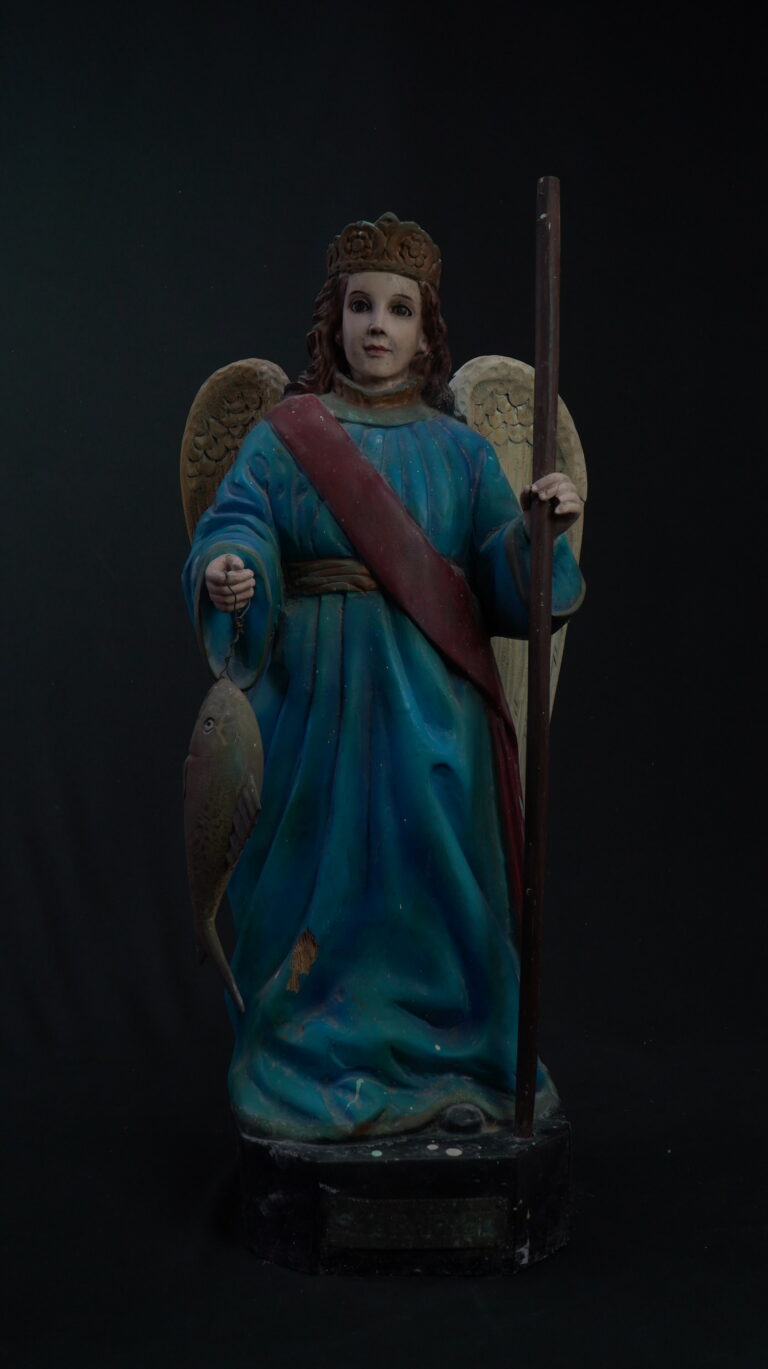
At the overall height of 70 centimeters, the statue of Saint Raphael the Archangel is the smallest of the set. This statue, too, shows a typical and traditional representation of Saint Raphael that portrays a direct reference to the Book of Tobit, one of my favorite stories from the Old Testament: a winged figure holding a staff in the left hand and a fish in his right hand. The staff is a reference to Saint Raphael being the patron of travelers. A more interesting story is behind the fish that the archangel is holding.
Archangel Raphael’s name means “the healing of God”. In the story of Tobit and his son Tobias, Archangel Raphael first presented himself as a willing companion for Tobias, who was tasked by his father to collect money from a relative. Raphael introduced himself as Azarias, which means “Assistance of God”, for indeed he was sent to assist Tobit who remained a faithful servant of God. As a traveling companion, Archangel Raphael safely guided Tobias to accomplish his tasks and meet the people he needed to meet.
When the two travelers came to the River Tigris, they caught a large fish. Raphael instructed Tobias to cut open the fish and take its heart, liver and gall, then they cooked and ate it. Raphael told Tobias that the fish parts that were kept are effective remedies. Later in the story, we find out that the heart and liver were used to drive away the demon tormenting Sara, whom Tobias wed, and the gall was used to cure his father’s blindness. (Book of Tobit, Chapters 4-12) From all these, Saint Raphael is the patron saint of travelers and happy meetings, of the blind, of those with bodily ills, and all those in the medical field (nurses, physicians and medical workers).
Because of the teachings of the church and our faith experience, we have come to believe in the existence and the power of angels, and not just as images that are portrayed by sculptors. The images of the archangels, though, and the stories behind why they are represented as such remind us that angels are God’s messengers, and they have interacted with people, guiding the faithful to Go