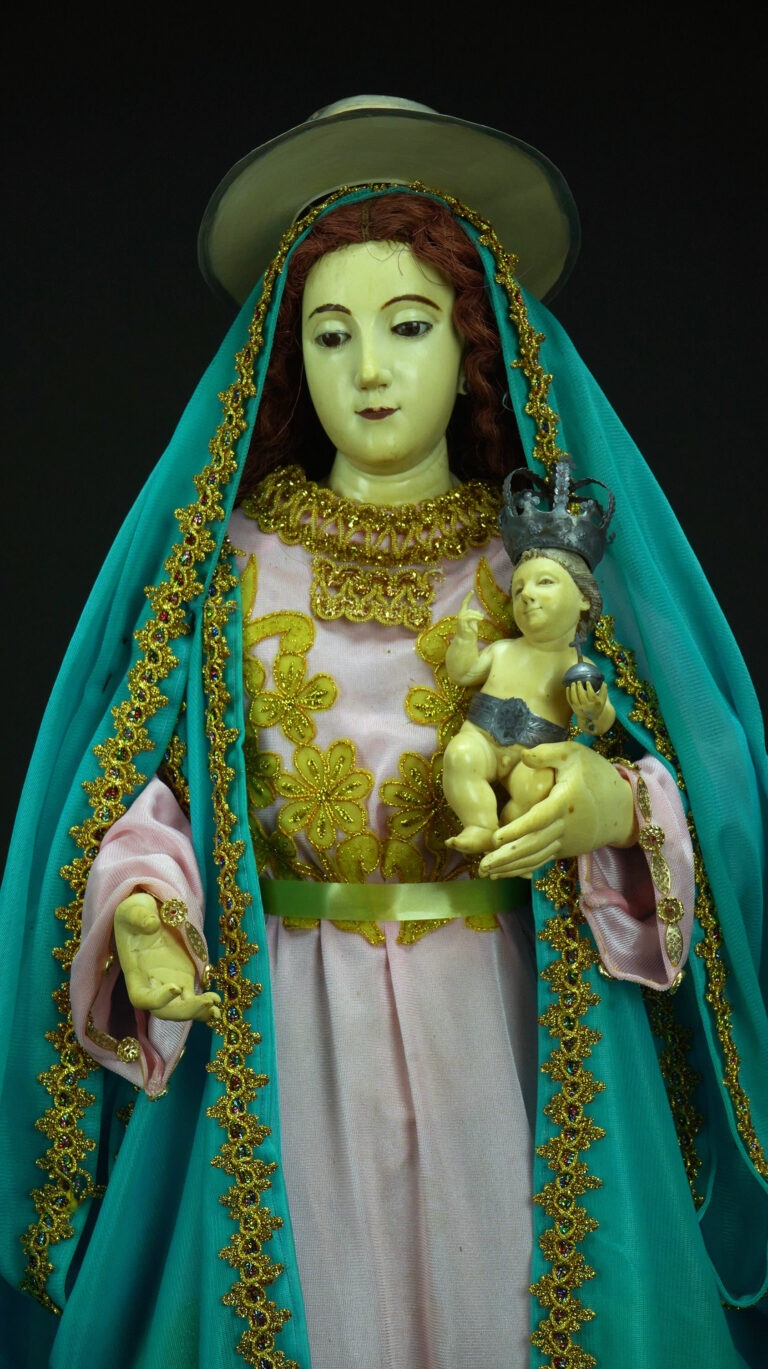
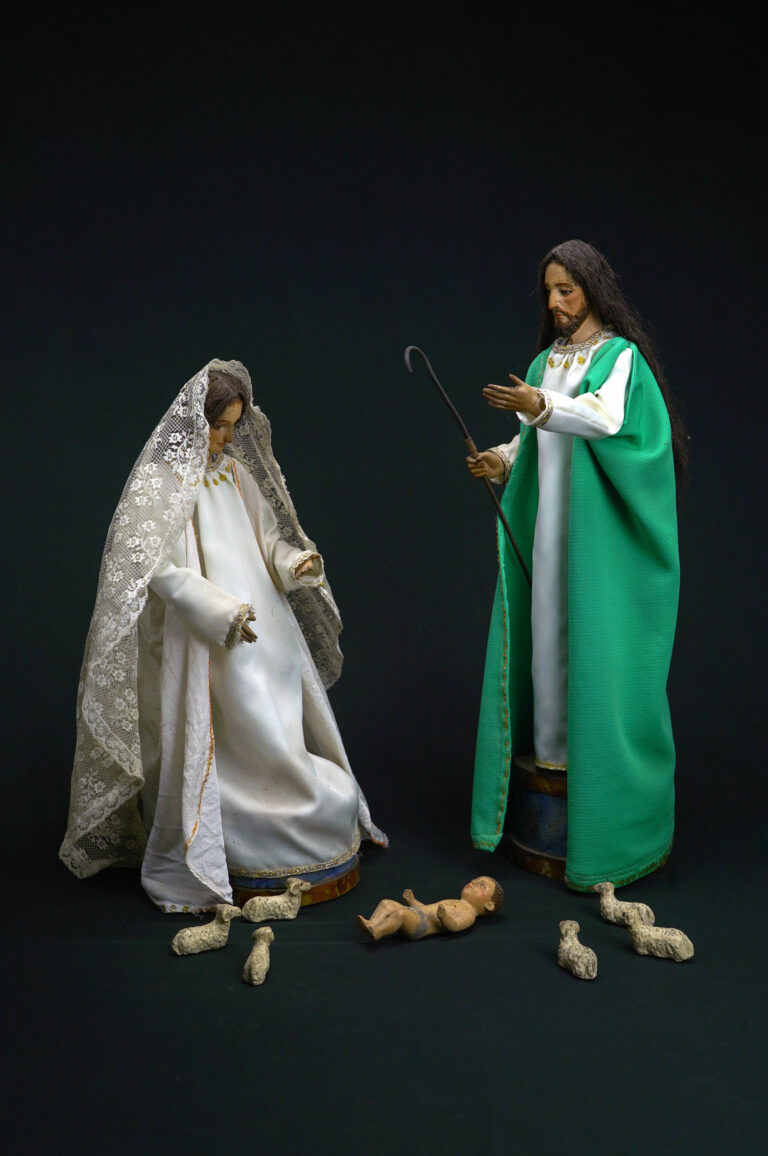
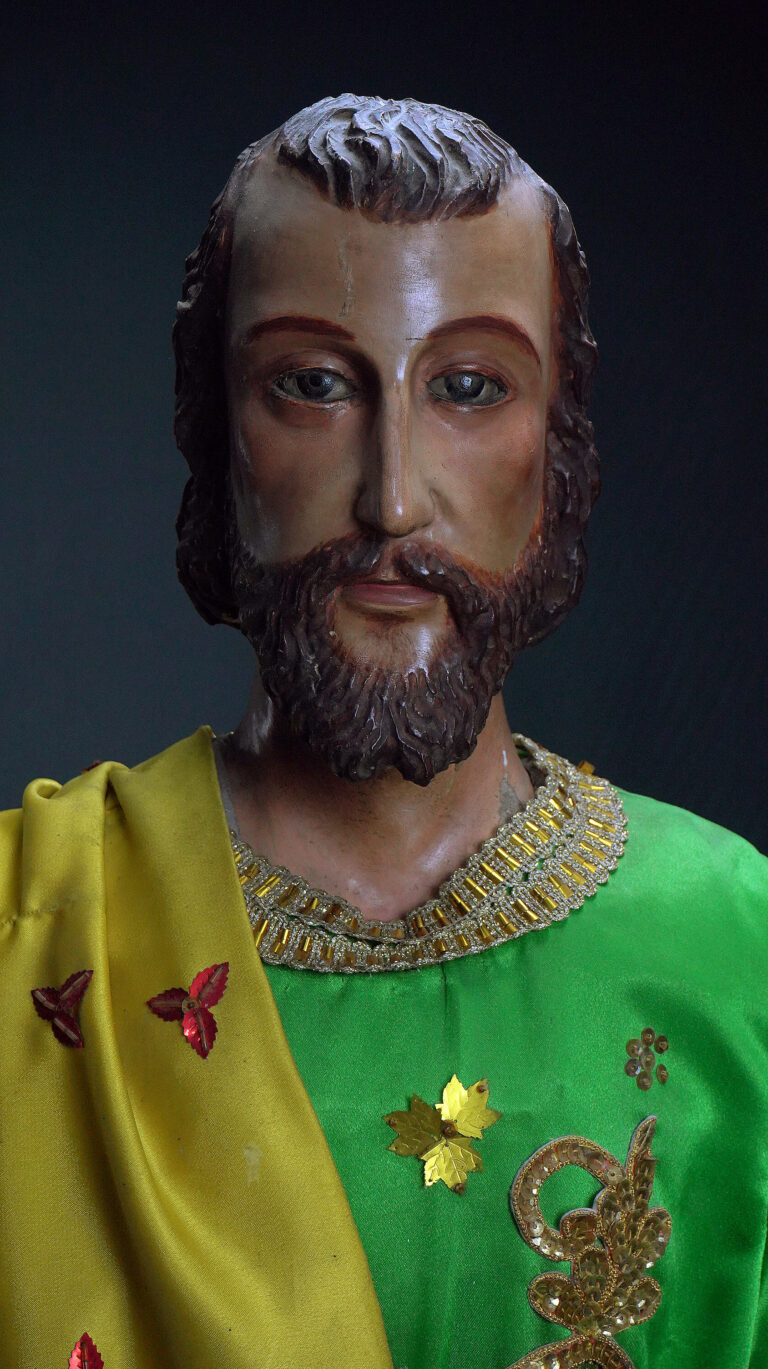
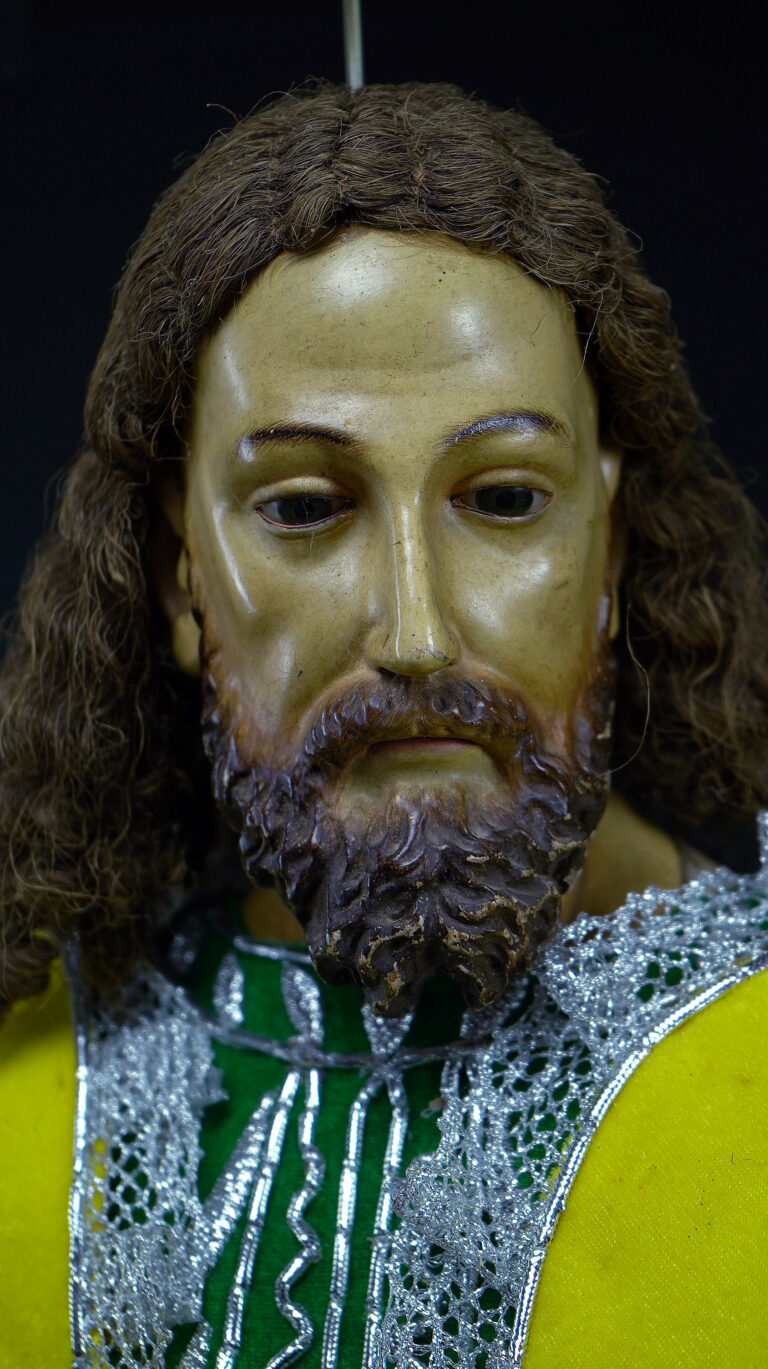
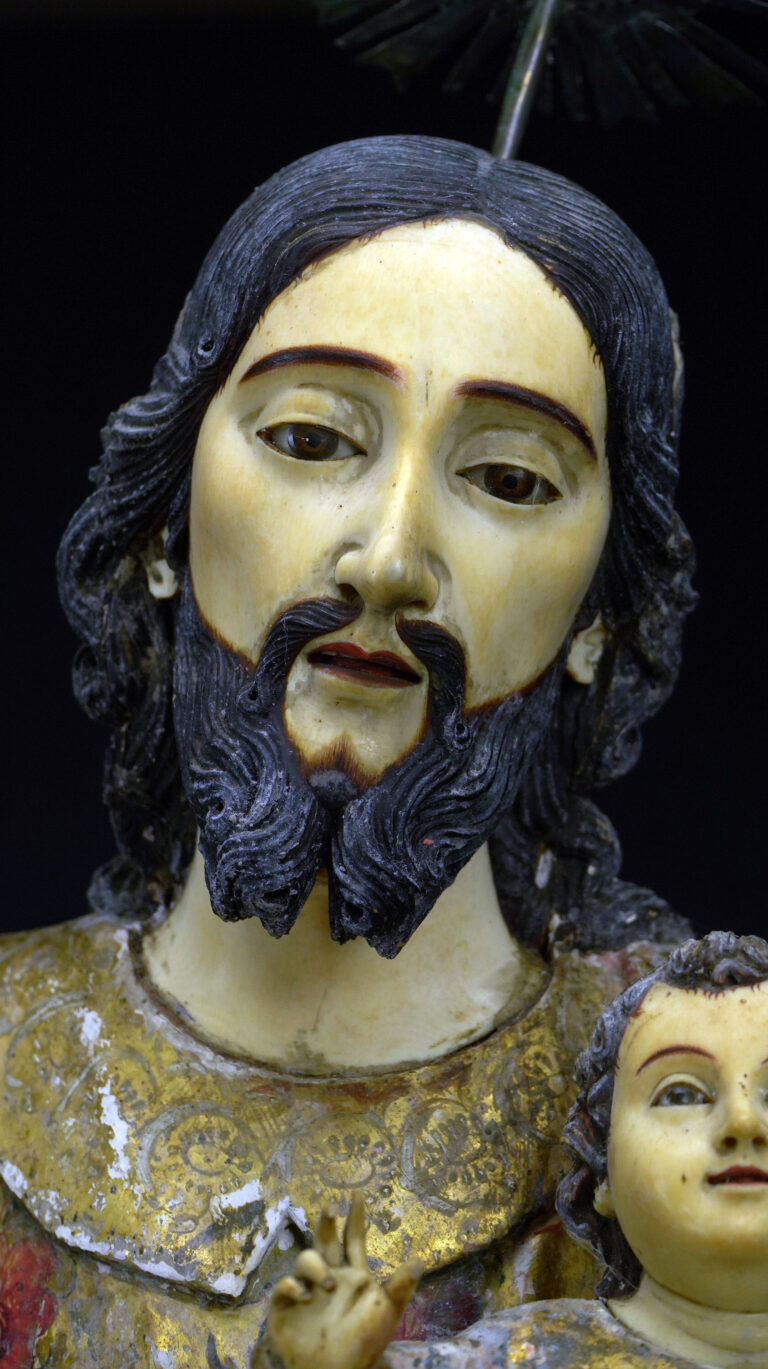
Two free-standing figures make up this ivory Sagrada Familia set from the Archdiocesan Shrine and Parish of Saint Michael the Archangel in the town of Argao, Cebu. The statue of the Blessed Mother is, of course, portrayed carrying the Child Jesus. Both the Santa Maria and San Jose statues are a little over half a meter tall and are also of the kind called de bastidor. The best thing about the sculptures is that they are in good condition.
Immediately the Caucasian features of the statues caught my attention. Their heads and detachable hands are made of ivory; their eyes are made of glass. I feel that the ivory material is the greatest contributor to this effect. The vestments and accessories made for these religious images also contribute to the same.
Although the provenance of these statues is not particularly detailed or documented by the parish, they seem to belong to one of the three types of Spanish colonial religious images described by Fernando Zobel in his essay Philippine colonial sculpture: a short survey. According to Zobel, Spanish colonial religious images fall into three categories: ‘popular’, ‘classical’ and ‘ornate’. Of interest would be the ‘ornate’ style, the description of which matched the features found in the Sagrada Familia sculptures.
According to Zobel, ‘ornate’ religious images are of two types: ornate ivory and ornate wooden sculptures. Whether made of ivory or wood, this type of sculpture has a “richness of detail” that is influenced by the Spanish Baroque and ‘romantic realism’. Zobel also pointed out that, particularly, the ornate ivory religious statues were most common between the middle of the eighteenth century and the middle of the nineteenth century.
Zobel further described ornate ivory religious statues to have either two styles for the wooden framework that served as the sculpture’s body. Either the framework would be de tallado, that is, fully carved, or de bastidor, or the kind with conical framing made of sticks. Whether de tallado or de bastidor, ivory heads and hands would be fitted into the sculpture framework. Sometimes ivory feet would be added.
Embellishments and miniature attributes found on the Argao Sagrada Familia are also some of those found on ornate sculptures as described by Zobel. Such embellishments and attributes give the religious sculptures a more realistic look and are part of the creation of a “richness in detail”. Specifically for the Sagrada Familia figures, the embellishments include the hair or wigs and glass eyes. Although the vestments used are new, they are elaborated and accessorized with embroidery as can be expected from the style. The miniature attributes include the hats on both figures, Saint Joseph’s staff, and the miniature crown and globe held by the Child Jesus.
The Feast of the Holy Family is celebrated within the Christmas season, on the Sunday immediately following December 25. It is especially memorable to me as it is the fiesta of the residential village where I live. That day is celebrated with a lively procession led by a drum and bugle band and a Holy Mass in our village chapel. The community elders at that time probably chose the Holy Family as patron in order to give the families in our community a model. Truly, to honor the Holy Family is a devotion that benefits all the faithful who contemplate on and continue to be inspired by the lives of Jesus, Mary and Joseph.
Keeping communities that are devoted to the Holy Family animated and preserving images of the Holy Family like the Argao Sagrada Familia help keep alive this tradition and devotion.
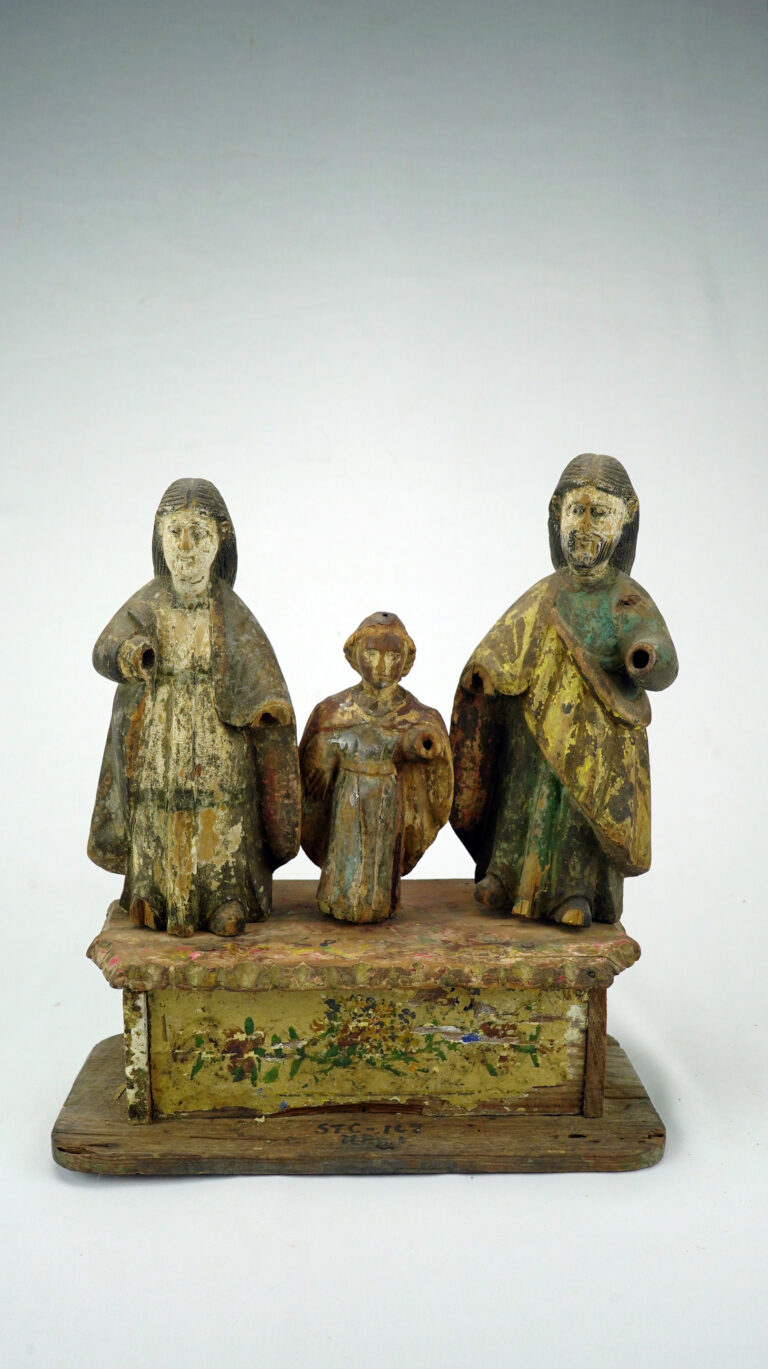
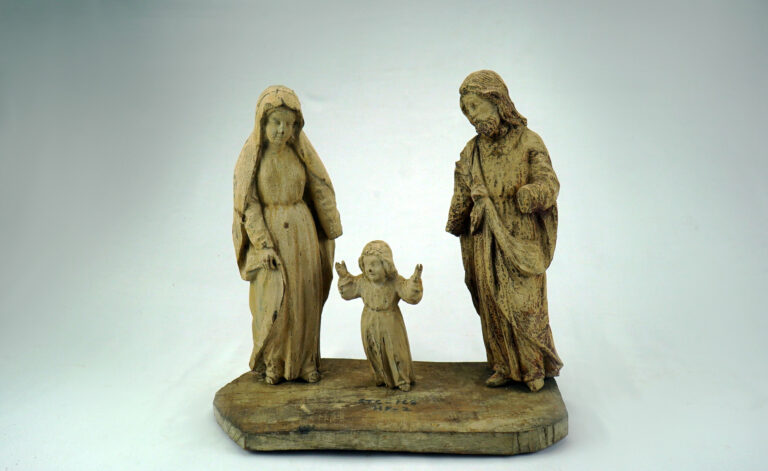
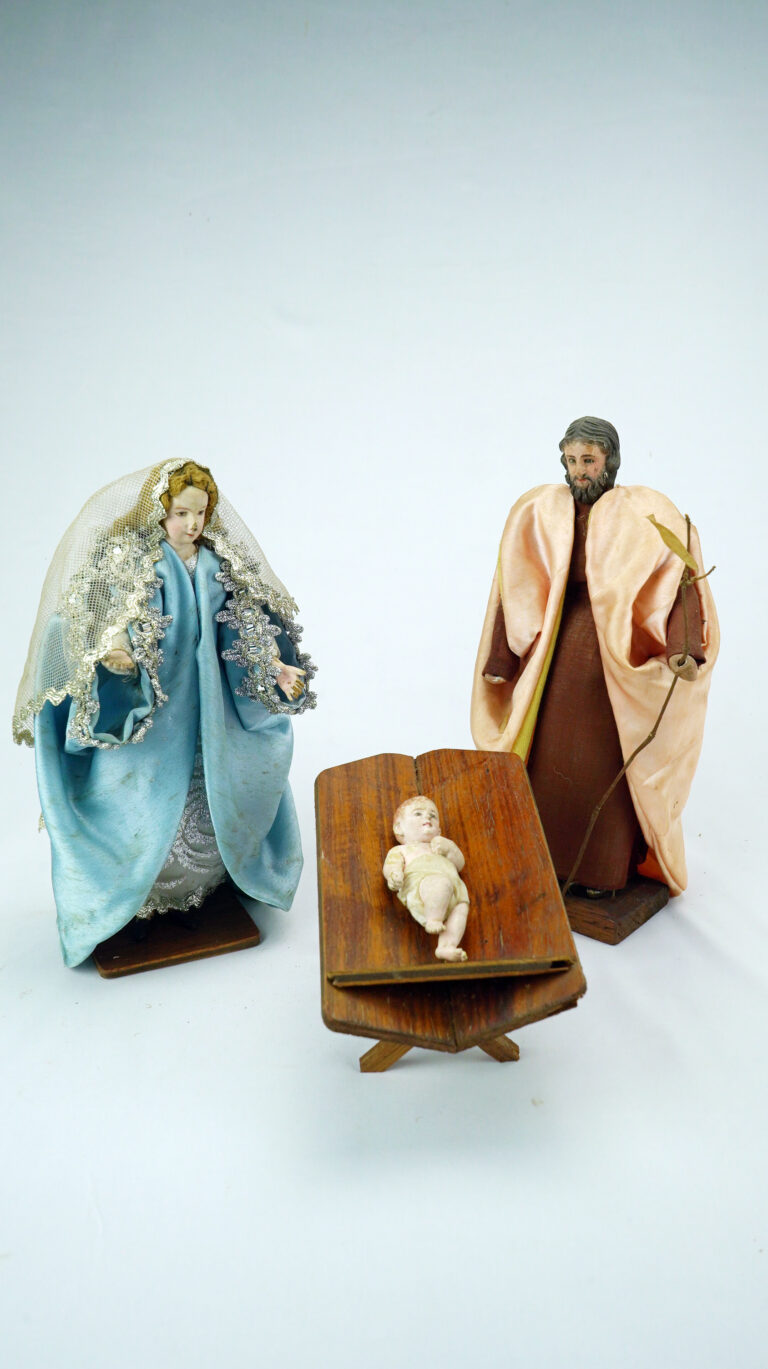
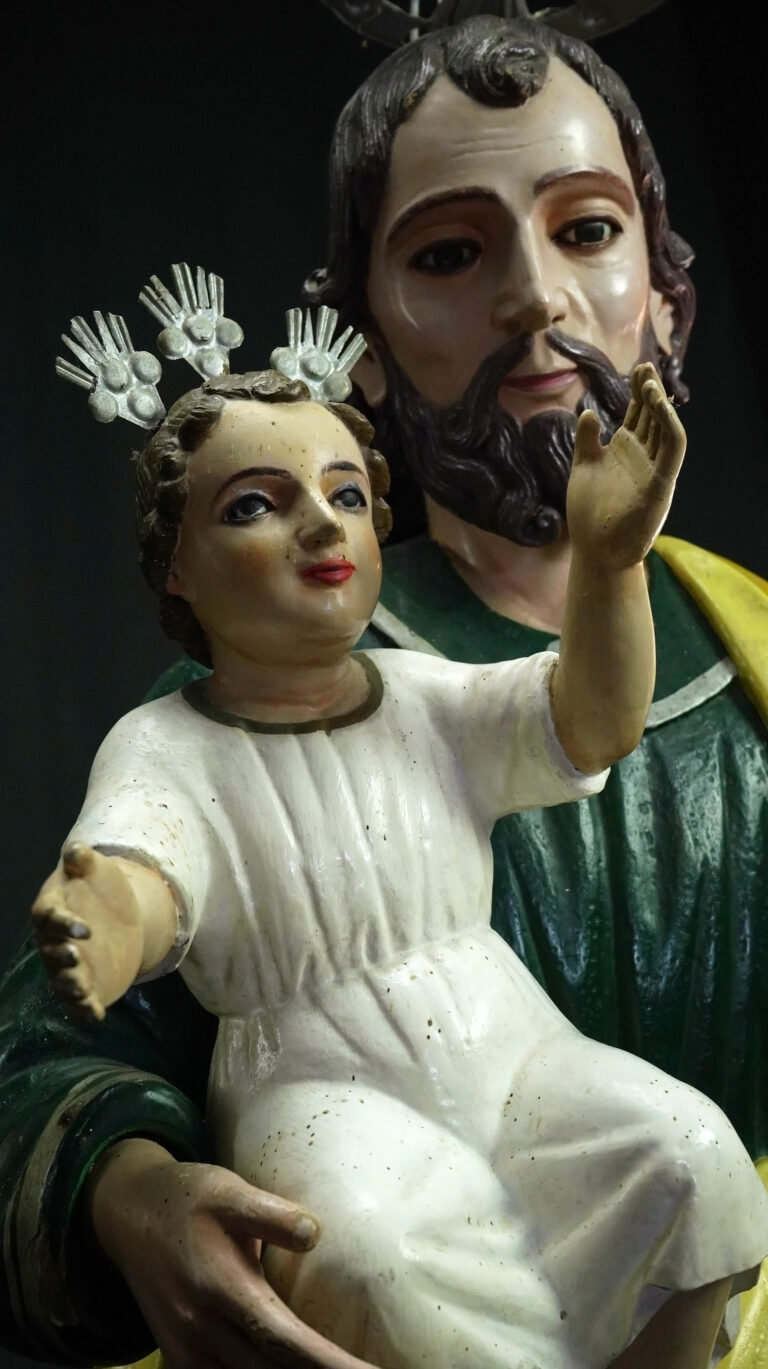
This has also feature folk representations of the Holy Family. How did local artists interpret these biblical scenes?
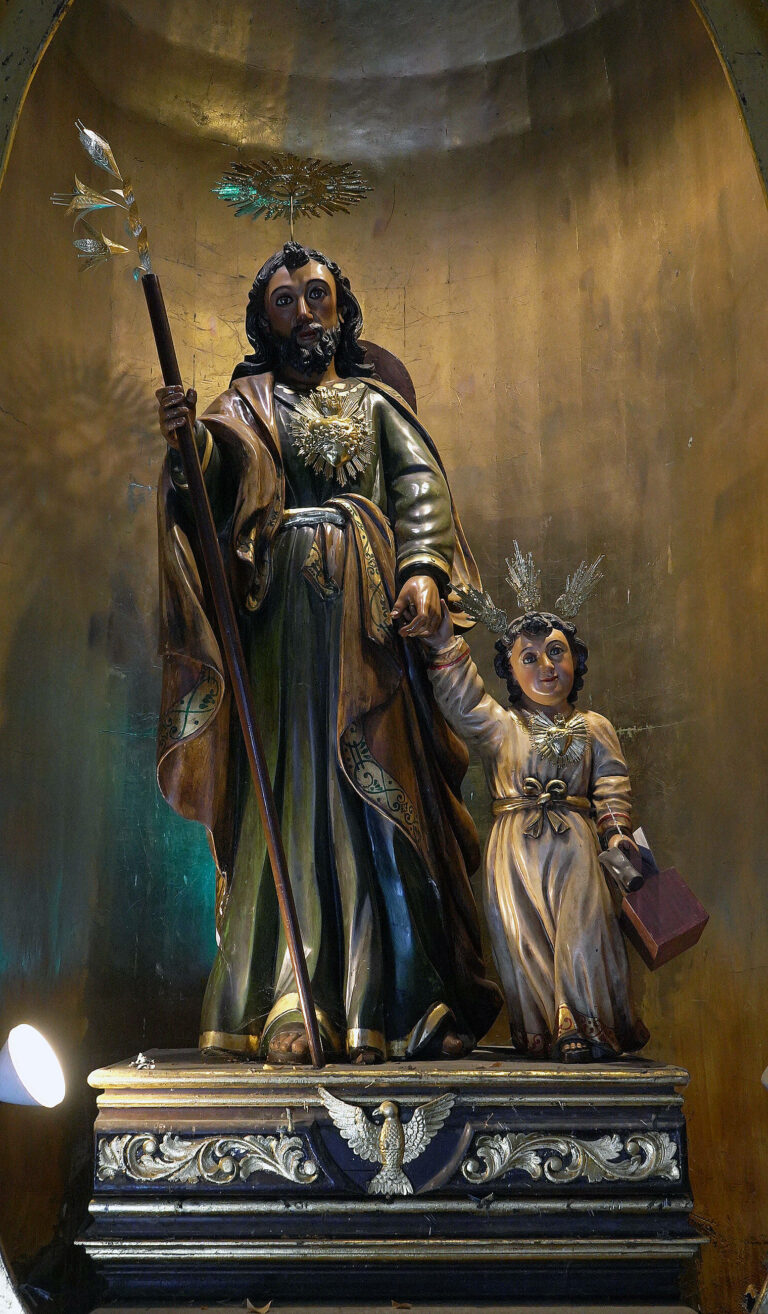
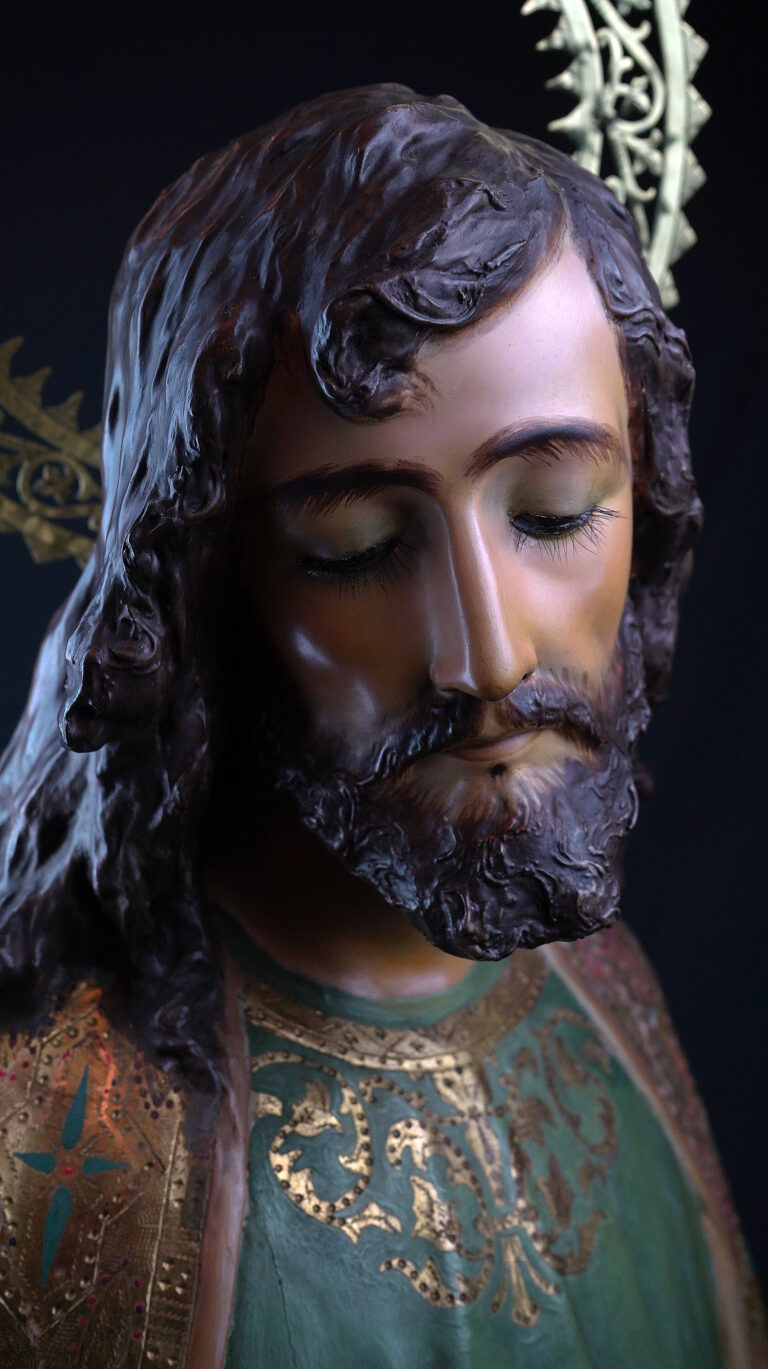
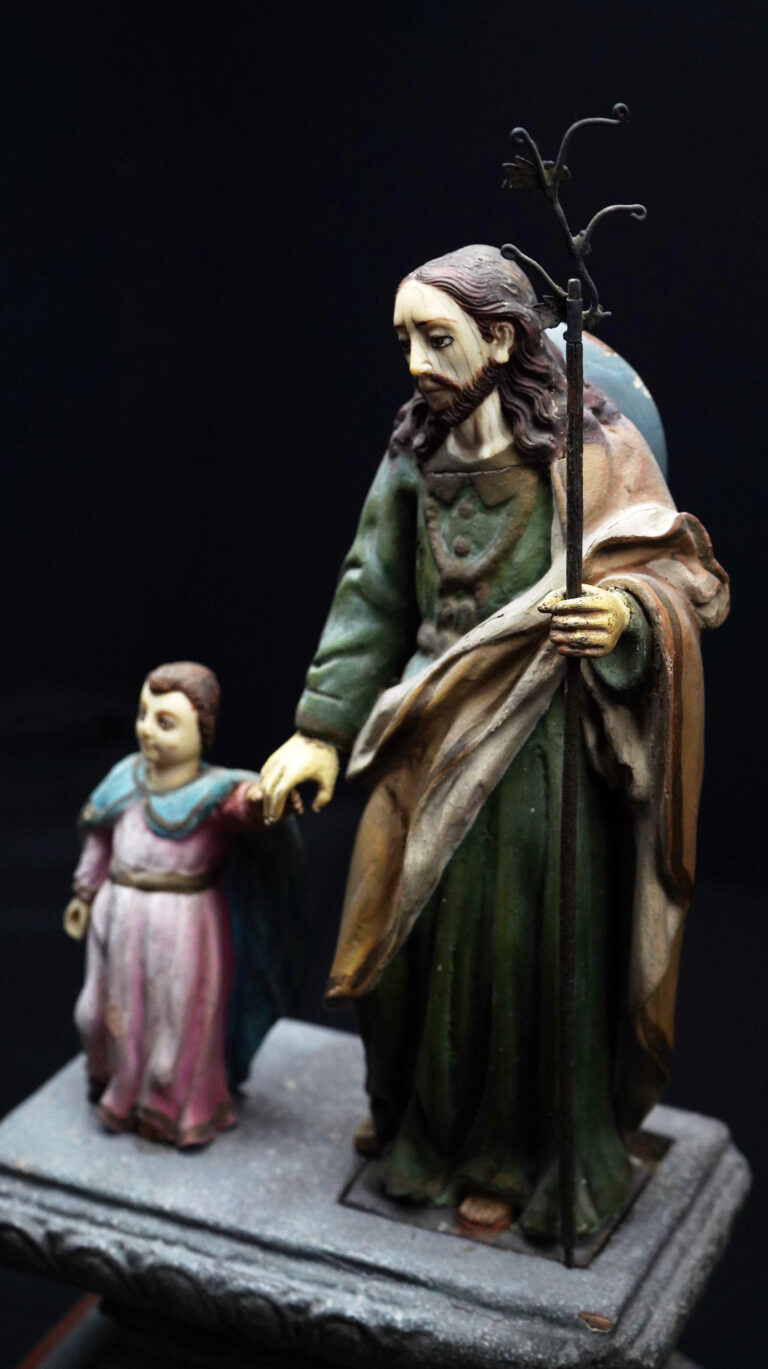
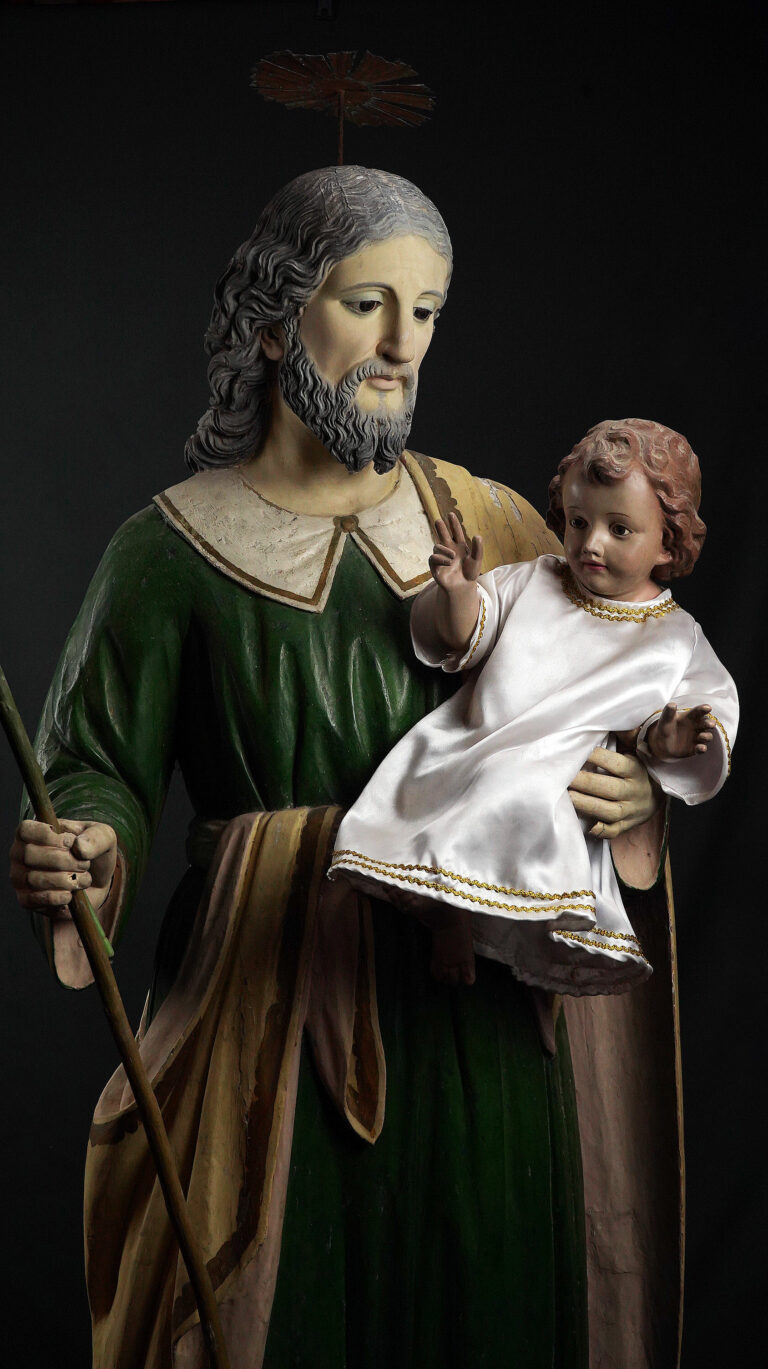
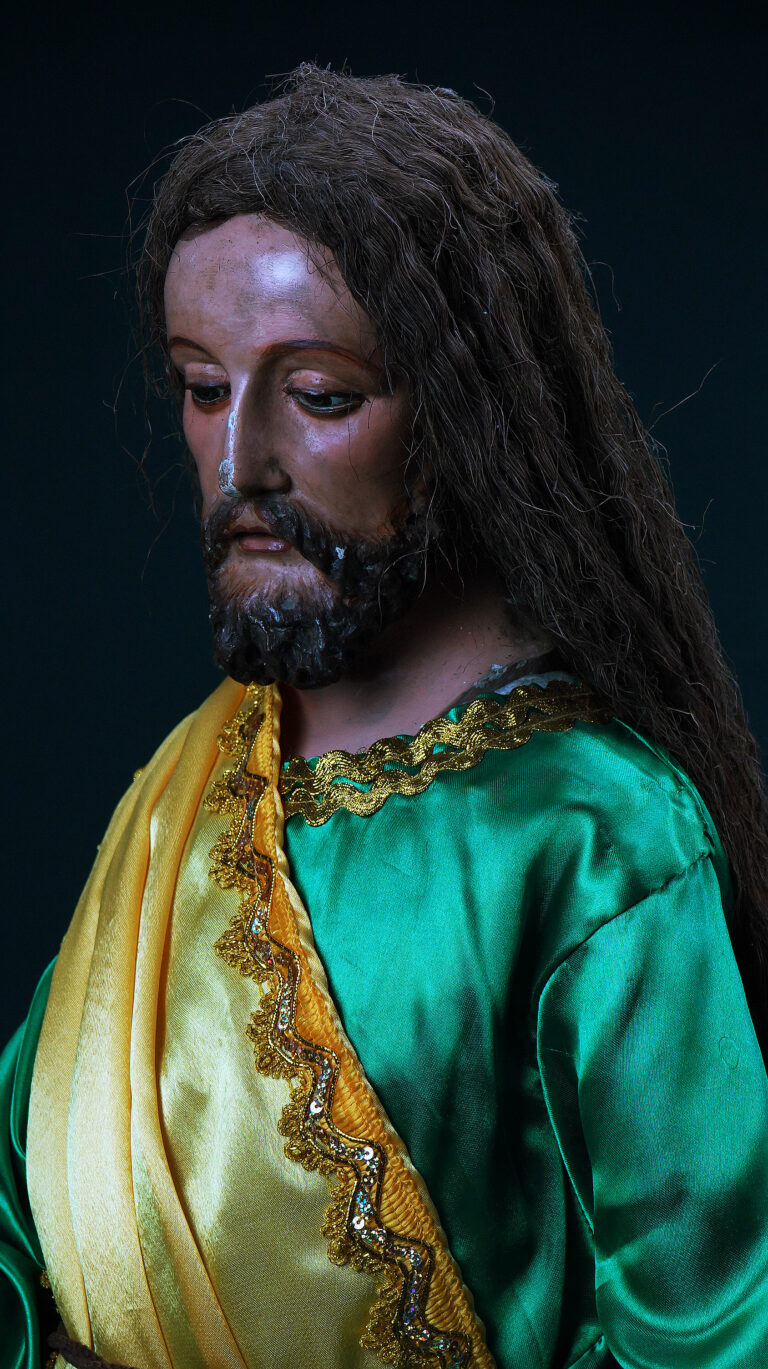
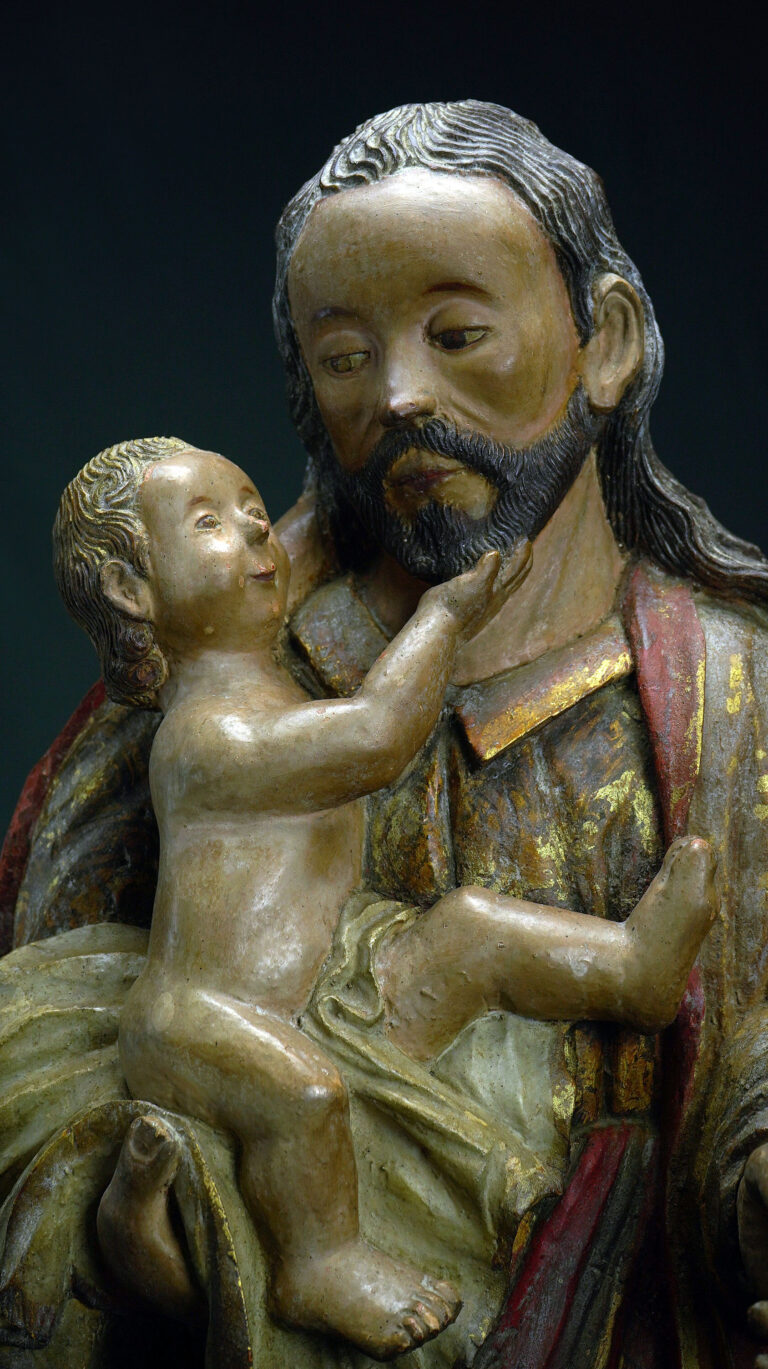
Under this theme, a special gallery is devoted to St. Joseph. Like the Blessed Mother, Saint Joseph is associated with many titles and attributes: He is popularly called the Head of the Holy Family, St. Joseph the Worker, Foster-father of the Son of God and Diligent protector of Christ, as most of the figures in the gallery represent. Because of his role in salvation history, he is also called the Silent Protector of the Holy Church.
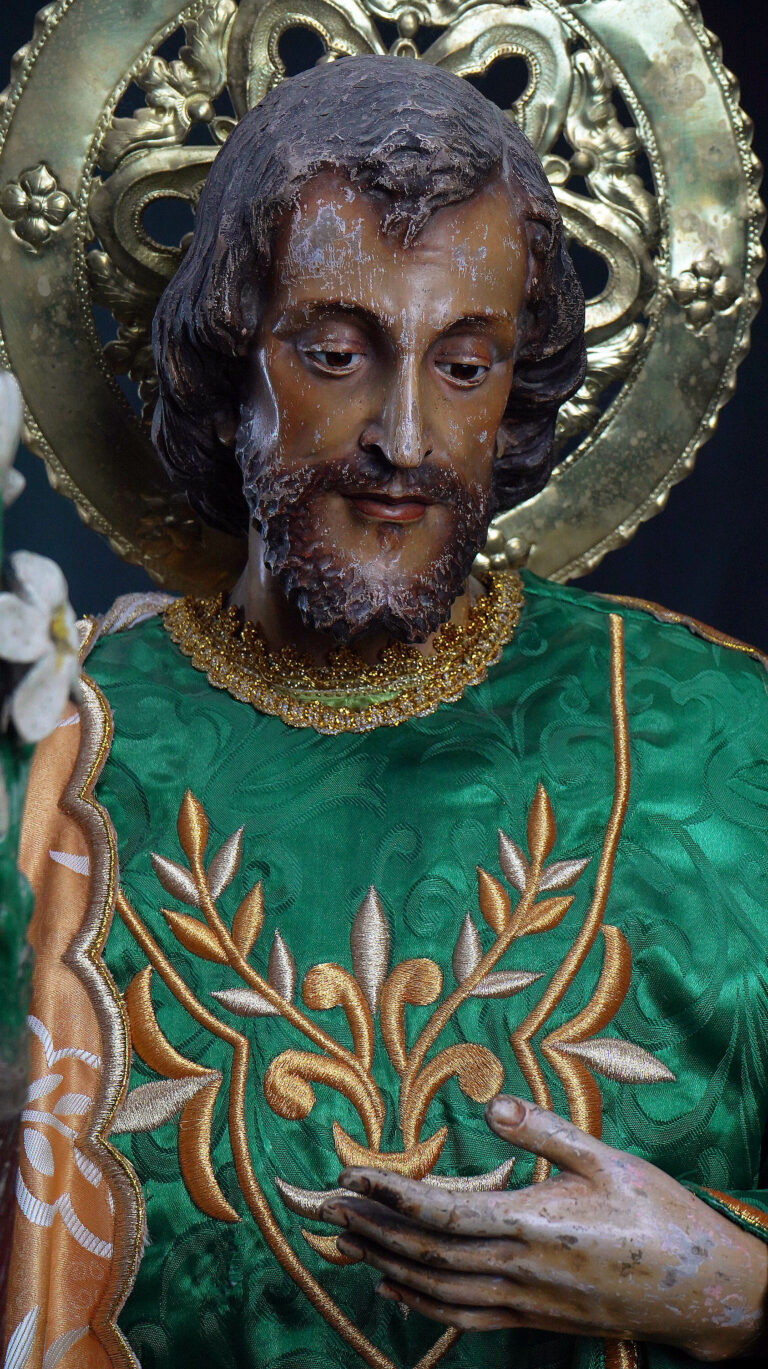
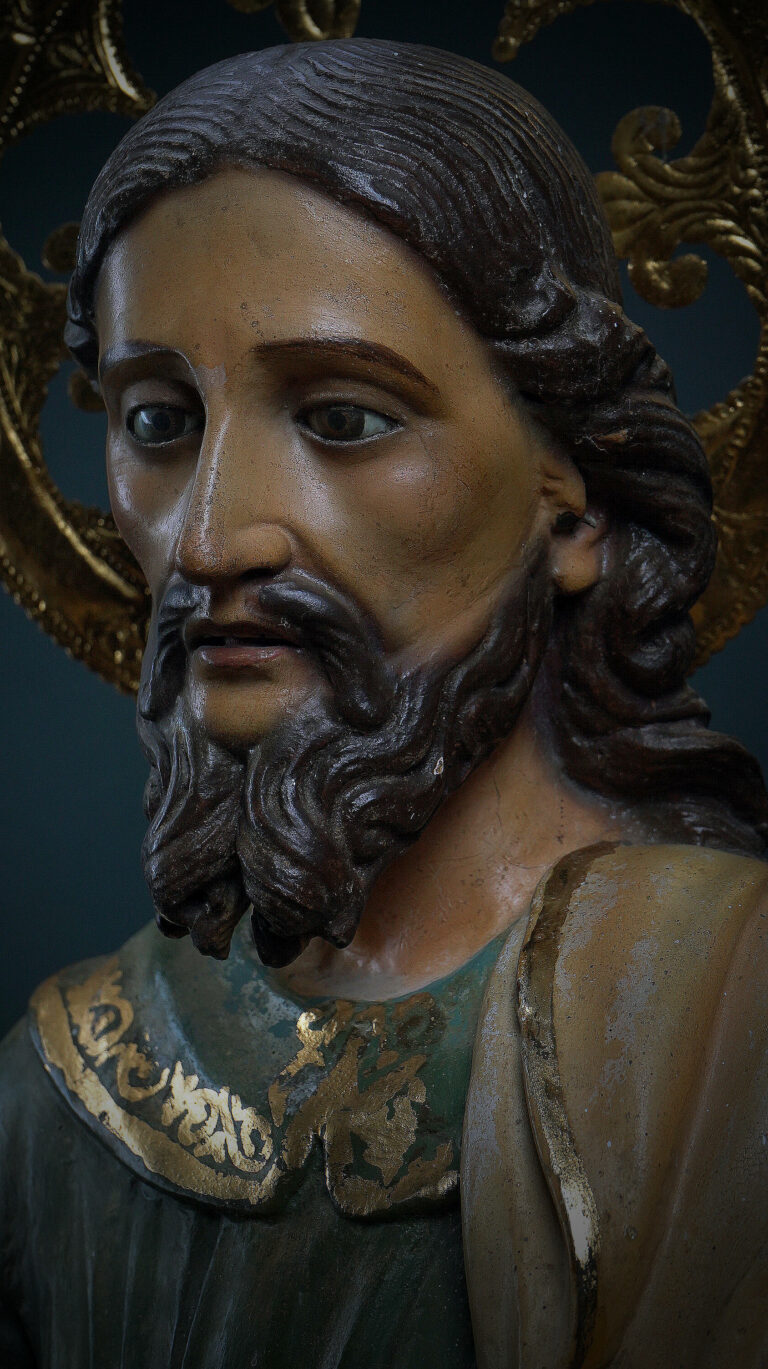
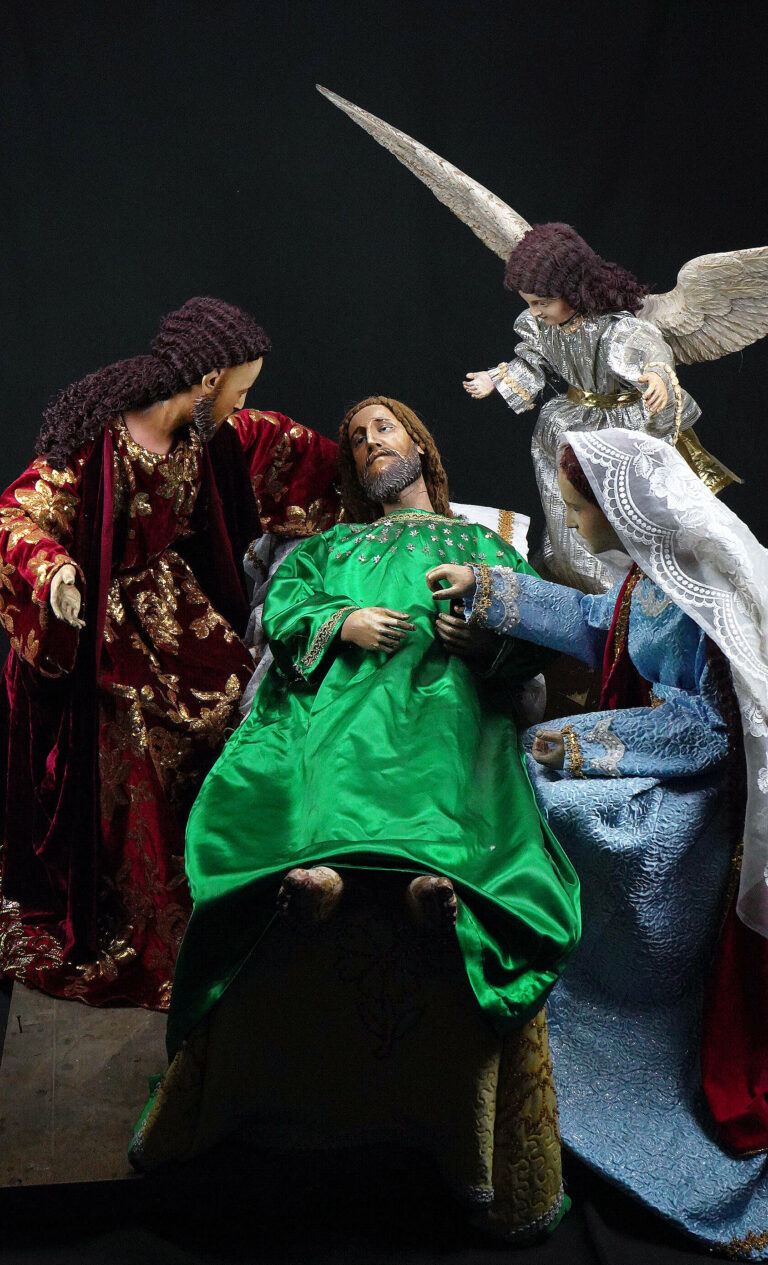
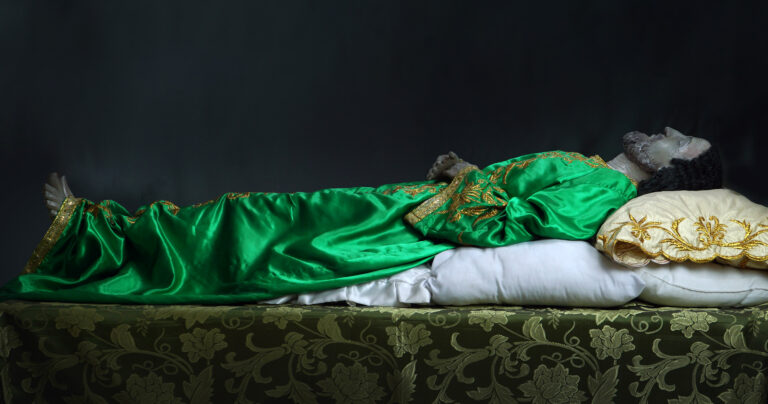
Interestingly, two figures show two uncommon attributes of St Joseph. (1)A statue from the parish of Argao presents St. Joseph with his hand on his chest, a pose commonly attributed to modesty and chastity. It is a reference to St. Joseph Most Chaste. (2) A tableau from Danao Parish portrays St Joseph at his deathbed, flanked by the Blessed Virgin and the adult Jesus. The scene is a reference to St Joseph as the patron for a happy death. These images propagate two beautiful devotions, which may just be what our times need.